





Email verification for form submission sits right in the middle of that exchange and decides how clean, safe, and reliable your data becomes over time.
This guide walks through the full verification process, explains how verification links and confirmation messages work, and shows how to protect mailing lists from risky emails and undeliverable emails. The focus stays practical, clear, and relevant for teams building forms in 2026.
What email verification for form submission actually does
Email verification for form submission checks an email address right when a user submits a form. The goal is simple. Confirm that the address exists, can receive mail, and fits your rules before it enters your database.
This process usually combines several checks. Syntax validation reviews the email field for formatting issues. Domain checks confirm that the mail server exists. Mailbox checks test if the inbox can accept messages without sending an actual email. Some systems also look for risky emails linked to bots, disposable services, or spam activity.
By verifying early, you block bad data before it spreads across your site, your CRM, and your email list. That keeps your database lighter, your email messages cleaner, and your future campaigns safer.

Why form-level verification matters more than list cleaning
Bulk list cleaning has value, but it happens late. By the time you clean a list, bad addresses have already entered your system, triggered automations, and damaged sender reputation.
Form submission verification stops the problem at the door. It reduces spam complaints, lowers bounce rates, and protects email deliverability from the first interaction. It also improves the experience for real users, since they receive fewer broken messages and clearer confirmation steps.
For growing sites, the difference shows quickly. Clean form data leads to more successful verification flows, fewer support tickets, and better long-term inbox placement.
Common places where email verification belongs
Email verification fits anywhere users submit an email address through a form. Some use cases are obvious. Others are often overlooked.
- Registration form for new accounts and apps
- Newsletter and mailing list signups
- Contact and support request forms
- Comment systems and community access
- Free trial and demo request pages
- Download gates for reports or templates
Each of these form fields collects data that feeds into email campaigns, product messages, or account communication. Verification keeps that data usable.
How the verification process works step by step
A modern verification process runs quietly in the background and responds in milliseconds. The user submits a form, and several checks fire at once.
First, the system checks formatting in the email field. This step catches missing symbols, spaces, or invalid characters. Next, the domain is checked to confirm it exists and can receive mail. Then, mailbox-level checks evaluate if the address is likely to accept messages.
Some setups add behavior analysis. These look for patterns linked to bots, repeated submissions, or known risky emails. If everything passes, the form submission continues. If something fails, the user sees a clear message asking them to edit or confirm their input.
This entire process happens before data is saved, which keeps your database clean by default.
Verification link and confirmation message explained
Many forms pair real-time checks with a verification link sent by email. This is often called double opt in.
After submission, the user receives an email message with a verification link. Clicking the link confirms ownership of the inbox and completes successful verification. This step reduces fake signups and protects mailing lists from abuse.
The confirmation message should be short, clear, and written in plain text or simple HTML. Avoid heavy email content, excessive images, or confusing subject lines. The message exists to confirm, not to sell.
Double opt in and compliance considerations
Double opt in helps with data quality and legal compliance. It creates a clear record that a user agreed to receive mail and confirmed their address.
In regions with strict privacy rules, this process supports transparency and reduces disputes. It also lowers unsubscribe rates because users remember signing up.
Double opt in does add a step, so clarity matters. The page after submission should explain what happens next. The inbox message should explain why confirmation is needed and what happens after the click.
Handling errors and edge cases gracefully
Not every email address fails verification for bad reasons. Some inbox providers behave differently. Temporary mail issues happen. Corporate mail servers may block certain checks.
Good form logic handles these cases with flexibility. Instead of hard blocking everything, you can flag uncertain addresses, ask users to confirm, or allow access with limited features until verification completes.
Clear messages help here. Avoid technical language. Tell users what to do next and how to fix the issue.
The impact on sender reputation and deliverability
Sender reputation builds over time. Every bounced email, spam complaint, or ignored message leaves a mark.
Email verification for form submission improves deliverability by reducing undeliverable emails before they ever leave your system. Fewer bounces mean inbox providers trust your mail servers more. That trust improves inbox placement and keeps your messages out of spam folders.
This effect compounds. Clean data today protects campaigns tomorrow.
Spam complaints and how verification reduces them
Spam complaints often start with poor targeting or unexpected emails. Invalid or mistyped addresses make the problem worse.
Verification limits these risks. Only valid addresses receive messages. Only confirmed users join your email list. That alignment lowers frustration and reduces spam signals sent back to inbox providers.
Over time, fewer complaints translate into stronger sending status across providers like Gmail and Yahoo.
Email verification versus CAPTCHA and other controls
CAPTCHA tools block bots, but they do not validate email addresses. They solve a different problem.
Email verification focuses on data quality and inbox access. It checks if an email address exists and can receive mail. Used together, CAPTCHA and verification create a strong first line of defense without hurting user experience.
Using an email validator in forms
An email validator connects directly to your form logic. It checks addresses in real time and returns a clear status.
Validators vary in depth. Basic tools check format only. Advanced systems analyze domains, mailboxes, and risk signals.
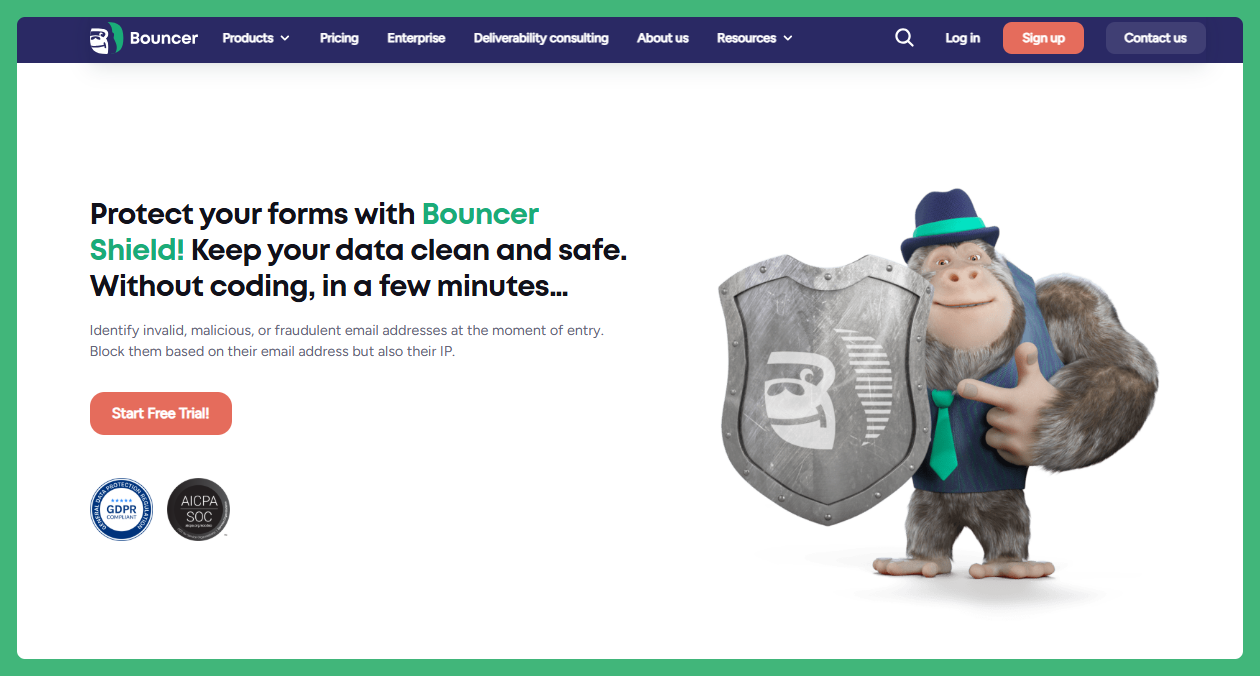
Bouncer Shield is built specifically for this moment of entry. It identifies invalid, malicious, or fraudulent email addresses at submission and blocks them before they enter your system.
API-based verification for developers
Many teams use an email verification API to handle form submission checks. APIs integrate directly into your code and respond instantly.
Bouncer’s Email Verification API is ultrafast, robust, and easy to integrate. It fits registration forms, comment systems, and custom apps without slowing down submission flows.
Developers can configure rules, log responses, and control what happens on pass or fail. This flexibility matters for complex sites.
Frontend and backend placement decisions
Verification logic can live on the frontend, backend, or both.
Frontend checks give immediate feedback and reduce unnecessary requests. Backend checks protect data even if frontend scripts fail or are bypassed.
A combined setup delivers the best results. Users see instant messages. The server confirms everything before saving data.
Designing clear messages for users
Every verification result should trigger a helpful message. Avoid blame. Avoid jargon.
Explain what happened, what the user should do, and how to continue. Simple language builds trust and reduces support requests.
Confirmation messages, error notices, and success screens all play a role in smooth submission experiences.
Managing mailing lists after submission
Once an address passes verification, it enters your mailing lists with confidence. That confidence shapes everything that follows.
Clean lists improve open rates, reduce unsubscribe actions, and support healthier engagement over time. They also make analytics more reliable.
Tools like Bouncer Email Verification help clean existing lists, while form-level checks keep new data clean from the start.
Bulk verification versus real-time checks
Bulk verification reviews existing databases. Real-time checks protect new entries.
Both approaches work best together. Real-time verification keeps forms clean. Bulk processes catch legacy issues and imports.
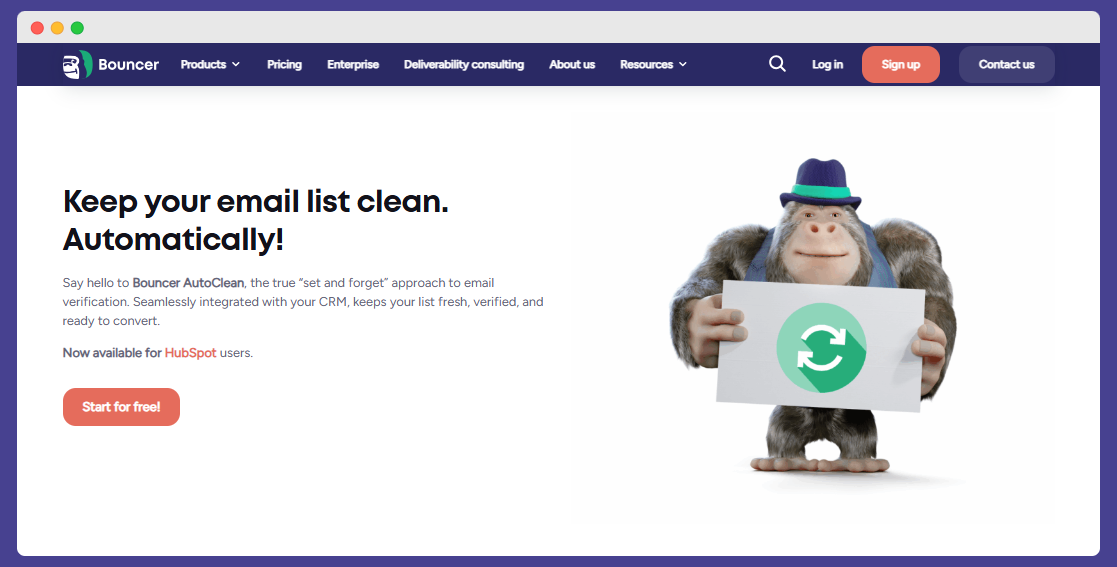
Bouncer AutoClean connects directly to your CRM or database, verifies addresses automatically, and saves teams from manual cleanup work.
Handling risky emails and disposable addresses
Risky emails include temporary inboxes, role-based addresses, and known abuse sources.
Verification tools can flag or block these addresses based on your rules. Some sites allow them with limits. Others reject them outright.
The right choice depends on your product, audience, and risk tolerance.
Logging, monitoring, and audits
Verification systems generate valuable data. Logs show what failed, what passed, and why.
This information helps teams tune rules, spot abuse patterns, and improve form performance. It also supports audits and compliance reviews.
Improving long-term engagement and inbox health
Verification does more than clean data. It supports better engagement.
When addresses are valid, messages reach inboxes. When messages arrive, users can respond, click, or unsubscribe normally. This natural behavior supports healthy sender signals.
Bouncer Email Engagement Insights help teams understand how active contacts are in their inboxes overall, adding context beyond raw delivery stats.
Testing and iteration
Verification setups should be tested regularly. Browser behavior changes. Providers update policies. User patterns evolve.
Test forms, confirmation links, and edge cases. Review logs. Adjust messages. Keep the process smooth.
Security, access, and trust
Verification protects systems from abuse and supports secure account creation. It limits fake accounts, reduces password reset abuse, and protects support teams from noise.
Used correctly, it strengthens trust between users and your site.
Bringing it all together
Email verification for form submission connects data quality, deliverability, and user experience. It verifies addresses before damage happens, supports double opt in flows, and keeps databases clean by default.
With tools like Bouncer Shield, Email Verification API, AutoClean, and the Deliverability Kit, teams can build reliable forms that scale safely. Bouncer Guarantee adds confidence that your verification decisions stand up to real-world sending conditions.
In 2026, verification at submission is no longer optional. It is part of responsible email practice and a foundation for sustainable communication.


