





When email delivery breaks, the entire process slows down. Costs rise, teams spend more time fixing errors than serving customers.
That’s why insurance verification (especially email verification) deserves more attention than it usually gets.
This article walks through how bad email addresses enter insurance systems, what problems they cause, and how insurance companies can clean and maintain their data in a way that feels manageable, reliable, and realistic.
How bad email addresses end up in insurance systems
Most insurance databases grow over years. Products expand, teams change, systems get updated, and records move across platforms. Email address issues usually come from ordinary moments, not dramatic failures.
A common example is onboarding. A customer fills out a form on a phone while commuting. One letter goes missing. The address looks fine at first glance, so it gets saved. Months later, a claim update fails to deliver. Support teams step in, spending time tracking down the correct contact.
Agents and brokers add another layer. They often collect details verbally or enter information quickly between meetings. A small typo slips through. That address then travels across systems tied to coverage, eligibility, and documents.
Long-term policies create a different challenge.
Clients change jobs, retire, or stop using old inboxes. The policy stays active, but the address no longer works. Renewal alerts bounce and expiration dates pass quietly. Moreover, lapsed policies follow.
Mergers and data imports add complexity. Records from vendors, subcontractors, or partner companies arrive with mixed quality. Some addresses are outdated, others belong to shared inboxes that no longer exist.
And then you understand that without verification, these records blend into the system unnoticed.
Over time, these issues multiply. The insurance system still looks complete on the surface, yet delivery reliability drops. Teams rely on phone calls to recover missing communication. Costs rise, compliance risk increases. Fortunately, email verification addresses this at the root.

How to remove bad email addresses from insurance databases
As always, cleaning email data starts with understanding what needs fixing.
Insurance teams often begin by reviewing delivery reports and support logs. Patterns appear quickly:
- Certain clients never receive mail.
- Specific workflows generate repeated errors.
- Claims updates fail more often than renewals.
Initial cleanup focuses on obvious issues:
- Addresses with clear formatting errors get corrected or removed.
- Contacts tied to closed or inactive records get archived.
This alone reduces noise and improves efficiency.
However, manual review cannot scale across thousands of records. That’s why automated email verification becomes essential.
Email verification tools help insurance teams verify address validity in bulk. They confirm whether an address can receive mail, flag risky inboxes, and surface delivery issues before messages are sent.
For example, a batch verification of policyholder records may reveal that a portion of addresses belong to inactive domains. Another group may accept mail but never engage, signaling potential delivery problems. Teams can then decide how to handle each case based on risk level.
Email verification also helps separate temporary issues from permanent ones. Some addresses fail temporarily due to server problems. Others no longer exist. Knowing the difference prevents unnecessary deletions and protects valid client relationships.
Once verification becomes part of the process, cleanup feels less reactive.
✅ Teams spend less time fixing errors after failed delivery and more time maintaining accurate records.
✅ Claims processing improves.
✅ Renewals become smoother.
✅ Compliance communication reaches the right inbox consistently.
What to look for in an email verification tool for insurance
Insurance verification tools need to match the industry’s reality. Email communication here carries legal and operational weight, so a good tool should support among others accuracy and clarity. Let’s check that.
Accurate verification results you can trust
Accuracy and adequate coverage comes first. Insurance teams need to trust verification results. Tools should confirm address existence, assess delivery readiness, and flag risk clearly. Vague pass or fail labels are not enough when coverage or eligibility depends on communication.
Clear reasons why
Clarity matters just as much. Results should explain why an address is risky or invalid. This helps teams decide what action to take. Some addresses should be corrected, others monitored, the next removed entirely – in every case, you need to know why.
Real time verification for instant results
Real time verification is another fundamental factor. During onboarding or policy updates, verifying email addresses immediately prevents errors from entering the system. This reduces future cleanup work and protects delivery from day one.
Security to keep your insurance business in shape
Security and compliance play a major role, since insurance data is sensitive. Verification tools must handle personal data responsibly and align with regulatory requirements. Here, predictable processing and clear data handling practices help teams stay compliant.
Deliverability checks for critical insurance mail
Beyond basic verification, insurance teams benefit from deliverability checks. These tools test inbox placement and email setup, including authentication records. They help answer a simple question: will important mail land in the inbox or get filtered out? This is especially useful for alerts, documents, and compliance notices that must be seen quickly.
Toxicity checks to reduce long-term risk
Another valuable layer is toxicity checks. These identify email addresses linked to risky behavior, widely circulated lists, or known problem patterns. Keeping such addresses out of sensitive workflows helps protect sender reputation and reduce fraud risk over time.
Workflow fit and automation support
Finally, tools should fit existing workflows. APIs, batch uploads or even integrations – they can enhance your email verification, smoothly introduce it into your daily operations. When tools feel natural to use, adoption stays high and results improve across the entire process.
What other features help maintain long-term email hygiene in insurance
Fixing email data once helps, but maintaining it over time creates real value. Insurance systems change constantly. After all, clients update details, policies renew, claims reopen. Email hygiene needs to keep pace. So what you also need is:
Monitoring tools add visibility. Alerts can highlight rising delivery failures or changes in engagement patterns. Teams can act early instead of reacting after complaints arrive.
And reporting supports progress tracking. Clean data trends show which workflows perform well and which need attention. This helps insurance companies improve processes without guesswork.
Together, these features create a system that stays reliable. Fortunately, modern email verification tools have these features build-in. With such a back up, your email delivery can improve, support teams can handle fewer recovery calls, customers receive timely, and you can create personalized content that supports clarity.
Use Bouncer for email verification and insurance coverage
So you see that tools that can combine all of these elements in one place, can really make life easier for insurance teams. A platform like Bouncer covers the full range: from accurate email verification and real time checks to deliverability testing and toxicity analysis.
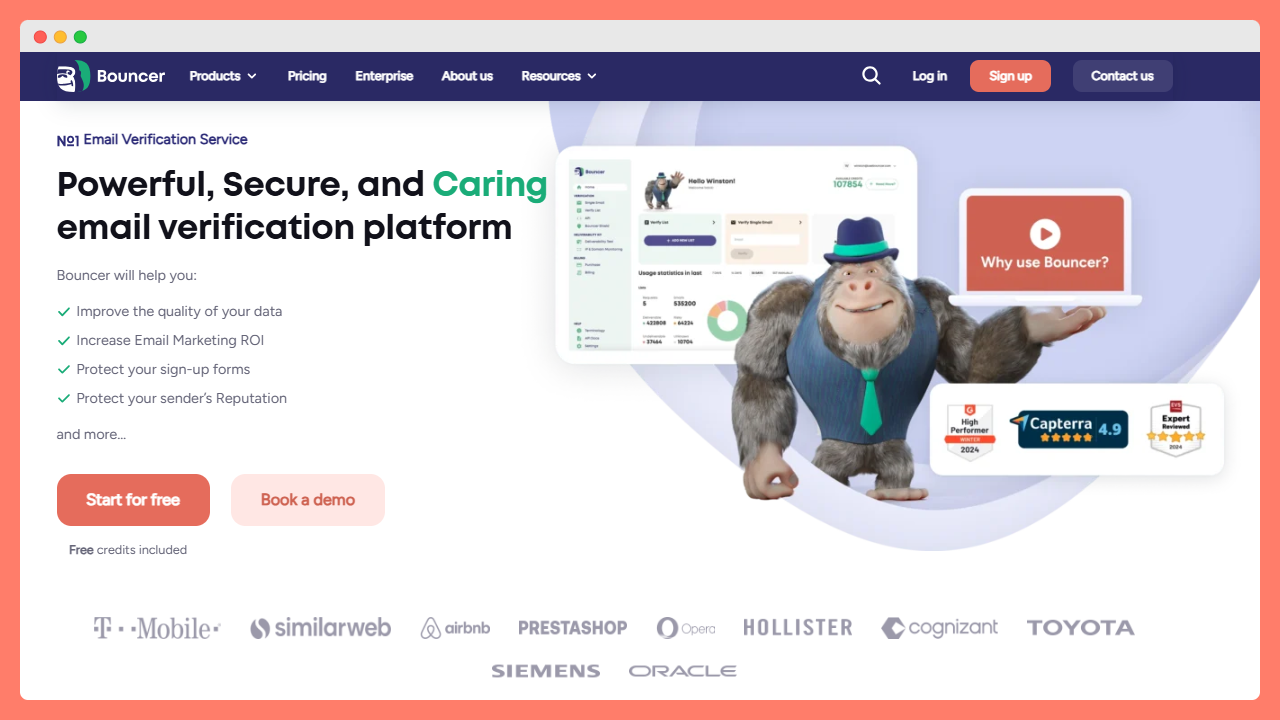
Bouncer helps teams verify addresses, understand delivery risk, and protect sender reputation at the same time.
On top of that, it adds automation options, clear reporting, and features that support long-term email hygiene across large systems. For insurance companies managing sensitive data, complex workflows, and strict compliance requirements, having everything connected in one solution does more than reduces errors. Think about saved time and communication that is reliable as operations scale.
Moreover, Bouncer bulk verification supports cleanup projects and ongoing maintenance. Clear classifications help teams decide how to handle each address without manual review. The tool also supports secure handling of data, which matters in insurance environments. Its focus on accuracy and transparency helps teams maintain reliable communication while reducing operational burden.
However, Bouncer can offer more.
Namely, the AutoClean.
Using Bouncer AutoClean for ongoing email verification in insurance
Insurance systems rarely stand still. New clients sign up every day, policies get updated, contractors rotate in and out, and contact records change quietly in the background. This is exactly where Bouncer AutoClean fits best. It’s built for teams that want email verification to run continuously, without manual uploads or repeated cleanups.
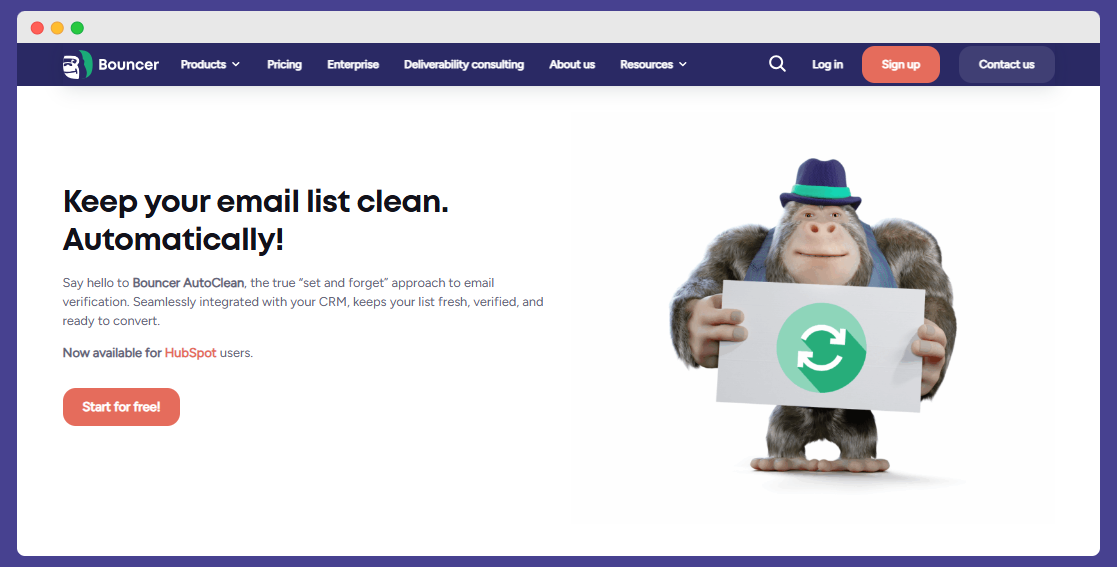
AutoClean works as a true “set and forget” solution. Once connected to a CRM, it verifies existing email addresses on a schedule and checks new contacts automatically, even every hour if needed. For insurance teams, this means fewer delivery errors for claims updates, renewal reminders, certificates, and compliance alerts. Bad addresses get caught before they cause delays.
One of the strongest parts of AutoClean is granular control. Insurance companies can define rules based on verification status and toxicity score. Safe addresses stay active. Undeliverable or disposable emails get suppressed. Risky addresses can be quarantined for review. This helps teams manage risk without losing potentially valid contacts tied to long-term coverage or active claims.
AutoClean also supports workflow triggers through the Bouncer Recommends field. That data can be used inside the CRM to automate actions. For example, a contact marked for suppression can be excluded from critical mail, while another flagged as risky can trigger a review task for an agent or operations team. This keeps workflows clean and consistent.
From an operations perspective, AutoClean reduces manual work. Teams spend less time exporting lists, running one-off checks, or fixing delivery errors after the fact. Everything runs in the background, and all jobs are visible in one dashboard with clear dates and status updates.
For insurance companies managing large volumes of sensitive contact data, AutoClean helps maintain reliable delivery across the entire process. Email verification becomes part of everyday operations, not another task to remember.
Making insurance verification easier than it looks
Email verification does not need to feel heavy or complex. When integrated into daily workflows, it becomes quiet support infrastructure. Clean email data improves delivery, reduces delays, and protects trust between insurance companies and clients.
Verification helps teams focus on what matters. Claims move faster. Renewals stay on track. Compliance communication reaches the right people. Support teams spend less time recovering missing messages.
For insurance companies managing risk, records, and responsibility, email verification strengthens the entire system. It keeps communication clear, reliable, and ready when it matters most. And if you use for it AutoClean, you won’t be disappointed. Automation will just handle the task for your.


