





What can help you is email verification for hospitality, which, frankly speaking, is no longer optional if you care about deliverability, engagement, trust – shortly your business.
After all, booking confirmations, reminders, updates, promotions, and loyalty messages all depend on valid email addresses. And if messages never reach the inbox, communication breaks. That hurts customer experience and marketing efforts at the same time.
Why hospitality email databases break down faster than other industries
Hospitality email databases age quickly because guest behavior is different. People travel, change jobs, switch inboxes, and use temporary addresses. Front desk staff often enter data manually while guests wait. Typos slip in easily, especially during peak hours.
Many addresses come from short interactions. One-night stays, one-time bookings, or walk-in guests leave little incentive to double-check accuracy. Over time, email databases fill with invalid, problematic addresses that quietly weakens your system.
Typing mistakes add another layer of risk. Missing dots, swapped letters, autocorrect errors, or rushed handwriting turn valid addresses into invalid email entries. These small errors look harmless but travel across systems, campaigns, and contact lists, staying active until emails bounce or messages disappear.
This decay happens even when your business grows. More customers usually mean more addresses, but not better list quality. Without verification, databases expand while performance drops.

Where bad email addresses come from in hospitality workflows
Hospitality collects addresses in many places, often outside marketing control. Each touchpoint introduces errors that spread across systems.
Common sources include:
- Front desk registration during check-in.
- Online booking forms completed on mobile devices.
- Wi-Fi access portals in hotels and restaurants.
- POS receipts and loyalty sign-ups.
- Manual imports from legacy databases.
“Small errors” rarely stay small. A rushed keystroke at reception drops a letter, an old domain lingers from a past job, or a shared inbox gets written down as a personal address. Each detail slips into the database and keeps circulating through systems, campaigns, and messages until it quietly causes delivery failures that no one connects back to the original moment.
What happens when invalid email addresses stay in your system
Invalid email addresses create damage long before teams notice. The typical process looks like this:
- 1. An email bounce, sometimes immediately, sometimes after several attempts.
- 2. A rising bounce rate sends negative signals to email service providers. As a result, sender reputation suffers.
- 3. Once reputation drops, inbox placement changes. Messages land in spam folders or never arrive.
- 4. Even valid addresses stop receiving emails consistently. Campaign effectiveness declines across all marketing campaigns, not only the weak ones.
The risk increases when spam traps appear in contact lists. These addresses look normal but punish careless sending. And in the end, repeated mistakes lead to a damaged reputation that is hard to recover from.
What about transactional emails?
Transactional emails are automatic messages sent after an action, such as booking confirmations, payment receipts, password resets, or check-in details. This type of email feels more personal because it arrives at key moments when customers expect clarity, speed, and reassurance.
For example, imagine a guest who finishes a booking late at night and waits for confirmation that never arrives. Another looks for check-in details while standing at the front desk. The system worked, the message was sent, yet nothing reached the inbox.
Behind the scenes, an invalid address quietly broke the flow, bring you stress, and made extra work for staff. All caused by small data errors that stayed unnoticed for too long.
That’s why you need email verification
Email verification checks if an address can safely receive messages. It looks at email format, invalid characters, and the email domain behind the address. It also evaluates whether an inbox is valid, risky, or invalid.
However, this process does not send messages to guests, as you may think. It works quietly in the background and improves email data quality before emails go out. Email address verification helps teams verify email addresses at scale without disrupting daily operations.
For hospitality, verification supports speed:
- Staff collect addresses quickly
- Systems move fast
- And verification adds control without friction
Real time verification vs list cleaning for hospitality teams
Okay, but email verification alone does not solve everything. Hospitality teams deal with two realities at the same time: email addresses already sitting in the database and new ones arriving every single day. They both need attention.
We have this email verification, yes. It protects new subscribers at the moment of registration. It checks addresses as they are entered and stops invalid emails before they reach your system. This works well for booking forms, Wi-Fi access, and loyalty sign-ups where speed matters and errors happen fast.
But there are also list cleaning services.
List cleaning focuses on what you already have. Older email lists change with time, behavior, and inactivity. People stop using inboxes, switch domains, or abandon addresses completely. Validating emails inside existing databases restores list quality and reduces the risk hidden in long-standing data.
Real time verification suits:
- Booking forms
- Wi-Fi registration
- Loyalty sign-ups
List cleaning fits:
- Email campaigns sent to large contact lists
- Seasonal promotions
- Re-engagement flows
Both approaches support business needs when applied consistently.
How email verification improves email marketing in general
Email verification strengthens marketing without changing creative or messaging. The subject lines do not change, the design stays familiar, and the message remains exactly as planned. The difference shows up after sending, when emails reach inboxes instead of bouncing back. As bounce rates fall, sender reputation recovers without extra effort.
With cleaner email databases, engagement rates stabilize. Open rates increase because emails reach real users. Click behavior becomes more reliable, and test results reflect reality instead of noise.
Email marketers gain confidence in their data and stop guessing. Data becomes something they can trust, and decisions come from real user engagement rather than silent failures hiding inside the list.
Sender reputation gets better condition
Sender reputation changes slowly, then all at once. At first, nothing looks wrong, emails keep going out, and reports seem acceptable. Over time, high bounce rates, spam complaints, and hidden spam traps begin to stack up. Email service providers notice every signal and quietly adjust how they treat your messages.
For hospitality brands, the risk feels higher because everything comes from the same domain. Promotional offers share space with booking confirmations and updates. When reputation drops, even transactional messages struggle to reach the inbox. Improving sender reputation means restoring trust at the domain level, where every email counts.
So yes, email verification protects reputation by reducing hard bounces and filtering bad emails before sending emails at scale.
Customer experience gets boost
Email verification supports customer experience as well. Guests rarely notice it working, but they feel the results. Messages arrive when expected. Updates reach inboxes without delay. Communication stays clear and reliable.
Missed emails frustrate users. They create unnecessary support requests and confusion at check-in or arrival. Clean data prevents these issues before they start.
Better data improves communication across the full journey, from registration to post-stay engagement.
Security measures and data responsibility in email verification services
Hospitality handles sensitive data every day. Email verification services must respect that responsibility. Secure systems, controlled access, and careful processing matter as much as accuracy.
Verification should integrate safely with existing systems and accounts. Ongoing support matters when teams manage large databases across locations and brands.
Choosing trusted services protects email data while improving performance.
Choose email verification services for hospitality businesses
However, we are not here to recommend you doing email verification manually. You wouldn’t keep up. Checking addresses one by one, exporting files, or fixing errors by hand quickly turns into busywork that no one has time for. When databases grow daily and messages go out constantly, manual control breaks down.
Instead, choose the right email verification service, which will fit into your existing systems and workflows.
They work in the background, scale with growing databases, and support both real time checks and ongoing list cleaning. Hospitality businesses need solutions that reduce effort, not add more steps, while keeping email data reliable across platforms and campaigns.
Important considerations include:
- Handling large email databases efficiently.
- Working with your email service provider.
- Supporting real time verification and list cleaning.
- Easy integration with CRMs and booking systems.
Verification should support daily operations instead of slowing them down.
How Bouncer fits hospitality email verification needs
Our answer for your pain point is Bouncer.
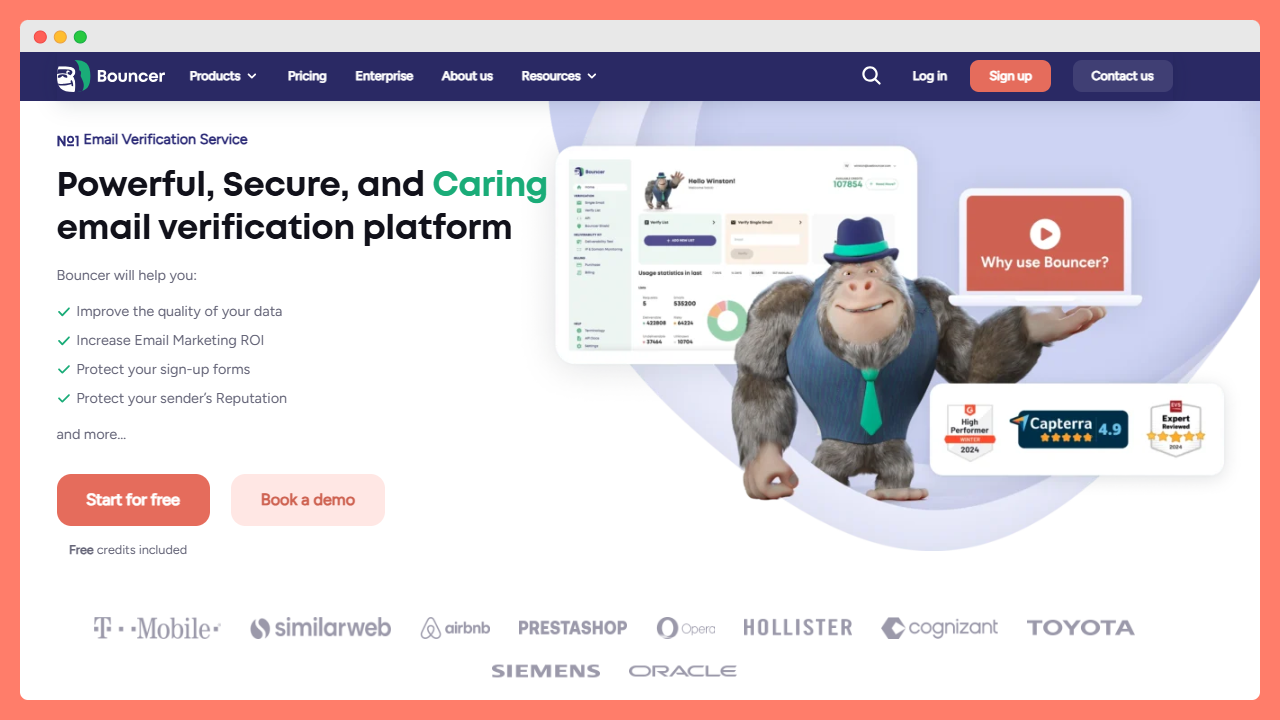
Bouncer supports hospitality teams that manage growing databases and frequent sending. Its email verification service helps verify email addresses quickly and accurately across large lists.
The email verification API fits booking flows and registration forms where real time verification matters. Integrations connect Bouncer with popular marketing platforms without manual work.
Bouncer Shield protects entry points by identifying invalid, malicious, or fraudulent addresses. AutoClean keeps databases healthy automatically through CRM connections. Toxicity Check highlights risky emails that threaten sender reputation.
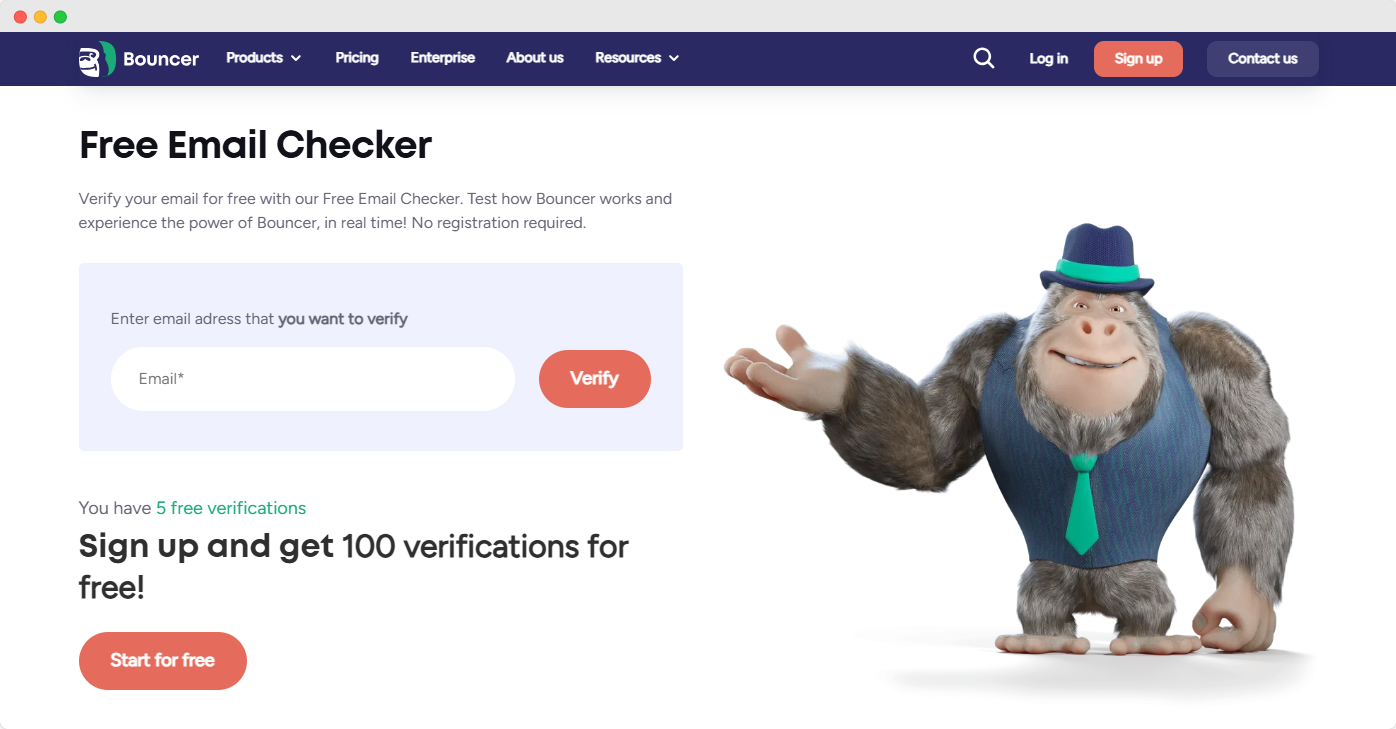
Additional tools like Data Enrichment, Deliverability Kit, and Email Engagement Insights help teams understand list quality, inbox placement, and user behavior without complexity. And with the free tools like Free Email Checker, you can see how our verification process is quick and easy.
Keep hospitality email lists healthy over time!
Healthy lists come from habits, not one-time fixes. Ownership matters. Teams should treat email data as a living system that changes constantly.
Now you know that regular verification keeps databases aligned with real user behavior. Clear responsibility prevents bad data from spreading across platforms. Consistent processes protect deliverability during busy seasons and quiet periods alike.
Verification becomes part of how hospitality communicates, not an emergency reaction. And Bouncer can help you with that. Try Bouncer for free and you will notice the difference.


