





Cold outreach lives in that uncomfortable space between opportunity and risk, where one wrong move can quietly push your emails into spam folders or damage a sender reputation you worked hard to build.
This guide focuses on email verification services for cold outreach, as a practical safeguard that keeps outreach campaigns alive, measurable, and worth the effort.
Cold outreach today moves fast, pulls data from many places, and touches inboxes that belong to real people with little patience for mistakes. Email verification sits right at the start of that journey, long before copywriting or sequencing matters. Without it, even the best cold email ideas struggle to reach anyone who can read them. Let’s see why.
What cold outreach looks
Cold outreach means starting a conversation with someone who did not ask to hear from you, using contact details you gathered through lead generation, research, or domain search. In practice, cold email outreach is about timing, relevance, and trust, even when there is no relationship yet.
Teams still rely on cold email because it scales, it stays personal when done carefully, and it reaches professional email addresses where business decisions actually happen.
Things usually go wrong early, often before the first message ever leaves your system. Lists get built too fast, email addresses come from email finder tools without checks, and outreach efforts begin with contact data that looks fine on the surface.
In the end of the day, invalid emails, risky addresses, and outdated inboxes can slip in quietly, setting campaigns up for trouble before results can even be measured.

Cold email outreach vs other outreach channels
Email still matters for outreach campaigns because it gives control over timing, message length, and follow-ups in a way few marketing platforms can match. But it’s just the heavy hitter in a much larger lineup.
While email is the backbone for most B2B teams, there are the other primary channels used alongside it:
- Professional Social Media (LinkedIn): This is the most common partner to email. It involves profile visits, connection requests, and DMs. It’s “softer” than an email because it feels more like a social interaction than a formal pitch
- Cold Calling: The old-school classic. It’s high-pressure but high-reward because you get real-time feedback. Most modern sequences use a “triple touch” (email, then call, then LinkedIn) to stay top-of-mind.
- Video Outreach: Using tools like Loom or Vidyard to send personalized video messages. These are often embedded in emails or sent via LinkedIn to prove you aren’t a bot.
- Direct Mail: Surprisingly making a comeback. Sending a physical gift, a handwritten note, or a printed case study to someone’s office can cut through the digital noise instantly.
- SMS & WhatsApp: Used sparingly in B2B (and usually only after some rapport is built). It’s the most personal channel, but it carries the highest risk of annoying the prospect if you overstep.
Used together, they create a multi-channel outreach.
But why do people use more than just email?
It’s all about the “Rule of 7″—the idea that a prospect needs to see your brand multiple times before they trust you. If you only send emails, you’re easy to ignore. If you send an email, comment on their LinkedIn post, and then leave a polite voicemail, you’re suddenly a person they recognize rather than just another line in their inbox.
Why email verification exists in the first place
Email verification is the process of checking whether email addresses can receive messages before a cold email is sent. This happens without sending an actual email, which matters for protecting sender reputation and avoiding unnecessary signals to email service providers.
Verification looks at technical clues and behavior patterns to decide whether an address is safe, risky, or invalid.
It’s not part of sending, and it does not improve copy or targeting by itself. It exists to reduce uncertainty before outreach campaigns begin. Verification tools became standard once teams realized that sending fewer emails to verified email addresses outperforms sending more emails to unverified lists, even when lead generation volume feels tempting.
Email verification vs email validation
Email verification and email validation are closely related, yet they focus on slightly different layers of the same problem.
The verification process checks whether an email address exists and can accept messages, while validation often refers to formatting and basic correctness. Syntax errors get caught early, domain checks confirm whether a server can receive email, and mailbox existence signals estimate whether an inbox is actually there.
Real time verification matters today because email addresses decay quickly, especially in cold outreach.
Job changes, abandoned inboxes, and temporary setups mean that yesterday’s valid contact details can become today’s bad addresses. Verification tools help teams react to that reality before damage shows up in reports.
What happen if you send unverified emails?
It’s tempting to think that sending an email to a dead address is a victimless crime—it just disappears, right? Not exactly.
#1 Invalid and risky addresses hurt sender reputation
Every time an email bounces, email service providers receive a signal about how carefully you manage your lists. Bounce signals stack up quietly, and sender reputation erodes without clear warnings. Domain reputation drops when invalid addresses keep appearing in campaigns, even when volumes stay low.
Long term damage shows up slowly. Outreach campaigns start landing less often, inbox placement becomes unpredictable, and verified email addresses get treated with the same suspicion as bad ones. Protect sender reputation early, because repairing it later costs time, trust, and money that most teams underestimate.
#2 Spam traps, disposable email, and catch all domains
Spam traps are email addresses designed to identify careless sending behavior. In practice, they look like normal inboxes, yet they exist only to catch outreach that ignores list cleaning and verification. Catch all domains create a different challenge, since they accept all emails without confirming whether a specific mailbox exists.
Disposable email detection adds another layer of complexity, because temporary inboxes appear valid for a short time and then disappear. Email verification services help identify these patterns by analyzing risk signals rather than relying on a single yes or no outcome. Catch all handling requires deeper checks, since many professional domains use catch all setups legitimately.
#3 Inbox placement, spam folders, and silence
Emails disappear without warning when filters lose confidence in your sender behavior. Spam folders act as a quiet penalty. Email deliverability drops gradually, making it hard to connect cause and effect.
Campaigns fail without obvious errors because nothing technically breaks. Emails send successfully, reports look normal, and response rates fall anyway. That silence often traces back to unverified emails earlier in the process, where inbox placement started slipping long before teams noticed.
So how exactly email verification services support cold outreach
Email verification services perform a series of invisible handshakes with recipient servers to confirm an inbox is active without ever actually sending a message. For a cold outreach campaign, this support is foundational. It allows you to scale your efforts with confidence.
They help in lead generation
Email addresses come from many sources, including domain search, manual research, and email finder tools used by sales teams and marketing teams. These tools focus on discovery. Verification belongs after finding, acting as a filter that decides which contact details are safe to use in cold outreach.
Verified email addresses form the foundation of outreach campaigns that scale without breaking. Without verification, lead data looks complete while hiding risks that surface only after sending begins.
They can help in cleaning your lists (automatically)
List cleaning removes bad addresses before they affect sender reputation. Bulk verification works well for large campaigns prepared in advance, while batch verification suits smaller or segmented lists. Both approaches aim to separate usable contacts from invalid contacts without guesswork.
Handling invalid emails early keeps outreach efforts focused on people who can actually respond. Bulk email verification and batch verification reduce wasted sends, protect domain reputation, and make campaign results easier to trust.
They can help in your existing workflows
Many teams work inside Google Sheets, CRMs, and marketing platforms where contact data lives day to day. Email verification services that fit into existing workflow patterns reduce friction and mistakes. A Google Sheets add on allows quick checks without exporting data back and forth.
Verification inside familiar tools keeps sales and marketing teams consistent. When verification happens where lists are built, errors get caught before campaigns move forward.
In short: sales and marketing teams can benefit
Sales teams rely on verified contacts to keep cold email campaigns predictable. Outreach efforts at scale amplify small mistakes, making verification essential for SDRs who send daily sequences. Verified contacts reduce bounce noise and help sales teams focus on conversations instead of troubleshooting delivery issues.
Professional email addresses carry more weight in sales outreach, yet they also carry more risk when outdated or mistyped. Verification supports consistent results by filtering lists before sales activity ramps up.
Marketing teams often juggle email marketing tools, automation, and segmentation, all of which depend on clean inputs. Verification integrated into these workflows protects sender reputation over the long term by keeping bad addresses from circulating between systems. Cleaner customer data leads to clearer performance insights and fewer false assumptions about engagement.
Email verification becomes part of decision-making. Teams perform better when they work with verified inputs rather than constantly compensating for data quality issues.
What email verification tools actually check
Verification services operate in layers, moving from simple formatting checks to deep-level server communication. This “layered defense” is designed to catch errors at the earliest possible stage to save processing power and ensure the highest accuracy.
Technical checks behind the scenes
- Email verification tools start with syntax errors, since formatting mistakes immediately signal invalid emails.
- Domain logic checks confirm whether mail servers exist and can accept messages.
- MX records show whether a domain is configured for email at all.
Mailbox existence signals go deeper, estimating whether a specific inbox responds in a way that suggests a real user. These checks happen without delivering a message, protecting sender reputation while gathering useful signals.
Risk signals beyond “valid” or “invalid”
Not all addresses fit clean categories. Risky addresses may exist yet pose a threat to inbox placement. Catch all handling identifies domains that accept all messages while hiding real inbox status. Verification status often includes safe, risky, unknown, or invalid outcomes to reflect this nuance.
As a result, teams can make better decisions instead of relying on a single label. Literally, email verification software exists to guide choices.
Real time API verification and bulk email verification
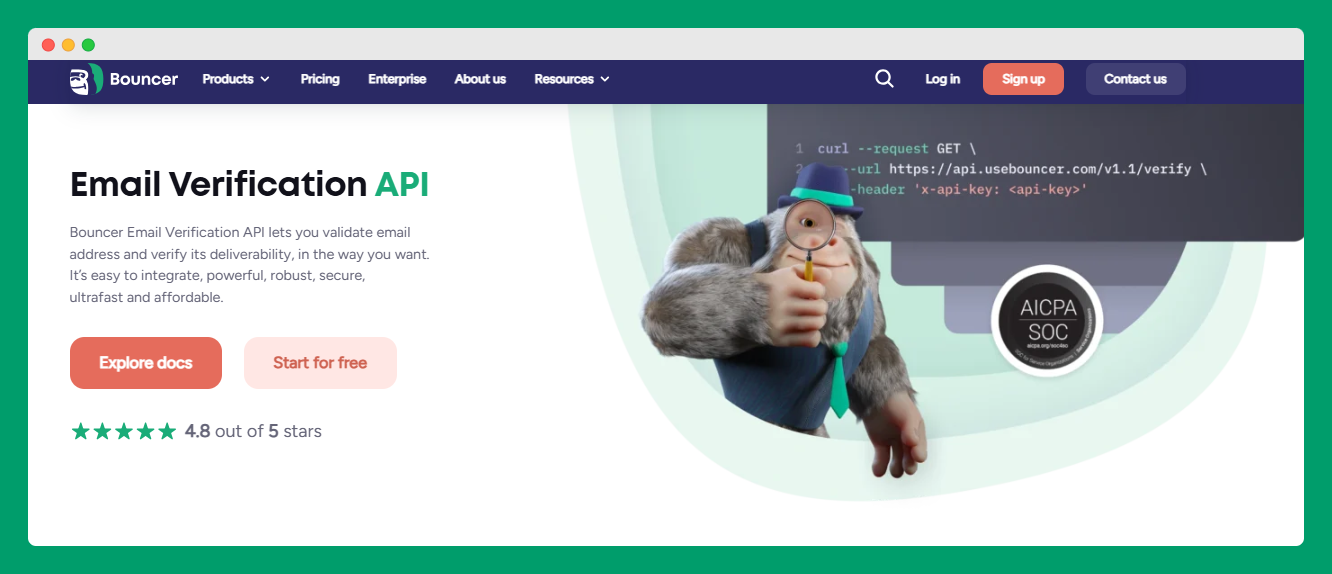
Signup forms and lead capture workflows benefit from real time API verification, since it checks email addresses at the moment of entry. This prevents bad addresses from entering customer data in the first place. Cold email campaigns prepared in advance rely more on bulk email verification to clean lists efficiently.
Bulk email validation suits outreach campaigns where timing and scale matter, while real time verification protects inbound data streams. Both approaches serve different moments in cold outreach, yet they work best when combined thoughtfully.
How to choose email verification software for cold outreach
Choosing an email verification service starts with accuracy and coverage, because a tool that misses risky addresses or mislabels good ones creates more problems than it solves.
Also, teams need verification tools that work across many email service providers, handle edge cases, and return clear results without forcing users to guess what to do next.
Plus, a user friendly interface matters more than most teams expect, since verification often happens under time pressure before outreach campaigns launch.
Data security expectations also play a role in buying decisions. Email verification software touches customer data, lead data, and professional email addresses that cannot be exposed or mishandled.
Moreover, strong verification tools make it clear how data is processed, stored, and protected, allowing teams to use them confidently across regions and markets.
What’s else?
Free plans, credits, or tools
A free plan helps teams test workflows, understand verification status logic, and spot obvious list issues without committing budget. Free plans work well for small checks, early-stage outreach, or quick audits of contact details. Paid plans make sense once outreach efforts scale and verification becomes a routine step rather than an occasional task. If you offer free credits, that’s also cool. Your prospects can just see how your tool really works,
A good option is also unlimited verification. It appeals to teams sending large volumes, yet cost control matters just as much as volume. The goal is not to verify everything endlessly, but to save money by avoiding wasted sends, spam folder placement, and reputation recovery.
Smart verification pricing just aligns with how often lists change and how frequently outreach campaigns run.
How to compare verification tools
You can look at result clarity, processing speed, and how well tools handle real-world data. A bulk email verifier should support large uploads, return results quickly, and handle mixed-quality lists without breaking workflows. Verification tools are often compared alongside deliverability tools, yet they serve different purposes.
Deliverability tools diagnose sending problems after emails go out, while verification tools prevent many of those problems before sending starts. Teams that understand this distinction compare tools based on prevention value rather than post-campaign reporting alone.
Bouncer as an email verification service for cold outreach
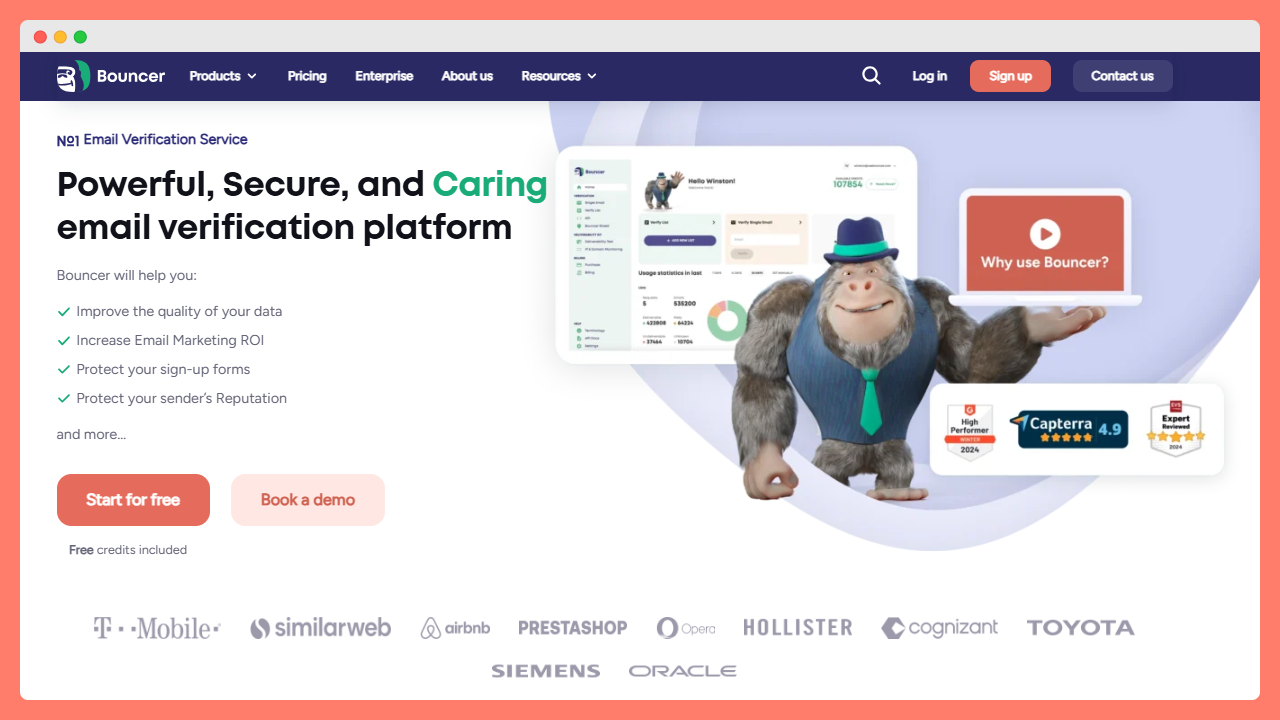
Bouncer positions itself as email verification software built for accuracy, coverage, and clarity. The platform focuses on helping teams keep sender reputation intact by identifying risky patterns early and explaining verification results in a way that supports decisions rather than confusion. Coverage matters here, since modern lists include complex domain setups and mixed-quality sources.
Bouncer emphasizes reliability and transparency, allowing teams to understand why an address is flagged and what that means for outreach.
Core Bouncer tools for cold outreach
Bouncer email verification supports both bulk verification and batch verification, making it suitable for different campaign sizes. Catch all handling and spam trap detection receive special attention, since these address types create the most uncertainty in cold outreach. The goal is not to block blindly, but to inform teams where risk lives.
Bouncer approach supports smarter filtering rather than rigid rules that remove potentially valuable contacts.
Advanced Bouncer features for modern outreach
- Toxicity Check adds another layer by identifying addresses linked to harmful sending outcomes.
- Bouncer Shield protects signup forms and data entry points from bad inputs before they enter systems.
- The Deliverability Kit helps teams understand inbox placement factors without replacing verification itself.
These features support prevention across the outreach lifecycle rather than reacting after damage appears.
Automation, integrations, and scale
AutoClean supports ongoing list cleaning by verifying contacts automatically over time. Google Sheets and other connections via Zapier and not only reduce friction by embedding verification into tools teams already use daily. Real time verification options help teams catch bad addresses at entry points instead of during campaign preparation.
Automation keeps verification consistent, especially when multiple people touch the same data.
Free tools and entry points
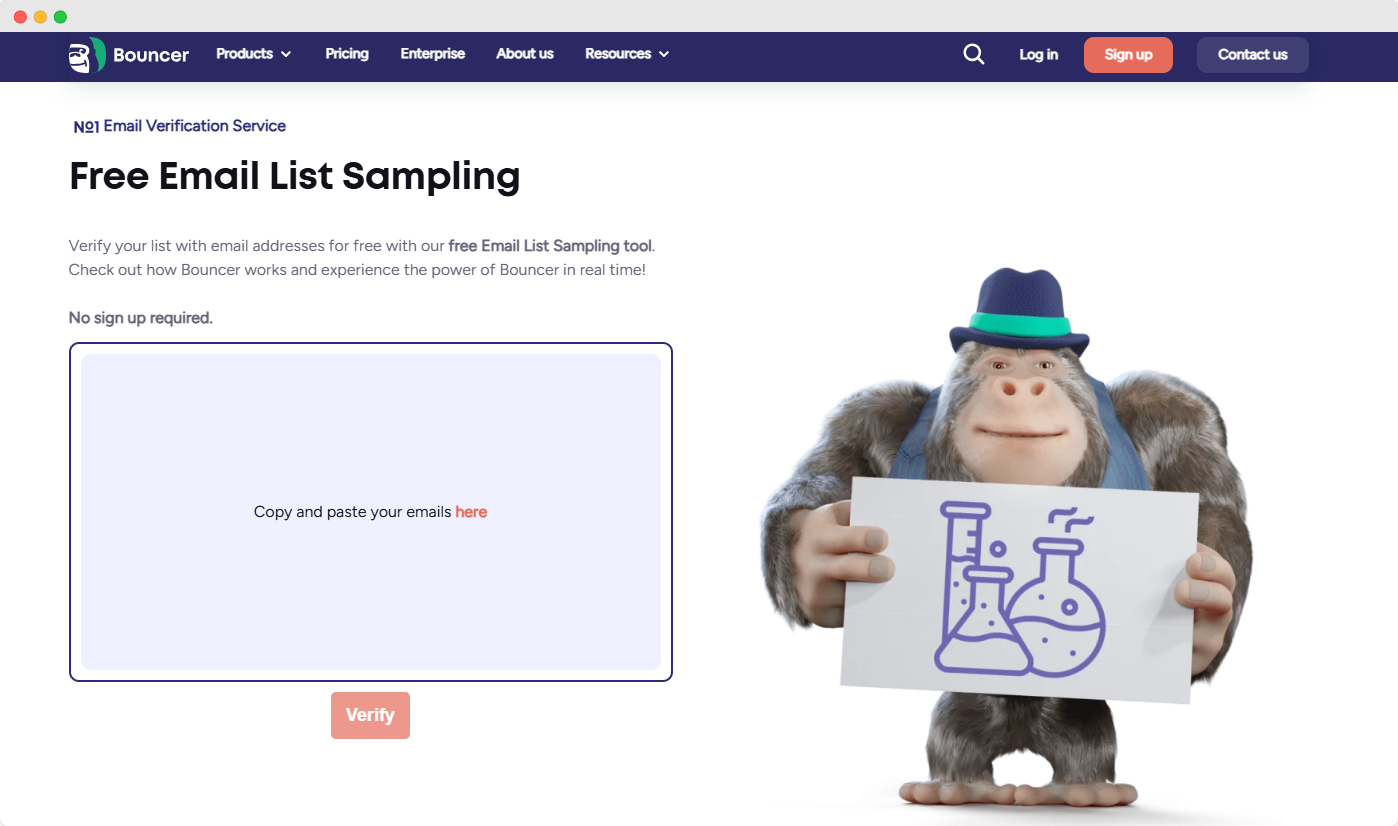
Free Email Checker and Free Email List Sampling offer low-risk ways to test list quality and understand verification output. These entry points help teams decide when verification should move from occasional checks to a regular workflow step. Moving beyond free options usually happens once outreach volume increases and data quality becomes harder to manage manually.
How to build a safer cold outreach process step by step
Knowing why verification matters is one thing, but knowing where to slot it into your actual workday is another. You can have the best verification tool in the world, but if you’re using it as an afterthought—or worse, after you’ve already hit send on half your list—you’re still playing a dangerous game with your deliverability.
Building a “bulletproof” outreach machine isn’t about adding more work; it’s about creating a sequence where data quality is checked automatically at every gate. It’s the difference between a chaotic blast and a precision strike.
Preparing contact details before verification
Good outreach starts with lead data hygiene, where obvious errors and duplicates are removed early. Domain checks help identify outdated companies and unreachable inboxes. Avoiding bad addresses early reduces noise and keeps verification focused on real decisions rather than cleanup.
Preparation shortens the path from list building to outreach readiness.
Verifying before sending cold emails
Bulk email verification works best just before campaigns launch, when lists are finalized but not yet active. Verification status decisions guide which contacts to send, pause, or exclude. Handling invalid or risky addresses deliberately protects campaigns from sudden deliverability drops.
Monitoring results after sending
Users report insights reveal patterns over time, especially when verification outcomes are compared with replies and bounces. Outreach performance signals help teams adjust targeting and sourcing rather than blaming copy alone. Long-term list health improves when verification feedback informs future lead generation choices.
Common mistakes teams make with email verification
Even the most well-intentioned sales teams can fall into habits that quietly sabotage their own success. Check out these pitfalls, where most teams lose their momentum:
Over-trusting “valid” results
A valid label does not guarantee engagement or safety. Teams that treat verification as a green light for everything miss nuance and expose campaigns to unnecessary risk.
Ignoring catch all domains
Catch all domains require careful handling. Ignoring them entirely leads to unpredictable results that skew performance analysis.
Skipping verification between campaigns
Lists change faster than teams expect. Skipping verification between campaigns allows decay to accumulate quietly, undoing earlier cleanup efforts.
Email verification for cold outreach is in your hands!
Email verification services for cold outreach exist to protect momentum. Clean lists support better inbox placement, steadier sender reputation, and clearer outreach signals over time. Verification is a practical requirement for teams that want cold outreach to remain predictable, measurable, and worth the effort.
If you want cold outreach to stay predictable and safe, start with verification that works quietly in the background. Try Bouncer and see how verified email addresses, clear risk signals, and simple workflows support better inbox placement from the first campaign. Start with the free tools, then scale when your outreach grows.


