





You already monitor inbox placement across Gmail, Outlook, and Yahoo.
You check blocklists.
You track sender reputation scores.
You verify authentication records.
You know exactly where your emails land — and where they don’t — because you learned the hard way that what you can’t see will hurt you.
Now there’s a new set of platforms gatekeeping your audience, and most email marketers aren’t monitoring them at all.
AI assistants — ChatGPT, Perplexity, Gemini, Google’s AI Overviews, Copilot — are where a growing number of marketers and business buyers go to research tools before they ever open a comparison page. “What’s the best email verification service?” “How do I reduce my bounce rate?” “Which ESPs have the best deliverability?” These questions get answered by AI now, and the answers name specific products. If yours isn’t one of them, you’ve been filtered out before the conversation even started.
Think of AI platforms as a new layer in your monitoring stack. Just like inbox placement tools show you whether Gmail is delivering your emails or burying them, AI visibility tools show you whether ChatGPT is recommending your product or sending prospects to a competitor.
Here are seven tools that give you that visibility.
1. Ahrefs Brand Radar
Best for: Full-stack AI visibility across platforms — the broadest monitoring without manual prompt setup
If inbox placement tools show you where your emails land across mailbox providers, Ahrefs Brand Radar shows you where your brand lands across AI providers. It monitors six AI platforms – ChatGPT, Perplexity, Gemini, Copilot, Google AI Overviews, and Google AI Mode – plus YouTube, TikTok, and Reddit.
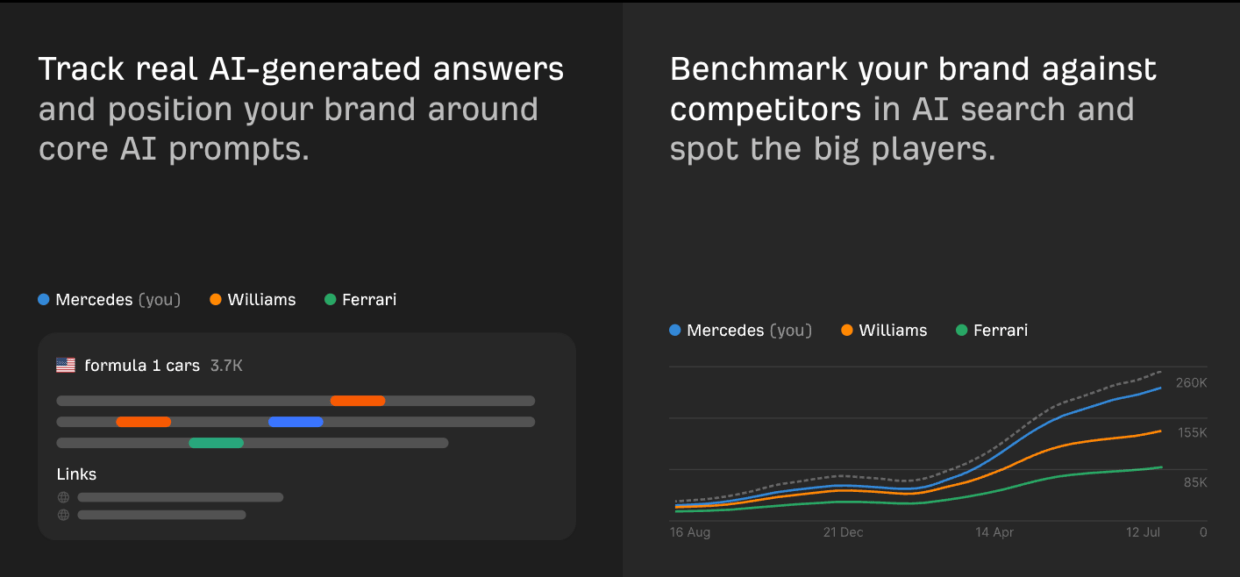
What separates Brand Radar from every other tool on this list is how it sources data. Most AI visibility tools ask you to manually add prompts — the equivalent of only checking deliverability for a handful of subject lines you pick yourself. Brand Radar works differently: it pulls from Ahrefs’ database of over 110 billion keywords, extracts real People Also Ask questions, and runs them through AI platforms at scale. You don’t have to guess that people ask “best email verification tool” — that query (and thousands like it) is already in the system.
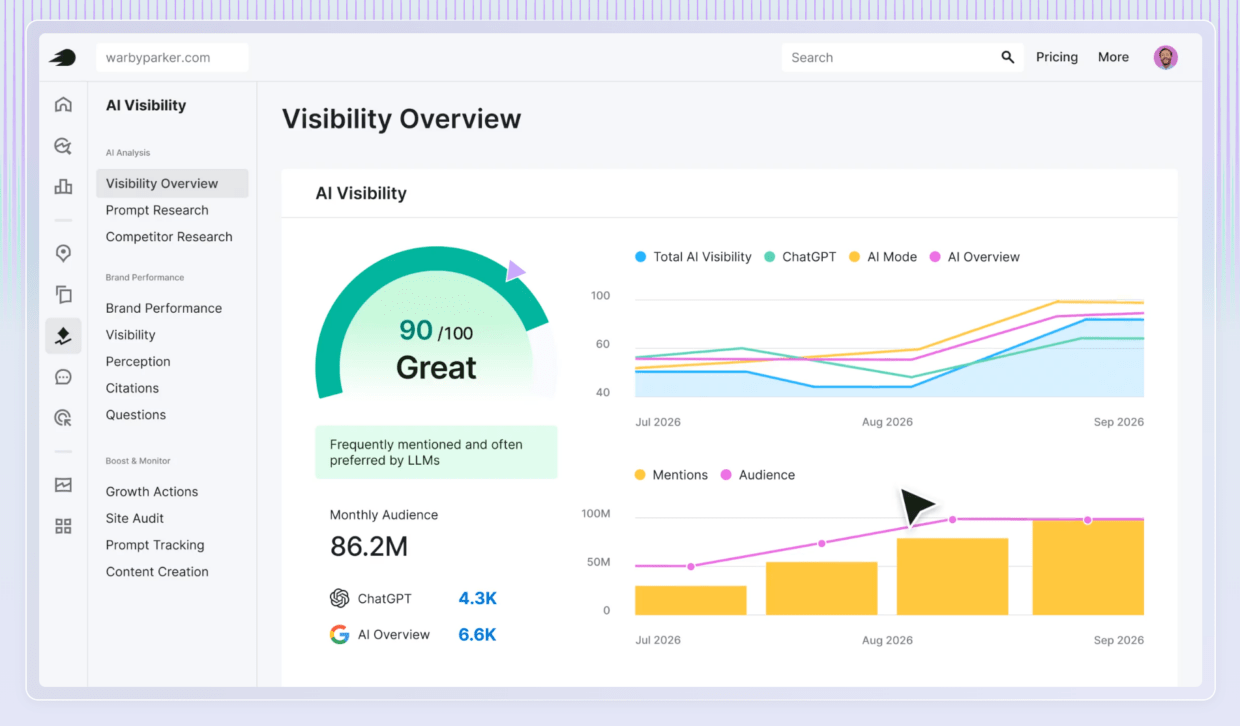
The metrics translate well to a monitoring mindset. Mentions are your presence score — how often your brand appears in AI answers. Citations show which websites AI links to when discussing your category, telling you which sources AI trusts in the email space (think of it like checking which IPs have the best sender reputation, except for content). Impressions weight mentions by actual search volume, so you see whether you’re visible for high-traffic queries or just niche ones. AI Share of Voice compares your visibility to competitors — your deliverability rate versus theirs, in AI terms.
Two reports are particularly actionable. Cited Domains reveals which websites AI references most when answering email-related questions. If a specific deliverability blog, a G2 category page, or a competitor’s knowledge base keeps getting cited, that’s the equivalent of a trusted IP range — you want to be associated with it. Cited Pages goes deeper, showing the exact URLs AI links to, so you can identify which specific competitor pages are earning the recommendations you want.
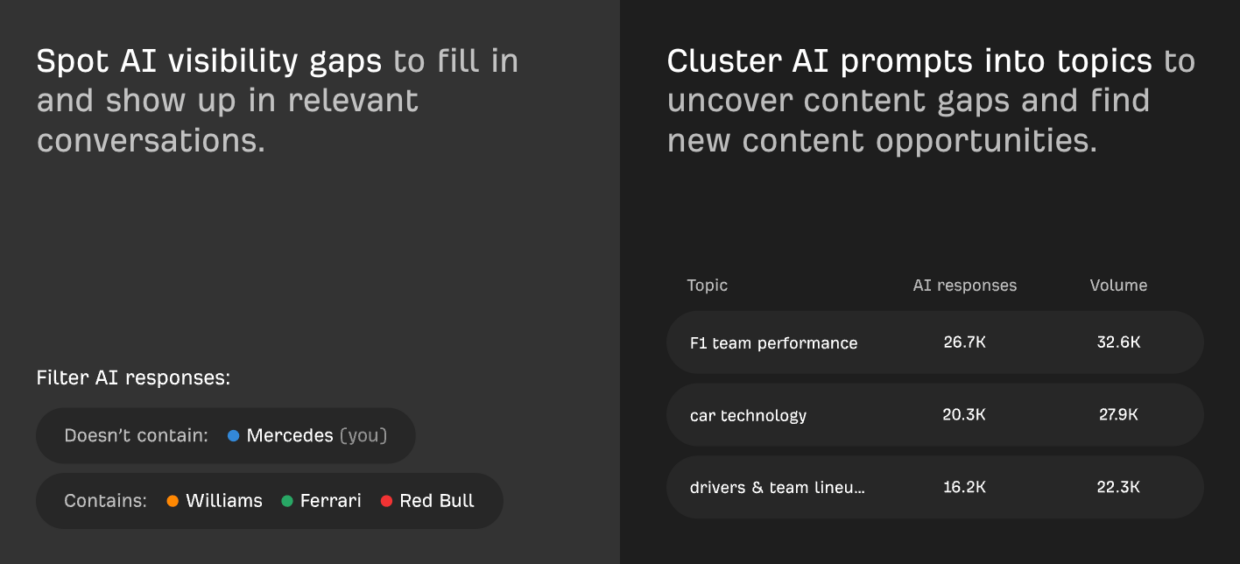
The competitive filter works like a gap analysis: enter a competitor’s name and instantly see every prompt where they get mentioned and you don’t. That’s a ready-made list of visibility gaps — the AI equivalent of finding out which mailbox providers are filtering you but not your competitor.
Brand Radar also tracks trends over time, so you can measure whether a content push or a link building campaign actually improved your AI placement. And because it’s part of Ahrefs’ broader toolkit, you can connect AI visibility data to your existing backlink, keyword, and content strategies.
Available as add-ons to Ahrefs subscriptions, with individual platform indexes or a combined package.
2. Otterly.AI
Best for: Quick, prompt-level monitoring — like a seed list test for AI answers
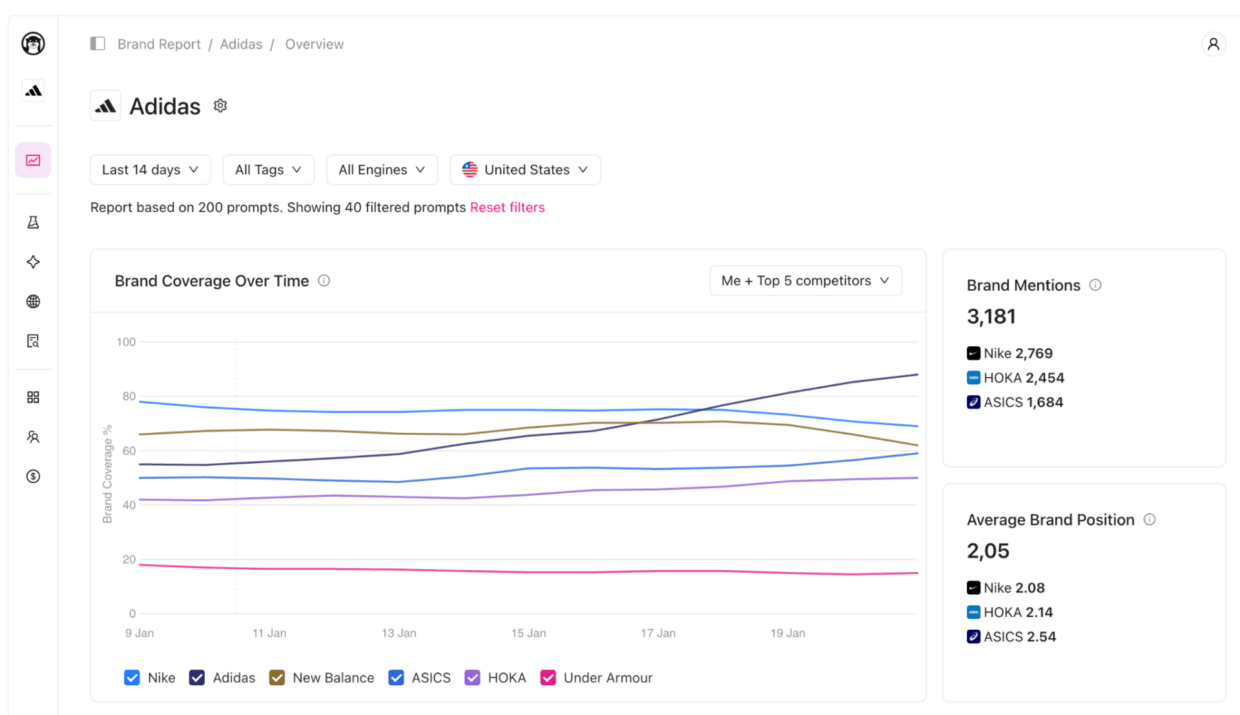
If Brand Radar is the full deliverability suite, Otterly is the seed list test. You add specific queries – “best email verification service,” “how to improve inbox placement,” “email list cleaning tools” and Otterly checks whether your brand appears in the AI-generated answer for each one across Google AI Overviews, ChatGPT, Perplexity, AI Mode, Gemini, and Copilot.
The dashboards are clean and shareable, making it easy to add AI visibility to your regular reporting alongside open rates and deliverability metrics. Otterly also runs a GEO audit that checks technical factors affecting your AI placement – schema markup, content structure, crawl accessibility – similar to how you’d audit authentication records before a big send.
The Lite tier starts at $29/month for 15 tracked prompts. That’s enough to cover the core buying queries in a single email marketing subcategory. Higher tiers (100–400+ prompts) add competitive analysis.
The trade-off: you only see results for prompts you’ve added. Queries you didn’t think of won’t show up, which is where a broader tool like Brand Radar fills the gap.
3. Semrush AI Toolkit
Best for: Adding AI placement data to an existing SEO monitoring workflow
Semrush has added AI visibility tracking to its SEO platform, primarily for Google AI Overviews. If you already use Semrush for keyword tracking and competitive research, this adds AI placement data to your existing dashboard — no new tool, no new login.
The value is seeing gaps between traditional and AI search. You might rank well for “email deliverability best practices” in Google but not appear at all in the AI Overview for the same query. Semrush surfaces that discrepancy, helping you identify which content earns AI visibility and which only performs in traditional search.
Coverage focuses more on Google’s AI products than standalone platforms like ChatGPT or Perplexity. For cross-platform monitoring, you’ll want a dedicated tool alongside it. Plans with the AI Toolkit start at $199/month.
4. Peec AI
Best for: Daily monitoring with sentiment, not just placement, but how AI positions you
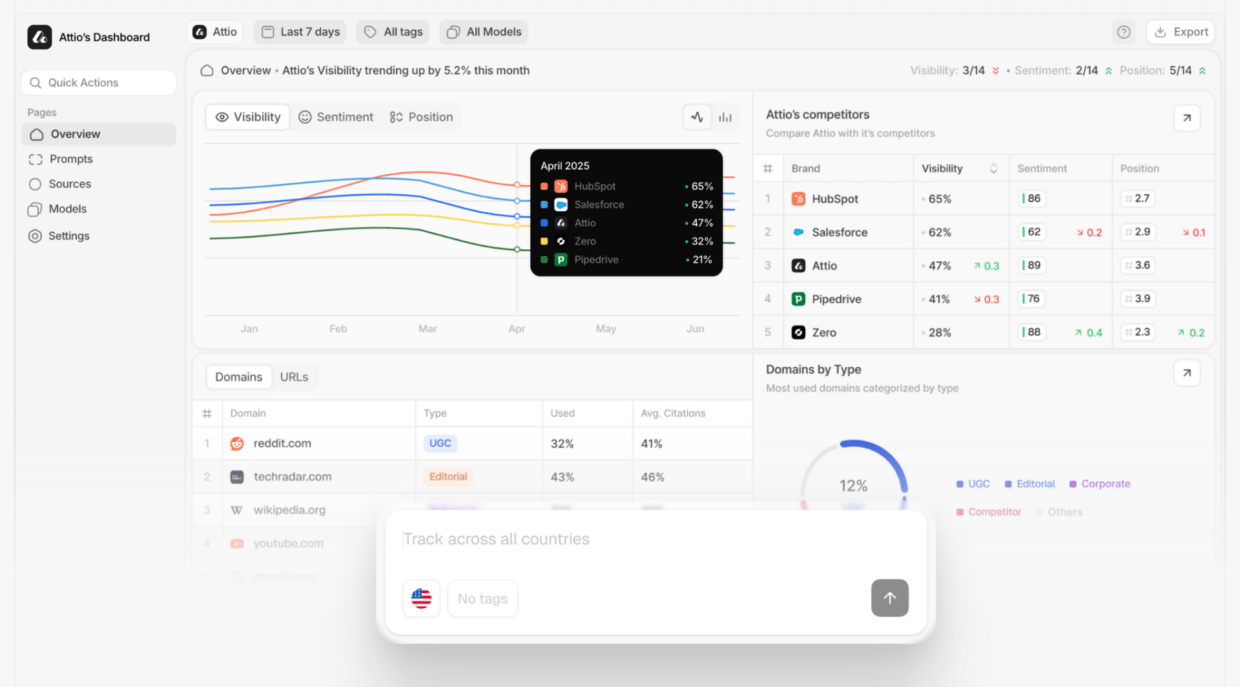
Peec AI monitors visibility across ChatGPT, Perplexity, Claude, and Gemini with daily prompt execution. In email marketing terms, it’s the difference between checking deliverability once a month and monitoring it every day; useful when AI recommendations in competitive categories shift week to week.
The feature that matters most here is sentiment tracking. Peec doesn’t just tell you whether you’re in the answer — it tells you how AI frames you. “Reliable tool with strong accuracy rates” is a different placement than “budget-friendly option with basic features.” Both register as mentions. Only one helps your pipeline. For email marketers who understand that inbox placement without good rendering is only half the battle, this distinction makes intuitive sense.
Peec also separates “used” (your content shaped the answer) from “cited” (your URL was explicitly linked). If you publish deliverability guides, authentication tutorials, or bounce rate calculators, knowing that your content informs AI answers — even without a brand mention — is a signal you’re close to earning direct recommendations.
Starts at €89/month (25 prompts). €199/month adds sentiment analysis and 100 prompts. Unlimited seats on all plans.
5. Profound
Best for: Enterprise-grade monitoring across the most AI platforms, including niche ones
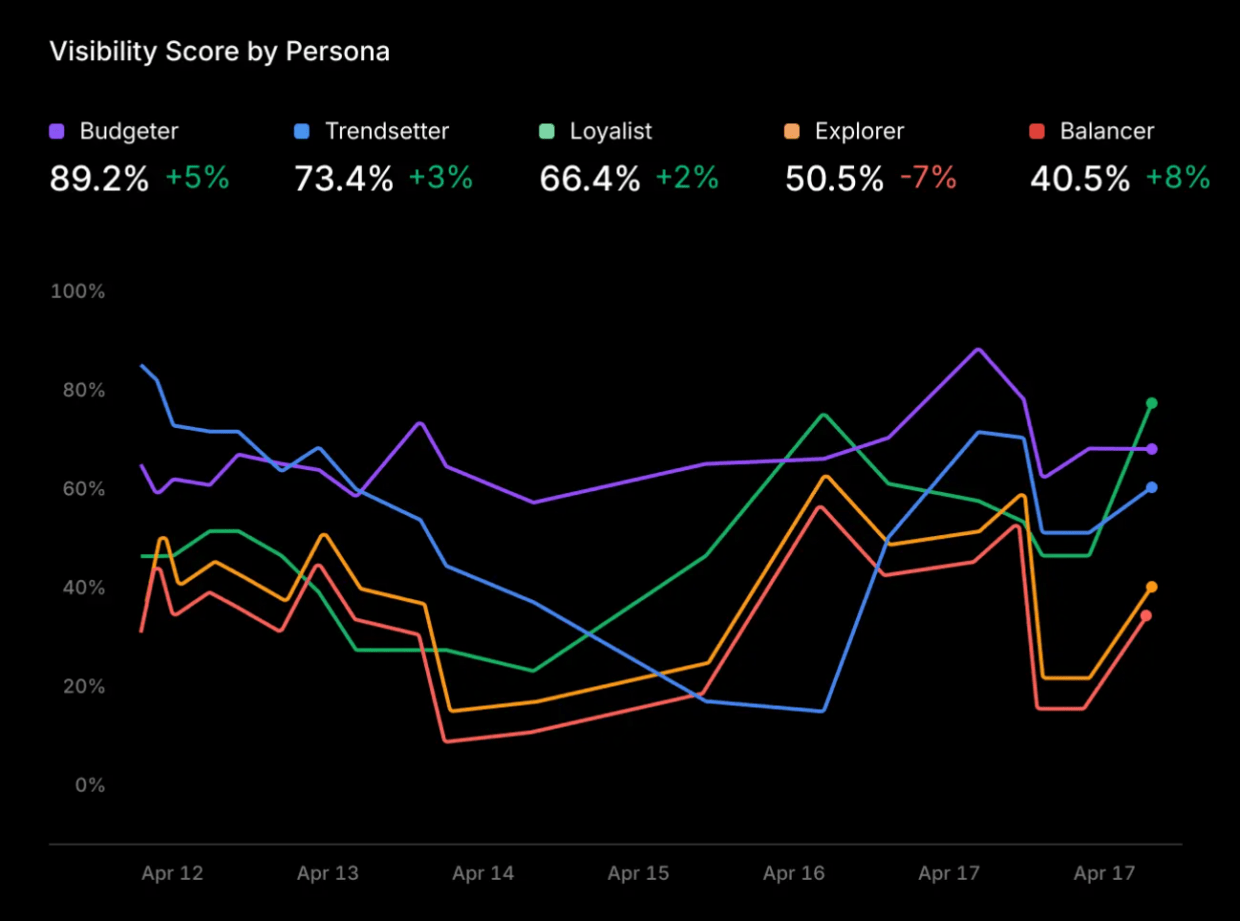
Profound monitors 10 AI platforms — ChatGPT, Perplexity, Claude, Gemini, Copilot, Google AI Overviews, Grok, Meta AI, DeepSeek, and Amazon Rufus. That’s the widest platform coverage available, relevant if your audience uses AI assistants beyond the usual suspects.
The URL watchlist lets you track whether specific pages — your deliverability guide, your pricing page, your API documentation — get cited in AI answers over time. Think of it as monitoring whether specific content assets are “getting delivered” to AI or being ignored. The Conversation Explorer shows what users are currently asking AI assistants, surfacing emerging topics before they hit keyword tools.
Enterprise pricing: $99/month (ChatGPT only, 50 prompts), $399/month (multi-platform), custom for Enterprise. Backed by Sequoia’s $35M Series B.
Same discipline, new channel
Your monitoring stack exists because you learned that invisible problems cause real damage. Emails that silently hit spam cost you more than hard bounces, because at least bounces are visible. AI visibility works the same way — when a prospect asks ChatGPT for a recommendation and your product isn’t in the answer, there’s no alert, no log entry, no analytics event. The sale just doesn’t happen.
These tools make that invisible channel visible. Start with Ahrefs Brand Radar to see how AI positions your brand across platforms, the same way you’d run a full deliverability audit before scaling a campaign. The data won’t fix your positioning, but it’ll show you exactly where to focus, which is how good monitoring has always worked.


