





An ecommerce list can look healthy until campaign day proves otherwise. You have thousands of subscribers, plenty of past customers, a few seasonal segments, and a cart recovery flow that should be printing money. Then the numbers come in: bounces, weak inbox placement, poor reactivation results, and abandoned cart emails that never got a fair shot. That is where bulk email validation for ecommerce brands becomes more than a technical cleanup task. It becomes part of revenue protection.
You’ll learn
- Why ecommerce brands need bulk email validation before major campaigns
- Which ecommerce email lists carry the most risk
- How bad email data affects abandoned carts, reactivation, retention, and deliverability
- Where Bouncer fits into an ecommerce email hygiene workflow
- Which statistics make email validation more urgent for ecommerce teams
- How bulk validation differs from real-time email validation
- How to build a practical validation process before seasonal campaigns
Why ecommerce brands need bulk email validation
Ecommerce email lists grow from many sources at once. Newsletter forms, checkout fields, discount popups, abandoned carts, loyalty programs, giveaways, product waitlists, referral campaigns, in-store signups, and old customer databases can all feed the same marketing platform.
That growth looks good on a dashboard. The problem is that not every email address has the same value.
Some customers mistype their email during checkout. Some use disposable addresses to get a discount code. Some subscribers join during a giveaway and never engage again. Some customer emails become inactive over time. Some old addresses still look valid but no longer belong to an active buyer.
Bulk email validation helps ecommerce teams check larger lists before they send campaigns. Instead of waiting for bounces, failed flows, or weak inbox placement to expose the problem, the brand can identify risky records before launch.
This matters most when the campaign has commercial weight. Black Friday, Cyber Monday, Christmas, Valentine’s Day, back-to-school, product drops, replenishment campaigns, and VIP launches all rely on email reaching real inboxes. If a large part of the list is stale or risky, the brand may lose revenue at the exact moment email should work hardest.
Bouncer’sEmail Verification can help ecommerce teams validate larger lists before campaigns. For brands that work with large databases or old customer exports, bulk email verification gives a more practical process than manual spreadsheet cleanup.
Why ecommerce email data gets messy so quickly
Ecommerce data decays for different reasons than B2B data. In B2B, people change jobs. In ecommerce, customers change habits, inboxes, and intent.
A shopper may use a personal email once to claim a discount and never open another email. Someone may create an account with a typo during checkout. A customer may abandon a cart with an email they rarely check. A contest participant may enter only for a prize. A buyer may use a secondary inbox for shopping emails, then stop checking it.
This creates a list that looks larger than it really is.
The issue is not only invalid addresses. Ecommerce brands also need to watch for low-quality signups, fake accounts, bot submissions, disposable emails, and old inactive records. These contacts can distort reporting and make segmentation less reliable.
| Ecommerce data source | Common email risk | Why it matters |
| Checkout forms | Typos, fake emails, inactive inboxes | Order updates, receipts, and post-purchase flows may fail |
| Discount popups | Disposable emails, low-intent subscribers | List size grows, but quality may drop |
| Giveaways | Fake or low-quality signups | Campaign metrics become inflated |
| Abandoned cart forms | Mistyped or secondary emails | Recovery emails may not reach shoppers |
| Loyalty programs | Old or duplicate accounts | Retention campaigns may waste sends |
| Old customer exports | Stale addresses and inactive inboxes | Reactivation campaigns carry higher bounce risk |
| Product waitlists | Fake demand and typo-heavy signups | Launch forecasts become less reliable |
| In-store signups | Manual entry mistakes | Valid buyers may miss campaigns |
Bulk email validation for ecommerce brands helps separate real opportunity from list noise. That does not mean every risky contact has no value. It means the brand needs better information before deciding who gets a campaign.
The ecommerce statistics that make validation matter
Email is still one of the most important channels for ecommerce because it supports owned audience growth, retention, lifecycle campaigns, and first-party data strategies. Litmus describes email as a high-ROI ecommerce channel that continues to outperform paid ads in many ecommerce workflows, especially when brands use segmentation and lifecycle messaging well. (Litmus)
Cart abandonment also shows why email hygiene matters. Baymard’s cart abandonment research puts the average documented online shopping cart abandonment rate at about 70%, which means most carts still need some kind of recovery path after shoppers leave. If the email address attached to that cart is wrong, old, or risky, the recovery flow starts with a broken foundation. (Baymard Institute)
Deliverability adds another layer. A 2026 report covered by TechRadar notes that nearly 18% of marketing emails fail to reach the inbox, while 60% of companies that measure email ROI report returns above $10 for every $1 spent. For ecommerce brands, that gap matters because email may be profitable on paper while a portion of potential revenue never reaches shoppers at all. (TechRadar)
This is why bulk email validation for ecommerce brands should sit near revenue planning, not only technical maintenance. If email drives abandoned cart recovery, repeat purchases, loyalty, and seasonal campaigns, list quality affects money.
What bulk email validation actually checks
Bulk email validation checks a large list of addresses and returns status information that helps you decide what to send, suppress, review, or segment.
At a basic level, validation checks whether an email has the right format. But a serious validation workflow goes deeper. It may check domain records, mail server signals, disposable domains, role-based emails, catch-all behavior, and other risk signals.
For ecommerce brands, the goal is not to create a perfect-looking export. The goal is to reduce avoidable sending risk before campaigns run.
| Validation check | What it means | Ecommerce example |
| Syntax check | Does the address use a valid format? | Finds typos like missing @ symbols |
| Domain check | Does the domain exist and receive mail? | Catches fake or inactive domains |
| Mailbox-level check | Does the mailbox appear reachable? | Reduces hard bounce risk |
| Disposable email detection | Is the address linked to temporary inbox services? | Flags discount-code abuse or low-intent signups |
| Catch-all detection | Does the domain accept many addresses? | Helps assess uncertainty for certain domains |
| Role-based detection | Is it a shared inbox like support@ or info@? | Less common in consumer ecommerce, but useful for B2B ecommerce |
| Toxicity or risk signals | Does the address carry reputation-related risk? | Helps protect sender reputation before large campaigns |
| Deliverability context | Are messages likely to reach inboxes? | Helps troubleshoot poor campaign performance |
Bouncer supports several of these checks through its verification platform, Toxicity Check, and Deliverability Kit. This matters because ecommerce brands often need more than a basic “valid or invalid” export.
Bulk validation vs real-time validation
Bulk validation and real-time validation solve different problems.
Bulk validation helps clean lists that already exist. Real-time validation checks emails at the moment someone enters them into a form, checkout page, or signup flow.
Ecommerce brands often need both.
Bulk validation is useful before a seasonal campaign, product launch, reactivation email, loyalty push, or migration to a new email platform. Real-time validation is useful at checkout, newsletter signup, account creation, abandoned cart capture, and discount popup submission.
| Validation type | Best ecommerce use case | Main benefit | Limitation |
| Bulk validation | Existing customer lists, campaign segments, old exports | Cleans large datasets before sending | Happens after bad data enters |
| Real-time validation | Checkout, signup forms, discount popups, account creation | Stops bad emails at entry | Needs setup before it works |
| Form protection | Lead capture, giveaways, newsletter forms | Blocks low-quality or risky submissions | Does not clean historic lists |
| Deliverability testing | Seasonal campaigns, inbox placement issues | Shows whether campaigns reach inboxes | Does not fix bad list data alone |
Bouncer’s email verification API can help ecommerce teams check emails in real time. Bouncer Shield can protect forms from invalid, fake, or malicious submissions. Bulk validation cleans what you already have. API and form protection help you stop collecting the same bad data again.
That is the cleaner long-term workflow.
Where bulk email validation fits in the ecommerce lifecycle
Bulk email validation is not only for newsletter sends. It can support almost every stage of the ecommerce customer lifecycle.
Acquisition
At the acquisition stage, brands collect email addresses through popups, quizzes, social campaigns, paid landing pages, influencer campaigns, and giveaways. This stage can bring high volume, but not always high intent.
A giveaway may generate thousands of subscribers, but some people join only for the prize. Discount popups may attract shoppers who use temporary emails. Paid traffic may bring bot or fake submissions if form protection is weak.
Bulk validation helps ecommerce teams check those lists before adding them to the main email program. It can prevent low-quality acquisition data from polluting future campaigns.
Conversion
At the conversion stage, email supports abandoned cart, browse abandonment, welcome offers, back-in-stock alerts, and price-drop campaigns.
If shoppers mistype emails or use inboxes they never check, these flows lose impact. A cart recovery campaign cannot recover much if messages bounce or never reach the right person.
This is why ecommerce brands should validate key segments before judging flow performance. If an abandoned cart flow underperforms, do not only blame timing, copy, or discount size. Check whether the email data can support the flow.
Retention
Retention campaigns depend on repeat access to customers. Post-purchase education, replenishment reminders, winback flows, loyalty campaigns, review requests, and VIP offers all need reachable addresses.
Old customer databases are a common risk here. A customer who bought once three years ago may still appear in the system, but their email may no longer be useful.
Bulk validation helps brands separate reachable customers from stale records before retention campaigns.
Reactivation
Reactivation is one of the riskiest email use cases. The audience is already inactive. Some contacts may not have opened for months or years. Others may use inboxes they abandoned.
Before sending a reactivation campaign, ecommerce teams should validate the list and start with safer segments. This protects deliverability and gives the campaign a better chance.
For teams unsure about full-list quality, free email list sampling can help estimate whether the segment is worth cleaning in full.
How bad email data affects ecommerce revenue
Bad email data does not only create bounces. It affects ecommerce revenue in several quiet ways.
First, it weakens campaign reach. If your list includes invalid, risky, or inactive addresses, the real reachable audience is smaller than your dashboard suggests. That can make campaign planning too optimistic. A brand may forecast revenue based on 200,000 subscribers when the useful audience is much smaller.
Second, bad data distorts metrics. If many contacts are fake, inactive, or unreachable, open rates, click rates, conversion rates, and flow performance become harder to interpret. The marketing team may change copy, creative, offers, or timing when the deeper issue is list quality.
Third, it wastes paid acquisition spend. If a brand pays for traffic that fills forms with low-quality or fake emails, the campaign may look cheaper than it really is. The cost per lead may look good, but the cost per reachable subscriber tells a different story.
Fourth, it affects deliverability. High bounce rates, poor engagement, and risky sending patterns can make mailbox providers less confident in your mail. Once inbox placement drops, even real customers may stop seeing campaigns.
Fifth, it creates operational drag. Customer support may chase account issues caused by wrong emails. Marketing may resend campaigns. Developers may investigate flow problems. Finance may question why a campaign missed the forecast.
Bulk email validation for ecommerce brands helps reduce these hidden costs. It will not fix weak offers or poor site experience. But it gives email campaigns a cleaner base before other optimization work starts.
When ecommerce brands should validate email lists
Email validation should not happen only when something breaks. The best ecommerce brands build it into campaign planning.
| Moment | Why validation matters | Recommended action |
| Before Black Friday/Cyber Monday | High volume, high revenue pressure | Validate core campaign segments early |
| Before Christmas and seasonal sales | Old segments often return to use | Clean customer and subscriber lists |
| Before reactivation campaigns | Inactive lists carry more risk | Validate and start with safer records |
| Before migration to a new ESP | Bad data can pollute the new setup | Clean before import |
| After a giveaway or contest | Lead quality may vary widely | Validate before nurturing |
| After major paid lead campaigns | Fake or low-intent signups may appear | Validate and review source quality |
| Before abandoned cart performance audits | Flow data may include bad emails | Check whether reachable emails support the flow |
| After deliverability drops | List quality may be part of the issue | Verify lists and test deliverability |
For high-volume ecommerce brands, validation should become a regular hygiene habit. For smaller brands, it should at least happen before major campaigns, old-segment sends, and platform migrations.
How Bouncer helps ecommerce brands with bulk validation
Bouncer is a strong fit for ecommerce teams because it supports more than one cleanup scenario.
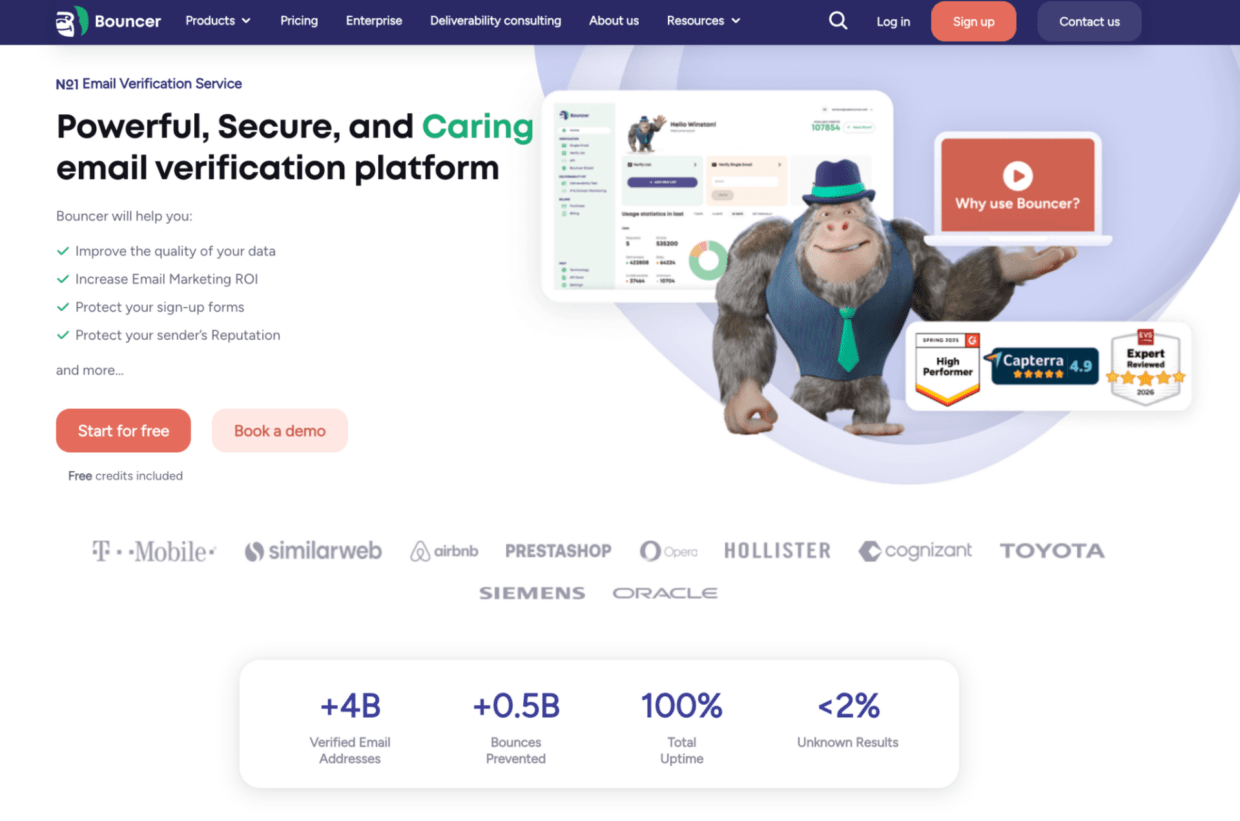
For existing lists, Bouncer’sEmail Verification helps validate email addresses before campaigns. For large files, bulk email verification gives teams a faster way to check customer lists, newsletter segments, and reactivation audiences.
For ecommerce forms, the email verification API can validate emails at the moment of entry. This matters for checkout, product waitlists, discount popups, loyalty signups, and account creation. Bouncer Shield can also help protect forms from invalid or malicious emails.
For risky contacts, Toxicity Check gives ecommerce teams another layer of insight. This can be useful when the brand has old lists, questionable acquisition sources, or large reactivation campaigns.
For inbox placement, Deliverability Kit helps teams test inbox placement, authentication, and blocklists. This gives more context when email performance drops and the team needs to know whether the problem is list quality, sending setup, or both.
Bouncer also offers integrations, which can reduce manual work for brands that already use marketing platforms and ecommerce workflows.
How to validate ecommerce email lists before a major campaign
A good validation process should be simple enough that the team can repeat it before every important send.
Step 1: choose the segment
Do not validate the whole database automatically if the campaign only targets part of it. Start with the segment that will receive the campaign: VIP customers, inactive subscribers, past buyers, cart abandoners, loyalty members, or seasonal shoppers.
This keeps the process focused and helps you understand risk per campaign type.
Step 2: export clean data
Export the email address, customer ID, subscription status, source, and any segmentation fields you need. Do not include unnecessary personal data. Keep the file clean and easy to map back into your marketing platform.
Step 3: run bulk validation
Upload the list to your validation tool. With Bouncer, this means using bulk verification to check the addresses and return status categories.
Step 4: review categories before deleting anything
Do not blindly delete every record that is not perfect. Invalid addresses should not receive campaigns. Risky or uncertain records may need segmentation, suppression, or lower-volume testing depending on your brand’s risk tolerance.
Step 5: create a suppression or exclusion file
Rather than permanently removing every record from your customer database, use suppression logic where appropriate. Ecommerce records may still connect to orders, customer history, loyalty points, or support cases. Email sending rules and customer records are not always the same thing.
Step 6: monitor the campaign
After the campaign sends, monitor bounce rate, inbox placement, complaints, engagement, and revenue. Validation gives the campaign a better starting point, but performance still depends on offer, timing, segmentation, creative, and deliverability.
How to decide what to do with validation results
Ecommerce teams should define rules before launch day. Otherwise, every campaign turns into a rushed debate.
| Validation result | Suggested action | Ecommerce note |
| Valid | Send normally | Still monitor engagement |
| Invalid | Suppress from campaigns | Keep customer record if tied to orders |
| Disposable | Suppress or segment carefully | Often linked to low-intent signups |
| Risky | Review before sending | Depends on campaign importance and list source |
| Unknown | Exclude from high-volume campaigns | Consider testing only in low-risk scenarios |
| Toxic | Suppress | Treat as reputation risk |
| Role-based | Review | More relevant for B2B ecommerce or wholesale lists |
| Catch-all | Segment cautiously | Less common for consumer domains, but relevant for business buyers |
This kind of rule set helps marketing, ecommerce, CRM, and customer support teams stay aligned.
Validation for abandoned carts and reactivation campaigns
Abandoned cart and reactivation campaigns deserve special attention because they sit close to revenue but carry very different risks.
Abandoned cart emails target high-intent shoppers. They already browsed, selected products, and reached checkout or cart stage. Baymard’s research shows cart abandonment remains extremely common, with an average documented rate above 70%. That means ecommerce brands have a large recovery opportunity, but the email attached to the cart needs to work.
If shoppers mistype emails at checkout, use secondary inboxes, or submit disposable addresses for discount codes, cart recovery flow performance can suffer. The team may think the offer is weak when the real issue is unreachable contacts.
Reactivation campaigns are different. These contacts already showed low engagement or inactivity. Some are real customers who may buy again. Others are stale records that should not receive aggressive campaigns.
For reactivation, bulk validation should happen before the campaign. Start with safer contacts, segment by recent activity, and avoid sending old inactive lists at full volume. This protects sender reputation and gives the campaign a cleaner test.
Ecommerce teams should not treat cart abandonment and reactivation as the same hygiene problem. Cart abandonment needs better data capture and flow protection. Reactivation needs list validation, segmentation, and careful sending.
Bulk validation and ecommerce compliance
Email validation can support cleaner consent and data handling, but it does not replace compliance work.
Ecommerce brands still need to respect opt-in rules, unsubscribe preferences, regional privacy laws, and platform policies. A valid email address does not mean you have permission to contact someone. A deliverable address does not mean the campaign is lawful or welcome.
This matters for brands selling across regions. Rules can vary depending on where the customer lives, where the company operates, and how the address was collected. GDPR, CAN-SPAM, CASL, and other regulations do not all work the same way.
Validation helps with data quality. Consent management handles permission. Suppression lists handle who should not receive campaigns. A responsible ecommerce workflow needs all three.
Bulk email validation vs list cleaning vs deliverability testing
These terms often get mixed together, but they solve different problems.
| Process | Main question | Best ecommerce use case |
| Bulk email validation | Can these addresses receive email safely enough to send? | Campaign prep, CRM cleanup, reactivation |
| Email list cleaning | Which records should we remove, suppress, or update? | Database hygiene and segmentation |
| Real-time validation | Should this email enter our system now? | Checkout, forms, signups, popups |
| Deliverability testing | Will our emails reach inboxes? | Seasonal campaign QA and troubleshooting |
| Consent management | Are we allowed to email this person? | Compliance and subscription rules |
Bulk email validation for ecommerce brands works best when it sits inside a broader email hygiene workflow. It should not act as a one-time fix for every email problem.
Common mistakes ecommerce brands make with bulk validation
The first mistake is waiting until the night before a major sale. If your Black Friday campaign launches tomorrow and validation shows a large risky segment, you have little time to adjust the plan.
The second mistake is deleting records without thinking. A customer email may be invalid for campaigns but still belong to an order record. Suppression is often safer than permanent deletion.
The third mistake is ignoring the source. If one discount popup produces lots of disposable emails, cleaning the list later does not solve the root issue. Add real-time validation or form protection.
The fourth mistake is validating once and assuming the list stays clean forever. Email data decays. Ecommerce brands need regular checks, especially before big campaigns.
The fifth mistake is treating deliverability as only a list problem. A clean list helps, but authentication, sending volume, domain reputation, content, and engagement still matter.
The sixth mistake is measuring list size instead of reachable audience. A smaller, cleaner list can outperform a larger, riskier one because more emails reach real shoppers.
Where bulk validation can improve ecommerce reporting
Bulk validation can make ecommerce reporting more honest.
If your email platform reports 500,000 subscribers, that number may include invalid, risky, inactive, or disposable addresses. Once you validate the list, you may find the real reachable audience is smaller. That can feel uncomfortable, but it gives the team better planning data.
Cleaner lists can improve how you read:
- Campaign reach
- Deliverable audience size
- Revenue per recipient
- Flow performance
- Cost per email subscriber
- Paid acquisition quality
- Reactivation potential
- Customer retention signals
For example, if a paid campaign brings 20,000 email signups but 15% fail validation, the real cost per usable subscriber is higher than the media report suggests. That insight helps ecommerce teams cut poor-quality sources before they waste more budget.
A practical validation cadence for ecommerce brands
Not every brand needs to validate every list every week. The cadence should match volume, risk, and campaign calendar.
| Brand situation | Suggested validation cadence | Why |
| Small ecommerce brand with monthly sends | Before major campaigns and reactivation sends | Keeps cost controlled while reducing big risks |
| Fast-growing DTC brand | Monthly plus before seasonal events | List growth can bring quality issues |
| Brand running constant paid lead gen | Real-time validation plus periodic bulk checks | Prevents fake or low-quality signups |
| Brand with large old database | Validate before reactivation or migration | Old records carry higher risk |
| Brand preparing for Black Friday | Validate key segments several weeks before launch | Allows time to adjust plans |
| Brand with deliverability issues | Validate lists and run deliverability tests | Checks both data quality and inbox placement |
| B2B ecommerce or wholesale brand | Validate before sales outreach and account campaigns | Company domains may create catch-all risk |
This gives teams a reasonable balance. You do not need to clean everything constantly, but you should never send high-stakes campaigns to unverified old lists.
Key takeaways
- Bulk email validation for ecommerce brands helps protect revenue, sender reputation, and campaign performance.
- Ecommerce lists get messy through checkout typos, discount popups, giveaways, abandoned carts, old customer records, and inactive subscribers.
- Cart abandonment remains a major ecommerce challenge, which makes reachable email addresses critical for recovery flows.
- Bouncer supports ecommerce workflows through bulk email verification, Email Verification API, Bouncer Shield, Toxicity Check, Deliverability Kit, and integrations.
- Bulk validation cleans existing lists, while real-time validation and form protection stop bad data before it enters your systems.
- Ecommerce teams should validate before seasonal campaigns, reactivation sends, ESP migrations, giveaways, and old-list campaigns.
- Validation does not replace consent management, deliverability testing, or good segmentation, but it makes each of them stronger.
Conclusion
Bulk email validation for ecommerce brands is not about making a list look tidy. It is about giving campaigns a fair chance to reach real shoppers.
Ecommerce email drives cart recovery, retention, loyalty, product launches, seasonal revenue, and customer reactivation. When the list contains invalid, risky, disposable, or stale addresses, those campaigns start at a disadvantage.
Bouncer gives ecommerce teams a practical way to validate existing lists, protect forms, check emails in real time, assess toxicity, and troubleshoot deliverability. That makes it useful before big campaigns and valuable as an ongoing email hygiene layer.
FAQ
What is bulk email validation for ecommerce brands?
Bulk email validation for ecommerce brands is the process of checking large customer, subscriber, or campaign lists before sending emails. It helps identify invalid, risky, disposable, or uncertain addresses so brands can reduce bounces and protect sender reputation.
When should ecommerce brands validate email lists?
Ecommerce brands should validate lists before major campaigns, Black Friday, reactivation sends, ESP migrations, giveaways, and old customer database campaigns. Fast-growing brands should also validate regularly because list quality can change quickly.
Does email validation help abandoned cart campaigns?
Yes, email validation can help abandoned cart campaigns because those flows depend on reachable shopper addresses. If the email captured during checkout is wrong or risky, the recovery message may never reach the customer.
Is bulk validation better than real-time validation?
Neither is better in every case. Bulk validation cleans existing lists, while real-time validation checks emails as shoppers enter them. Ecommerce brands often need both because historic data and new signups create different risks.
Can Bouncer validate ecommerce customer lists?
Yes. Bouncer can validate ecommerce customer lists through bulk email verification. It also offers Email Verification API, Bouncer Shield, Toxicity Check, Deliverability Kit, and integrations for broader ecommerce hygiene workflows.
Should ecommerce brands delete invalid emails?
Not always. Invalid emails should usually be suppressed from campaigns, but some records may still connect to orders, support history, or customer accounts. Suppression is often safer than permanent deletion unless your data retention rules say otherwise.
Does bulk email validation improve deliverability?
Bulk validation can support deliverability because it reduces bounces and risky sends. It does not solve every deliverability problem alone. Authentication, sender reputation, engagement, complaints, and content also matter.
How often should ecommerce brands clean email lists?
Small brands can validate before major campaigns and reactivation sends. Larger brands or brands that collect many new leads should validate monthly or add real-time validation to forms. Any brand with deliverability issues should validate lists before the next large send.


