




A trial signup belongs to a target account, but nobody spots it until two days later. A lead enrichment workflow for inbound SDRs solves this problem by turning raw inbound records into verified, enriched, prioritized leads before SDRs waste time guessing.
You’ll learn
- What an inbound SDR enrichment workflow should include
- Why email verification should happen before enrichment and routing
- How Bouncer supports verification, Company Data Enrichment, Toxicity Check, AutoClean, API, Shield, and Deliverability Kit
- Which fields help inbound SDRs prioritize leads faster
- How to separate reachable leads, enriched leads, qualified leads, and sales-ready leads
- Where lead scoring, routing, and suppression fit into the process
- How to keep the workflow useful without creating CRM clutter
Why inbound SDRs need enrichment before outreach
Inbound leads are not automatically good leads.
They may have shown intent, but that intent can vary wildly. One person requests a demo from a target enterprise account. Another downloads a guide with a personal email. Another signs up for a webinar using a typo. Another fills out a form on behalf of a student project. Another submits a business email but works at a company outside the ICP.
Without enrichment, SDRs have to research all of that manually. They open LinkedIn, search the company site, check CRM history, inspect the email domain, guess company size, ask who owns the account, and decide whether the lead deserves same-day outreach.
That creates delay. Delay hurts inbound because the lead’s interest is fresh only for a short window. If the lead is high-fit and ready to talk, the team needs to know that quickly.
A lead enrichment workflow for inbound SDRs adds structure. It verifies whether the email is usable. It adds company context. It checks source and intent. It scores fit. It routes the lead to the right person. It suppresses bad records before they waste SDR time.
The goal is not to make every inbound lead look impressive. The goal is to tell SDRs which leads deserve immediate action, which need nurture, which need review, and which should not enter outreach at all.
Verification comes before enrichment
Inbound workflows often jump straight to enrichment because enrichment feels commercially useful. Company size, industry, region, role, and account data help SDRs act faster. But if the email address is invalid, toxic, disposable, or fake, enrichment only makes a bad record look more complete.
Verification should come first.
Bouncer’s email list verification checks whether email addresses appear deliverable without sending emails to recipients. Bouncer says its verification checks syntax, DNS and MX records, SMTP server signals, and proprietary verification logic.
For live inbound flows, Email Verification API can validate email addresses inside forms, apps, signups, and workflows. Bouncer’s API page also notes use cases such as verifying emails before mass send-outs and identifying free email addresses when a B2B business prefers business emails.
This matters for SDRs because a lead that cannot be reached should not be routed like a normal hot inbound. It may need correction, suppression, or review. Verification protects the sales queue from unreachable records.
Once the email passes basic quality checks, enrichment becomes much more useful.
What enrichment adds for inbound SDRs
Lead enrichment adds context that the form did not capture or that the lead did not provide clearly.
For inbound SDRs, useful enrichment usually means company-level and account-level context, not random personal details. Company name, domain, country, company size, industry, LinkedIn profile, founding year, and account context can help the SDR understand whether the lead fits the ICP and how urgent the follow-up should be.
Bouncer’s Company Data Enrichment enriches customer data with publicly available company information. Bouncer’s enrichment workflow starts with uploading a full email list for verification, then selecting enrichment, and its article on customer data enrichment says enriched fields can include company name, country, founding year, industry, LinkedIn profile, and company size.
That order is useful for inbound SDRs: verify first, enrich usable records, then route.
Enrichment helps answer questions such as:
- Is this a target account?
- Is the company large enough for sales-led follow-up?
- Which region owns the lead?
- Is the email domain business or personal?
- Does this company match an active opportunity?
- Is the lead from an existing customer account?
- Does the industry fit our strongest use case?
- Should this go to SDR, AE, partner team, or nurture?
A good enrichment workflow gives SDRs context without asking them to become data researchers for every lead.
The inbound lead should become a decision record
Raw inbound leads are usually incomplete. A strong workflow turns each lead into a decision record.
That means the CRM record should not only store what the lead submitted. It should store what the system learned and what should happen next.
| Field group | Example fields | Why SDRs need it |
| Email quality | Verification status, toxicity status, disposable flag, role-account flag | Shows whether the lead is reachable and safe to contact |
| Source and intent | Form name, campaign, page, offer, UTM, webinar, trial, demo request | Explains why the lead entered |
| Company context | Company name, domain, industry, size, country, LinkedIn profile | Helps judge fit and personalize follow-up |
| Routing logic | Region, territory, owner, queue, account match | Sends the lead to the right team |
| Qualification | Fit score, engagement score, ICP tier, lifecycle stage | Helps SDRs prioritize |
| Suppression | Unsubscribe, hard bounce, complaint, do-not-contact | Prevents outreach mistakes |
| Follow-up state | SLA timer, next action, last activity, meeting booked | Keeps inbound response organized |
| Review flags | Personal email, catch-all, unknown, missing company, duplicate | Shows which leads need human judgment |
This is the operational center of a lead enrichment workflow for inbound SDRs. The workflow should not only add data. It should guide action.
Fit and intent should be scored separately
Many teams build one lead score and hope it tells sales everything. That usually becomes noisy.
Inbound SDRs need two ideas: fit and intent.
Fit asks whether the lead matches the company’s ideal customer profile. Company size, industry, region, business model, account tier, and role can all contribute to fit.
Intent asks whether the lead is showing meaningful buying interest. Demo requests, pricing page visits, trial activity, product usage, high-intent form submissions, repeated visits, webinar attendance, and replies can all contribute to intent.
HubSpot’s lead scoring product page says lead scoring helps teams prioritize and qualify leads, using fit and engagement scores to help shorten sales cycles and increase conversions. (hubspot.com) HubSpot Academy also frames lead scoring and routing as useful when organizations have many leads and limited resources to manage them.
This distinction helps SDRs avoid two mistakes.
A high-fit lead with no buying intent should not be treated like a demo request. A high-intent lead from a poor-fit company may need nurture, self-serve, or disqualification rather than expensive SDR effort.
A good workflow scores both, then routes accordingly.
Routing is where enrichment becomes revenue work
Enrichment only matters if it changes what happens next.
Salesforce’s help documentation explains that lead assignment rules specify how leads are assigned to users or queues. (help.salesforce.com) In practice, routing can use enriched fields such as region, company size, industry, account tier, existing owner, product interest, and source.
A lead enrichment workflow for inbound SDRs should route leads based on business rules, not random availability.
High-fit demo requests might go straight to an SDR or AE queue with a short SLA. Enterprise leads may route by territory. Existing customer leads may go to customer success or expansion. Students, vendors, competitors, and poor-fit contacts may go to nurture or suppression. Personal email leads may need enrichment or review before sales touches them.
| Lead profile | Recommended route | Reason |
| Verified business email + high-fit company + demo request | SDR or AE queue | High urgency and clear intent |
| Verified target account + trial signup | SDR or product-led sales queue | Product activity plus account fit |
| Personal email + high-intent form | Review or enrichment first | Company context is unclear |
| Invalid or toxic email | Suppress or hold | Outreach may fail or create risk |
| Existing customer account | Customer success or expansion | Avoid duplicate new-business routing |
| Small low-fit company | Nurture or self-serve | SDR time may not be efficient |
| Webinar attendee + medium fit | Nurture or SDR follow-up based on engagement | Intent is weaker than demo |
| Competitor, vendor, student, irrelevant role | Exclude or low-priority workflow | Poor sales fit |
Routing turns enrichment from “nice data” into sales efficiency.
Bouncer in the inbound SDR workflow
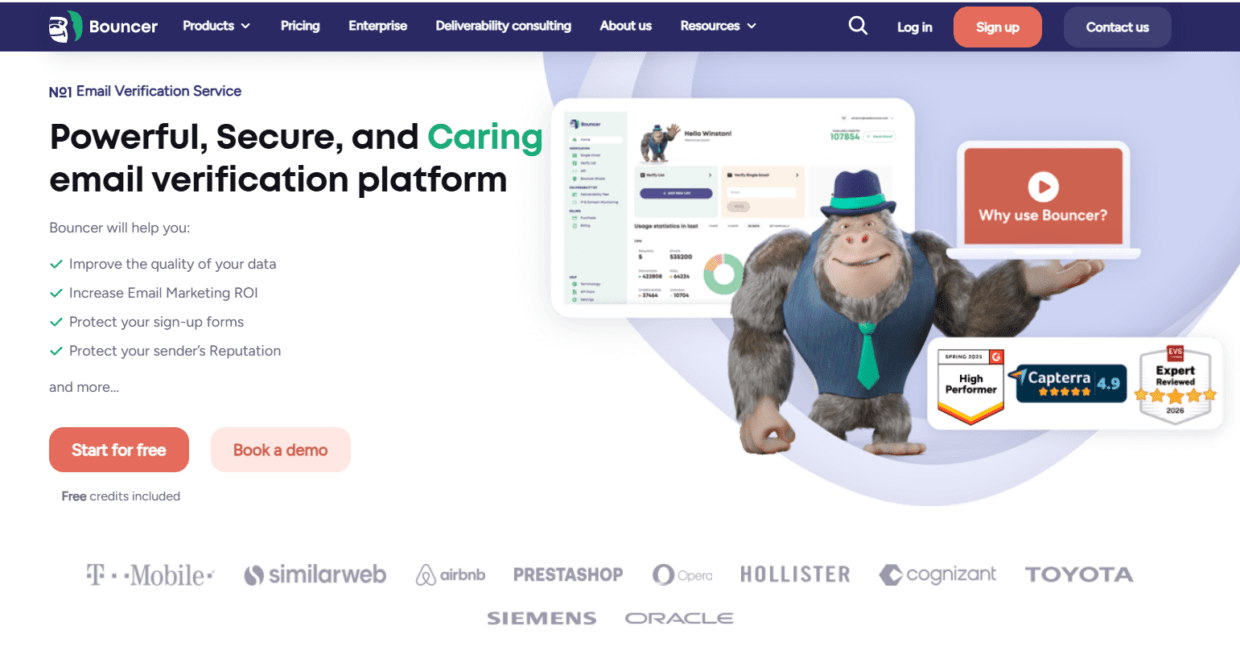
Bouncer fits several points in the inbound SDR workflow.
At the form level, Email Verification API can validate emails before records enter sales workflows. Bouncer Shield can help protect forms from invalid, fake, or malicious submissions. This prevents bad inbound records from becoming MQLs or SDR tasks.
After capture, email list verification or bulk verification can clean existing inbound databases, especially if the team is auditing old form submissions, webinar lists, or trial signups.
Toxicity Check can help identify risky records before outreach or nurture. This matters because inbound forms can still attract spam, fake users, disposable addresses, and low-quality submissions.
Company Data Enrichment can add publicly available company context after verification. That helps SDRs see company name, country, industry, LinkedIn profile, founding year, and size where available.
AutoClean can help keep connected lists cleaner over time. Bouncer’s AutoClean page describes recurring verification, automatic verification of new contacts, reverification of existing contacts, and export rules such as Keep, Suppress, and Quarantine based on verification and toxicity.
Deliverability Kit can help sales and marketing teams check inbox placement, blocklists, SPF, DKIM, DMARC, and SpamAssassin before larger inbound nurture sends.
This gives SDR teams a cleaner intake layer before manual work begins.
The personal email problem
Inbound SDRs often see personal emails in forms: Gmail, Outlook, Yahoo, iCloud, and local consumer providers.
A personal email is not automatically bad. A founder may use Gmail. A buyer may test a product with a personal inbox. A consultant may submit on behalf of a client. A small business owner may not use a company address.
But personal emails create ambiguity in B2B. The SDR cannot easily see company size, domain, industry, or account match. Lead routing becomes weaker. Lead scoring may overvalue intent and undervalue missing fit.
Bouncer’s Email Verification API can identify free email addresses, which B2B teams can use to ask for a business email or flag the record for review.
A practical rule: do not automatically reject every personal email. Instead, route by intent.
A personal email requesting a demo may deserve manual review. A personal email downloading a generic guide may go to nurture. A personal email signing up for a trial may need product behavior before SDR outreach. A personal email with invalid or disposable traits should be suppressed or held.
The workflow should reduce ambiguity, not blindly block possible buyers.
The duplicate and account-match problem
Inbound leads rarely arrive in a clean sequence.
Someone from an existing account downloads a guide. Another person from the same company requests a demo. A customer uses a different email address for a webinar. A past lead returns after six months. A target account appears through a trial signup. A duplicate record gets created because the email domain differs from the company domain.
Enrichment should help account matching.
Company domain, company name, LinkedIn profile, country, and industry can help match new inbound leads to existing accounts. Verification helps keep duplicate cleanup from wasting time on invalid or fake records. CRM rules can then route the record to the current owner, expansion queue, or new-business team.
This is important because SDRs lose time when records fragment. They may contact a lead who already has an owner, miss account history, or duplicate outreach from another rep.
A strong workflow checks whether the inbound lead is new, known, linked to an existing account, tied to an open opportunity, or connected to a customer.
Speed-to-lead without bad data
Inbound teams often obsess over speed-to-lead. That makes sense. Fast response can matter, especially for high-intent requests.
But speed without data quality creates waste. If every form submission triggers an SDR task instantly, the queue fills with invalid emails, vendors, students, fake records, duplicates, and poor-fit contacts. SDRs move quickly, but not necessarily toward revenue.
The better workflow is near-real-time quality control.
Verification should happen at entry. Obvious invalids should not become normal tasks. Toxic or disposable records should be held. High-fit enriched leads should route quickly. Ambiguous leads should go to review. Low-fit leads should enter nurture or self-serve paths.
This keeps speed for the leads that deserve speed.
A lead enrichment workflow for inbound SDRs should not slow down the best leads. It should stop low-quality records from stealing response time.
What SDRs should see before outreach
An inbound SDR should not need to research from zero.
Before outreach, the record should show:
- Email verification status
- Company name
- Company domain
- Company size
- Industry
- Country or region
- Lead source
- Form or offer
- Campaign
- Lifecycle stage
- Existing account match
- Recent activity
- Fit score
- Intent score
- Suppression status
- Suggested next action
This does not need to be a huge dashboard. It needs to be visible enough for the SDR to answer: should I contact this lead, how quickly, and with what context?
The best workflow reduces the number of tabs an SDR has to open before sending the first useful email.
When enrichment should not trigger SDR outreach
Not every enriched lead deserves SDR action.
A record can have company data and still be low priority. It may be outside the ICP. It may belong to a tiny company. It may have no intent beyond downloading a beginner guide. It may be a vendor. It may be a student. It may be from a region the company does not serve. It may belong to a competitor. It may have a valid email but no consent for sales outreach.
Enrichment should improve judgment, not inflate the sales queue.
For inbound SDRs, the worst workflow is one where every enriched lead becomes “sales-ready” just because the record looks complete. A full record is not the same as a qualified record.
Keep the threshold clear. SDR outreach should usually require reachability, eligibility, fit, and intent. If one of those is missing, the record may need nurture, review, or suppression.
A useful scoring model for inbound SDRs
A simple scoring model can help SDRs prioritize without overcomplicating the CRM.
| Score area | Positive signals | Negative or caution signals |
| Reachability | Verified valid, business email, recent verification | Invalid, toxic, disposable, unknown, stale verification |
| Fit | Target industry, right company size, served region, target account | Poor-fit industry, too small, unsupported region |
| Intent | Demo request, trial activity, pricing page, reply, high-intent form | Generic download, no product activity, weak source |
| Account context | Existing target account, active opportunity, customer expansion fit | Duplicate, competitor, vendor, student |
| Engagement | Recent visits, webinar attendance, email clicks, product use | Long inactivity, no engagement, prior opt-out |
| Routing confidence | Clear territory, owner, queue, lifecycle stage | Missing company, personal email, no source |
This model separates why a lead is strong. It also shows why a lead is weak.
Inbound enrichment for different lead types
Demo requests deserve the fastest workflow. Verify the email, enrich the company, match the account, check territory, and route quickly.
Trial signups need both verification and product context. A trial from a target company with activation signals deserves more SDR attention than a trial with no activity.
Webinar leads need a softer workflow. Attendance, engagement, company fit, and topic relevance should shape follow-up. Not every registrant needs SDR outreach.
Content downloads often need nurture first. Enrichment can help segment them, but intent may be too weak for immediate sales action unless fit is unusually strong.
Contact-us forms vary. A support request should not go to SDR. A partnership inquiry should go elsewhere. A buying question should route to sales.
Agency or reseller inquiries need their own path. They may be valuable, but not for the same SDR workflow as direct buyers.
This is why lead source and intent must stay visible. Enrichment without source context can cause wrong follow-up.
Preventing dirty inbound data at the source
Inbound hygiene should start at the form.
Bouncer Shield can help protect forms from invalid, fake, or malicious email submissions. Email Verification API can validate emails inside workflows. Together, they help prevent bad data from entering the CRM and becoming SDR work.
Use stronger validation on high-intent forms:
- Demo requests
- Contact sales
- Trial signups
- Pricing requests
- Partner inquiries
- Enterprise consultation requests
- Webinar registrations with sales follow-up
For lower-intent content downloads, teams may choose a lighter rule, but they should still flag invalid, disposable, personal, or risky records.
A good workflow treats form type differently. A demo request deserves stricter routing quality than a newsletter signup. But every form that creates a sales task should have some quality control.
Keeping enrichment privacy-aware
Inbound enrichment should stay practical and limited.
Company-level enrichment is usually easier to justify than collecting broad personal details. Company name, country, industry, size, domain, and public company profile can support routing and segmentation without turning the CRM into a data landfill.
Do not enrich fields that SDRs never use. Do not collect sensitive personal attributes for normal sales outreach. Do not add data just because a provider offers it. Do not use enrichment to override consent or suppression.
Bouncer’s Company Data Enrichment focuses on publicly available company information, which fits a lean B2B workflow. The goal is not maximum data. It is enough context for better sales action.
Measuring whether the workflow works
A lead enrichment workflow for inbound SDRs should improve business outcomes, not only CRM completeness.
Track:
- Verified lead rate
- Invalid rate by form
- Disposable rate by source
- Toxicity rate
- Time to first qualified touch
- SLA completion
- Sales-accepted lead rate
- Meeting-booked rate
- No-show rate
- Opportunity creation rate
- Conversion by enriched segment
- Disqualification reasons
- Routing accuracy
- Duplicate rate
- Manual research time
If verification reduces fake leads but sales acceptance does not improve, routing or fit scoring may be weak. If enrichment improves routing but SDRs still waste time on invalid emails, verification should move earlier. If demo requests from personal emails convert well, do not block them blindly. If a source produces many toxic or invalid records, stop treating it as a normal inbound channel.
The workflow should teach the team which sources, forms, and segments produce real pipeline.
What not to do
- Do not enrich every record before checking whether the email is valid.
- Do not route invalid or toxic leads to SDRs.
- Do not treat personal emails as automatically worthless.
- Do not treat enriched leads as automatically sales-ready.
- Do not combine fit and intent into one score without understanding which one is weak.
- Do not let form submissions create sales tasks before basic quality checks.
- Do not hide verification status from SDRs.
- Do not let duplicate records split account history.
- Do not add enrichment fields nobody uses.
- Do not overwrite suppression with a new lead source.
An inbound SDR workflow should reduce noise. If it creates more fields, more tasks, and more confusion, it is not working.
How Bouncer fits into the final workflow
Bouncer supports the workflow from entry to action.
At entry, Email Verification API and Shield help validate form submissions and block bad records. After capture, verification and Toxicity Check help separate reachable leads from risky ones. Company Data Enrichment adds useful company context to verified B2B emails. AutoClean helps keep connected lists cleaner over time. Deliverability Kit helps check sender readiness before larger nurture or sales-email campaigns.
Then the CRM uses those fields for scoring and routing. HubSpot, Salesforce, or another CRM can route based on fit, intent, region, owner, lifecycle stage, and account match. Bouncer supplies the email-quality and company-context layer that makes the CRM workflow more reliable.
That is the point of a lead enrichment workflow for inbound SDRs: give reps fewer bad leads, better context, and clearer next actions.
Key takeaways
- A lead enrichment workflow for inbound SDRs should verify emails, enrich company context, score fit and intent, route leads, and suppress bad records.
- Verification should happen before enrichment because invalid or toxic records should not receive more investment.
- Bouncer supports inbound SDR workflows through email list verification, Email Verification API, Bouncer Shield, Company Data Enrichment, Toxicity Check, AutoClean, Deliverability Kit, integrations, and bulk verification.
- Fit and intent should be scored separately so SDRs know whether a lead is a good company match, a high-intent request, or both.
- Enrichment becomes valuable only when it changes routing, prioritization, segmentation, or follow-up quality.
- Personal emails should be reviewed by context, not rejected automatically.
- SDRs should see verification status, company context, source, activity, account match, and suggested next action before outreach.
- The workflow should improve verified lead rate, routing accuracy, speed-to-lead, meeting-booked rate, and sales-accepted lead quality.
Conclusion
Inbound SDRs should not have to guess which leads are real, reachable, relevant, or urgent. A lead enrichment workflow for inbound SDRs gives them a cleaner path from form submission to first touch.
The right order matters. Verify the email. Remove risky records. Enrich company data where useful. Score fit and intent separately. Route the lead based on territory, account context, and urgency. Keep suppression rules visible. Measure whether the workflow improves accepted leads and meetings, not only field completion.
Bouncer fits this workflow because it helps teams validate inbound emails, protect forms, enrich company data, flag toxic records, automate hygiene, and support deliverability checks. That gives SDRs better leads and fewer dead ends.
Try Bouncer now – the first 100 credits are on the house!
FAQ
What is a lead enrichment workflow for inbound SDRs?
A lead enrichment workflow for inbound SDRs is a process that verifies inbound emails, enriches company data, scores fit and intent, routes leads to the right owner, and suppresses bad records before SDRs begin outreach.
Should inbound leads be verified before enrichment?
Yes. Verification should usually happen before enrichment because invalid, toxic, disposable, or fake emails should not receive more data investment or enter normal SDR queues.
How does Bouncer support inbound SDR workflows?
Bouncer supports inbound SDR workflows through email list verification, Email Verification API, Bouncer Shield, Company Data Enrichment, Toxicity Check, AutoClean, Deliverability Kit, integrations, and bulk verification. These tools help clean, enrich, and protect inbound lead data.
What fields should inbound SDRs see?
Inbound SDRs should see email verification status, company name, domain, industry, company size, country, lead source, campaign, account match, fit score, intent score, owner, lifecycle stage, and suppression status
Should personal email leads go to SDRs?
Sometimes. Personal email leads should not be rejected automatically. A personal email from a high-intent demo request may deserve review, while a personal email from a low-intent download may go to nurture.
What is the difference between fit and intent?
Fit measures whether the lead matches your ideal customer profile. Intent measures whether the lead is showing buying interest. Inbound SDRs need both because a high-fit lead with weak intent needs a different follow-up from a high-intent poor-fit lead.
Does enrichment replace lead scoring?
No. Enrichment supplies data that can improve lead scoring, but scoring still needs clear rules. Good scores combine reachability, fit, intent, account context, engagement, and suppression.
How do I measure an inbound enrichment workflow?
Measure verified lead rate, invalid rate, enrichment match rate, routing accuracy, time to first touch, sales-accepted lead rate, meeting-booked rate, opportunity creation, disqualification reasons, and manual research time saved.


