





The best email verification tools for B2B leads help you clean, validate, and monitor email lists so outreach campaigns perform better and messages reach decision-makers on time.
Below is a practical breakdown of the best email verification tools for professional B2B use, how they differ, what they do well, and where they fall short. You’ll also find a detailed checklist at the end to help you pick the right email verification tool based on your workflow, tech stack, and future campaigns.
TL;DR
- B2B email verification needs stronger accuracy, deeper domain checks, and smooth integrations because corporate data decays fast and comes from many sources.
- Bouncer stands out as the most reliable choice for B2B teams thanks to its accuracy, speed, and flexible workflows, while tools like ZeroBounce, NeverBounce, and DeBounce fit narrower use cases.
- The best tool depends on your data sources, volume, integrations, and security needs — and most teams benefit from pairing one primary verifier with occasional secondary checks.
Why B2B leads need stronger verification than B2C leads
B2B workflows rely heavily on email verification because you often work with multiple tools, external databases, and signup forms that collect lead data through different channels. Each source adds inconsistencies. With B2B contacts, stakes are higher: a single high-value lead is worth much more than a typical consumer record.
A clean list gives you:
- higher inbox placement
- lower bounce rates
- fewer spam complaints
- better campaign management
- stronger sender reputation over time
The catch: B2B data hygiene requires more than a quick syntax scan. You need real time verification, strong bulk email verification, and advanced analytics that help you spot invalid or risky addresses early. The tools in the list below focus on exactly that.

Best email verification tools for B2B leads
Bouncer — the most reliable verification platform for B2B senders
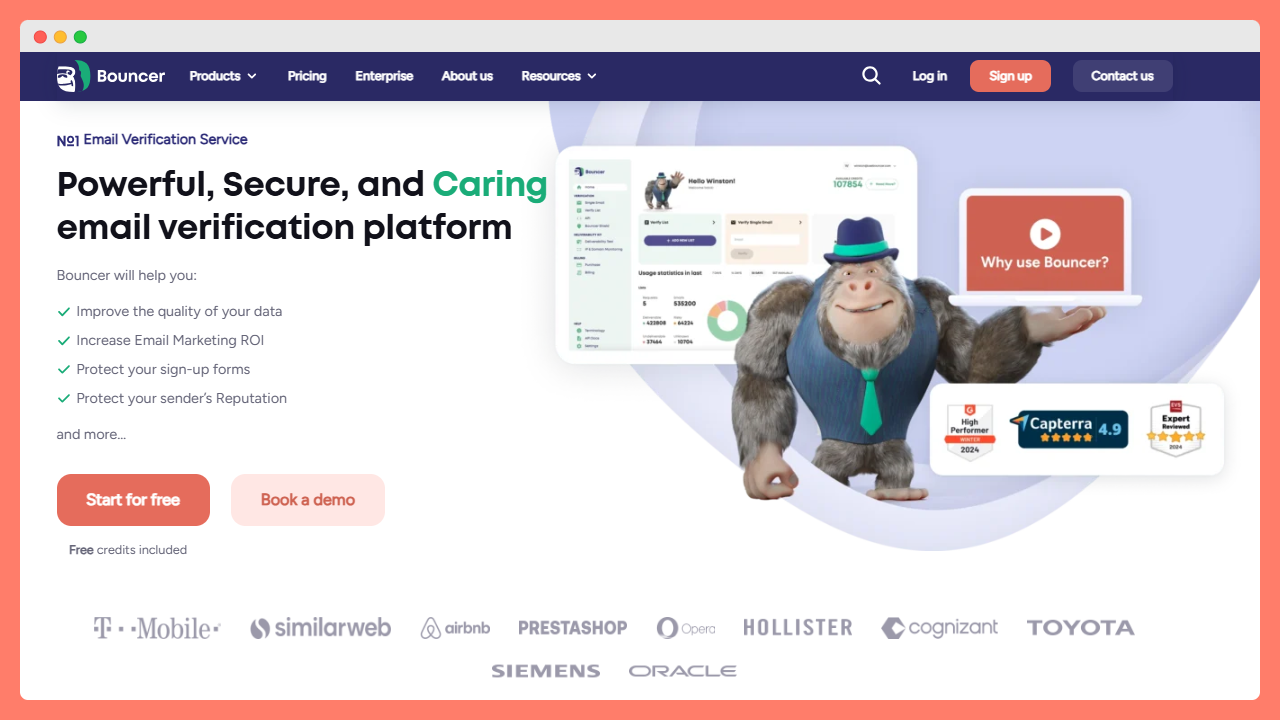
Bouncer remains one of the best email verification tools because it balances accuracy, scale, and usability. It’s popular among B2B marketers, SDRs, CRM admins, and anyone who runs outbound campaigns that depend on clean lead data. It delivers reliable verification across individual checks, bulk uploads, and ongoing list hygiene, and it offers advanced verification logic designed specifically for B2B use cases.
Why Bouncer stands out
B2B lists often mix personal emails, corporate domains, odd naming conventions, and role-based accounts. Bouncer’s email verification software handles all of these patterns without breaking your workflow. Its verification process checks catch all domains, risky addresses, mailbox providers, formatting issues, and active server responses. This reduces manual errors and helps you avoid hitting spam traps or invalid addresses.
You can use Bouncer as a standalone tool, import lists through Google Sheets, connect it to your existing systems, or trigger checks through an API based validation flow inside your outreach platforms. The Google Sheets add on allows quick bulk verification without switching tools. It works smoothly with marketing platforms, CRMs, and sales engagement platform setups — making integration capabilities one of its strongest value points.
Moreover, you can use many advanced features, like AutoClean, Data Enrichment, Toxicity Checks, Email Engagement Insights, and more!
Free credits and pricing model
Bouncer’s free credits lets teams test email verification before committing. When paid plans start, you get the flexibility of a pay as you go credit system instead of heavy subscriptions. This makes budgeting predictable even for large outbound campaigns.
What Bouncer could improve
If you want unlimited verification or blended deliverability tools (like blacklist monitoring or a separate tool that tests inbox placement), you’ll still need multiple providers. But unlike other tools, Bouncer doesn’t oversell features — it keeps marketing claims honest, which is refreshing in a crowded market.
Best for
Sales teams, marketing ops, and revenue teams who want a reliable platform, seamless integration options, and an interface that reduces manual work across importing external lists.
ZeroBounce — strong depth, but slower and heavier for B2B workflows
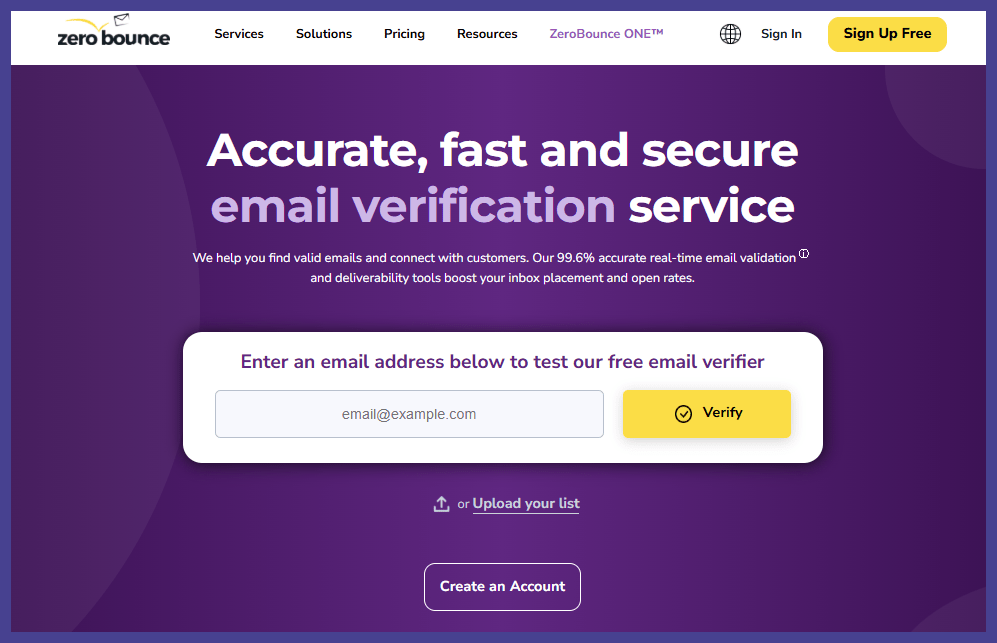
ZeroBounce is one of the most well-known email verification services, and it has strong technical capabilities. It can filter bad data, detect disposable inboxes, and analyze mailbox behavior with advanced features that go deeper than basic email validation services.
But for B2B needs, the tool can feel heavy. The dashboard is more complex than necessary for teams that only need consistent bulk verification and clear scoring.
Strengths
- robust email deliverability checks
- good detection of catch all addresses
- multiple tools inside one account
- solid data security practices
Weak points
- slower processing during peak times
- verification credits expire, which frustrates pay as you go users
- the interface isn’t the most user friendly for faster campaign management
- add-ons make total cost higher than expected
Best for
Teams that want deeper deliverability analysis rather than speed and simplicity.
NeverBounce — accurate but not ideal for B2B scaling
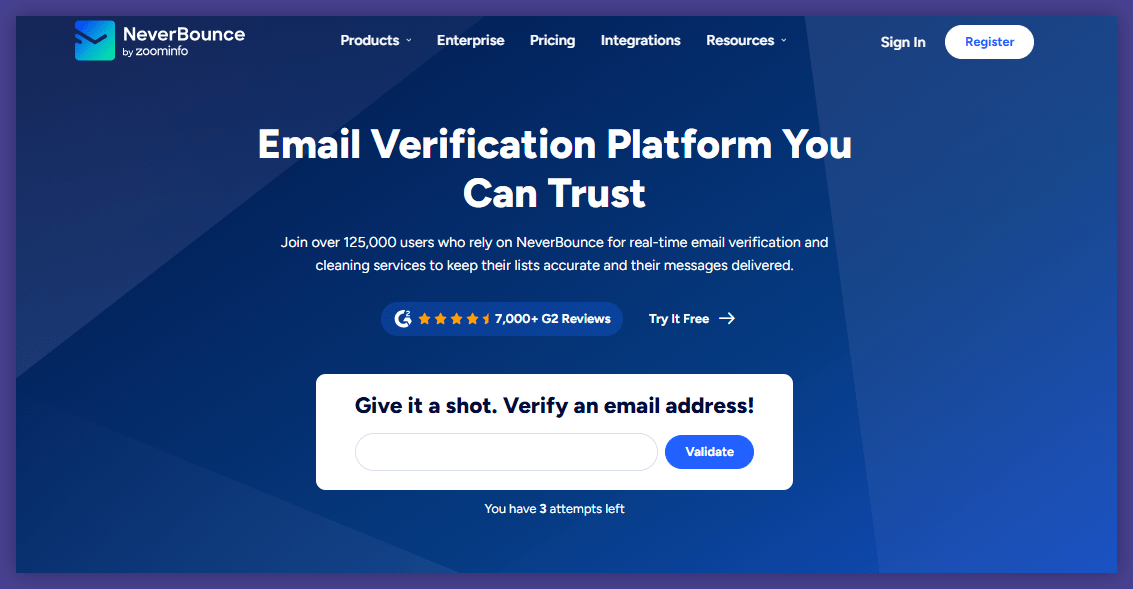
NeverBounce was once the go-to email verification service for cold email tools. It offers a clean interface and consistently strong verification accuracy.
However, B2B users often outgrow it. The importing external lists experience is slower, bulk uploads take longer, and integration pathways with outreach campaigns feel dated.
Strengths
- accurate catch-all detection
- easy to run bulk verification jobs
- reduces hard bounces reliably
Weak points
- limited advanced verification depth
- fewer integration capabilities compared to newer providers
- paid plans can feel steep when dealing with large data volumes
Best for
Smaller firms that need stable verification tools without advanced automation.
DeBounce — cost-efficient but inconsistent for corporate domains
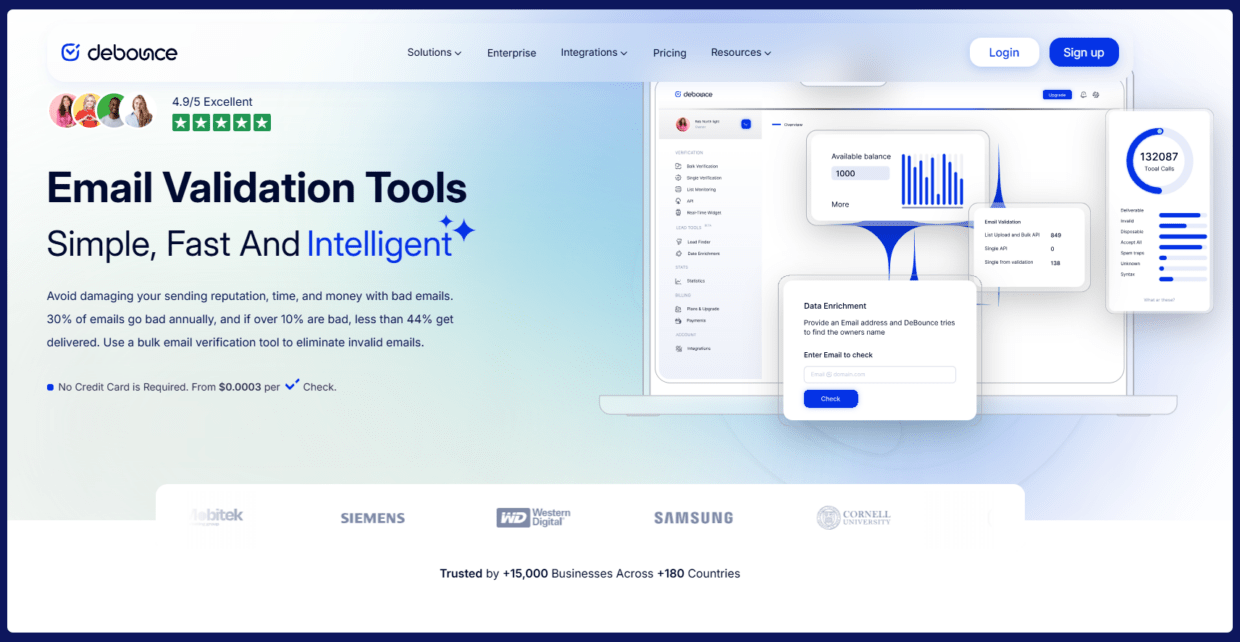
DeBounce offers strong pricing and a clean UI, making it one of the more accessible email verification tools. It works well for consumer lists, startup leads, and mixed-source databases.
For B2B lists, however, results can vary. Corporate domains with strict mailbox providers and aggressive spam filters sometimes return “unknown” results more often than competitors. This isn’t a dealbreaker but limits its usefulness for outbound campaigns that rely on accuracy.
Strengths
- very competitive pricing
- easy to run bulk uploads
- works well as a separate tool for occasional checks
Weak points
- weaker performance with enterprise-grade catch all domains
- not enough advanced verification options for complex B2B workflows
Best for
Teams with light validation needs and strict budgets.
How to evaluate any email verification software for B2B needs
Choosing the right tool isn’t only about accuracy. B2B workflows use multiple providers, data sources, tools, and automation layers. Your verification tools must match that ecosystem.
Below is a structured framework to guide your decision.
Understand your data sources
Ask where your leads come from:
- outreach platforms
- CRMs
- ads
- LinkedIn workflows
- signup forms
- web scraping
- purchased databases
- offline events
- partner imports
The more sources you have, the more important cross-tool consistency becomes. A reliable verification tool should support multiple import pathways and reduce manual steps.
Decide if you need bulk verification often
B2B teams often process lists of:
- inbound demo requests
- lead enrichment results
- trade show signups
- weekly exports
- scraped databases from outreach campaigns
You need bulk email verification that is fast, predictable, and accurate on corporate domains. Tools that struggle with enterprise catch all addresses will introduce uncertainty into your lead generation and outreach workflows.
Check how the tool handles technical challenges
Corporate mail servers behave differently from consumer inbox providers. You need tools that understand:
- mailbox providers’ anti-abuse rules
- strict spam filters
- server throttling
- greylisting
- role-based emails
- low-reputation domains
- private servers behind firewalls
A good verifier has advanced features that decode these signals.
Test integration capabilities early
The right tool connects to your existing systems with minimal friction:
- CRM environment
- marketing platforms
- outreach tools
- email marketing software
- sales engagement platform flows
- custom pipelines
- Google Sheets or a google sheets add on
If a tool forces you to export and reformat files constantly, it will slow your team down.
Consider your volume and the pricing model
B2B teams cycle between quiet periods and large outbound campaigns. This means you want:
- pay as you go flexibility
- predictable credit system policies
- no forced upgrades
- transparency in paid plans
Some vendors promise unlimited verification at small price points — but this usually leads to accuracy trade-offs. Be cautious with unlimited claims.
Look for meaningful reporting, not vanity stats
You want verification tools that provide:
- detailed mailbox behavior
- risk scoring
- deliverability patterns
- spam traps insight
- breakdowns by domain type
- flagged corporate firewalls
- advanced analytics on list hygiene
These help refine future campaigns.
Validate data security
Good email verification software should clearly explain:
- how data is stored
- where it is processed
- GDPR/CCPA compliance
- retention rules
- encryption policies
B2B leads are highly sensitive business contacts, so data security must be a non-negotiable requirement.
What B2B teams should expect from a modern email verification service
Modern email validation services must solve more than basic syntax errors. They should help you:
- protect sender reputation
- clean imported lists
- detect catch all addresses
- filter invalid addresses
- catch risky addresses early
- ensure email deliverability stays high
- adapt outbound campaigns based on risk scoring
- avoid the spam folder
- identify mailbox providers with strict filtering
- preserve the accuracy of lead data
A service that does all of the above gives you more confidence when planning targeted campaigns.
When to use multiple tools instead of one
There are cases where using multiple tools makes sense:
- you want a second opinion on unknown corporate mail servers
- your lists mix B2B and B2C contacts
- you want to compare key features and performance
- you need both verification and blacklist monitoring
- your workflow needs both light checks and deep, advanced verification
Most large revenue teams use one primary verifier (often Bouncer) and keep one secondary verifier for occasional double-checks, especially when dealing with enterprise accounts or unusual deliverability issues.
Common mistakes B2B teams make with verification tools
Relying only on free plan checks
Free tiers rarely include bulk verification or strong detection of corporate server rules.
Believing marketing claims instead of testing actual results
Always upload your real data and see how results compare across tools.
Treating verification as a one-time task
List hygiene is continuous, especially when lead generation processes run daily.
Expecting one tool to replace all deliverability tools
Verification solves one part of the pipeline; you still need inbox placement and monitoring in many cases.
Assuming outreach platforms validate perfectly
Outreach sequences often rely on external validation. A separate tool is still needed.
A practical comparison table for B2B email verification use cases
| Vendor | Best for | Strengths | Limitations |
|---|---|---|---|
| Bouncer | B2B sales + marketing | Accurate, fast, great integrations, clean UI | Doesn’t replace deliverability monitoring |
| ZeroBounce | Enterprise IT involvement | Deep technical tests | Slower, heavy interface |
| NeverBounce | SMB outbound teams | Accurate and stable | Lacks advanced analytics |
| CaptainVerify | Budget-first teams | Simple, flexible pricing | Limited B2B depth |
| DeBounce | Startups + light usage | Affordable, easy | Mixed results for corporate servers |
Full checklist: How to choose the right email verification tool for B2B leads
Use this when evaluating vendors:
Data accuracy
- Detects catch all domains reliably
- Flags invalid addresses with precision
- Catches risky addresses and spam traps
- Handles enterprise mail servers
- Provides up to date information on mailbox statuses
Scalability
- Supports bulk uploads without delays
- Works well for ongoing outbound campaigns
- Provides verification credits with predictable pricing
Speed
- Serves real time verification for signup forms and CRM workflows
- Processes large datasets quickly
- Doesn’t slow during peak times
Integration depth
- Works inside existing systems and marketing platforms
- Has API based validation
- Offers clean importing external lists flows
- Has seamless integration with tools like Google Sheets
Reporting
- Provides meaningful list hygiene insights
- Offers domain-level breakdowns
- Supports advanced analytics for future campaigns
Security
- Strong data security
- Clear retention, encryption, and compliance claims
Ease of use
- User friendly interface
- Reduces manual errors
- Supports teams with different technical skill levels
Final takeaway: pick the right tool, not the loudest vendor
The B2B email verification market is noisy. Lots of vendors make bold promises, yet B2B workflows are more complex than most tools admit. You need verification tools that understand how corporate domains work, how outreach platforms behave, and how deliverability shifts across inbox providers.
If you want a clean, stable, and reliable platform that doesn’t require technical expertise, Bouncer is the strongest starting point. It balances accuracy, scale, integrations, and transparency without overwhelming you with unnecessary extras.
Clean lead data is the foundation of every successful sales motion — and the right tool helps you protect your sender reputation before a single email goes out.
→ Try Bouncer with a free plan and see how much cleaner your B2B lists become.


