





After a busy Q4, most lists carry a bit of invisible baggage:
- contacts who signed up in a rush,
- subscribers who tuned out during the holidays,
- and engagement numbers that looked fine in December but feel softer now.
None of this means something went wrong. It just means your list did what lists naturally do under pressure.
A January mailing list health check isn’t about hitting delete or starting from zero. It’s about pausing, reading the signals, and setting the list up for steadier sending in the months ahead: before small issues turn into deliverability problems you only notice when results dip.
What usually breaks on mailing lists after Q4
Before jumping into metrics or cleanup tactics, it helps to understand what typically shifts after a heavy end-of-year sending period. Most issues aren’t dramatic. They show up quietly, in patterns you only notice if you know where to look.
Think of this as a traffic-light check for your list health.
🟢 green light: normal post-holiday behavior
These signals look different in January, but they’re part of a healthy reset.
Engagement usually softens once the promo season ends. Fewer opens and clicks don’t automatically mean people lost interest; many subscribers are simply catching up, unsubscribing from clutter, or mentally switching gears after the holidays. A small drop here is expected.
You might also see slightly lower conversion intent. That’s the seasonality doing its thing.
🟡 yellow light: signs your list is getting tired
This is where most lists land after Q4.
You’ll notice open rates drifting down week over week, not crashing, just sliding. Clicks become more selective. Subscribers who used to engage occasionally now ignore most sends. Unsubscribes may tick up, even if spam complaints stay low.
Nothing here calls for panic. These are signals to slow down, segment more carefully, and rethink who actually needs to receive every campaign.
🔴 red light: signals you shouldn’t ignore
These are the signs worth acting on early, before deliverability takes a hit.
Bounce rates that creep upward, especially soft bounces, often point to inboxes that went inactive during Q4. Spam complaints appearing after “normal” campaigns can suggest fatigue, not bad content. And if engagement drops sharply among previously active segments, that’s usually a list-quality issue rather than a messaging one.
Red lights don’t mean your list is broken. They mean it’s asking for a reset: not a blind cleanup, but a smarter one.

Step one: diagnose the list before deleting anything
The biggest mistake teams make in January is jumping straight to cleanup. It feels productive, it looks decisive, and it gives a quick sense of control. The problem is that deleting contacts without a diagnosis often removes useful signals along with the noise.
A proper health check starts with observation, not action. Look at how your list behaved over the last 30 to 60 days, especially across the transition from December into January. That window shows how your audience reacted once the seasonal pressure eased.
Start with engagement trends. A slightly lower open rate in January is common, so the more interesting question is how fast it changed and where. Did engagement drop evenly across the list, or only in certain segments? Did long-term subscribers behave differently from newer signups? Patterns matter more than averages here.
Next, review delivery signals that tend to lag behind heavy sending. Soft bounces, inbox inactivity, and subtle placement issues often surface after the holidays rather than during them. These indicators don’t call for mass deletion, but they do help identify which parts of the list deserve closer attention.
This diagnostic step isn’t about finding a single “bad” metric. It’s about building a short, realistic picture of what changed, where it changed, and how persistent those changes look. Once you have that, decisions about segmentation, re-engagement, or cleanup become calmer and more precise… and far less risky.
Why segmentation works better than mass list cleaning
Once you’ve looked at the signals, the next temptation is to clean everything in one go. It’s understandable. A smaller list feels lighter, more manageable, and easier to explain internally. In practice, though, treating your entire audience as one block removes context that’s hard to get back later.
Mailing lists don’t age evenly. Some contacts stay active with minimal effort. Others fade slowly, still opening occasionally but rarely clicking. Some stop engaging altogether, yet remain technically deliverable. When you segment, you respect those differences instead of forcing a single decision on everyone.
Segmentation also gives you room to experiment without putting the whole list at risk. You can adjust frequency for one group, test messaging for another, and pause sending to contacts that show prolonged inactivity. None of that requires permanent removal, and all of it produces useful feedback.
Another benefit is pacing. Mass cleanups often happen fast and in silence. Segmented approaches spread change over time, which tends to look healthier from a deliverability perspective and easier to manage operationally. You’re not reacting to Q4. You’re setting the tone for the months that follow.
Most importantly, segmentation keeps options open. It allows you to decide what to do with each group based on behavior, not assumptions. That flexibility is what turns a January health check into a foundation for steadier sending all year.
Inactive contacts: what to do and what to avoid
Inactive contacts tend to make teams uneasy. They’re still on the list, they still get sent emails, and yet they rarely react. The goal here isn’t to “wake everyone up,” but to handle this group in a way that keeps the rest of the list healthy.
do
- Do treat inactivity as a spectrum, not a verdict. Someone who hasn’t clicked in 60 days behaves very differently from someone who’s been silent for a year. Grouping them together usually leads to blunt decisions that miss useful nuance.
- Do use re-engagement emails sparingly and with intent. One or two focused messages that explain why you’re reaching out work better than a long sequence. Keep the ask simple, and let subscribers choose how they want to interact moving forward.
- Do adjust frequency before removing contacts. Reducing how often inactive subscribers hear from you can relieve pressure on your list without cutting ties immediately. In many cases, this alone improves overall engagement signals.
don’t
- Don’t run broad “last chance” campaigns across all inactive contacts at once. These messages often generate a spike in disengagement without giving subscribers enough context to respond meaningfully.
- Don’t send promotional-heavy emails to contacts who haven’t engaged in months. Even if they technically receive the message, it adds strain to your sending reputation and rarely produces results.
- Don’t rely on inactivity alone as the only decision factor. Engagement history, signup source, and past behavior all add important context that’s easy to overlook during cleanup.
Sender reputation after the holidays: the quiet January issue
One of the trickiest things about email performance is that issues don’t always show up where you expect them. They hide in engagement signals, delivery metrics, and audience activity trends… and January gives you the clearest look at all of them.
For starters, bounce rates are a solid early indicator of list health. Across a broad set of benchmarks, a bounce rate below about 2% is considered typical for a permission-based list, while anything consistently above 5% tends to signal trouble that can affect inbox placement.
Inactive subscribers also matter because email providers increasingly pay attention to interaction patterns. Recent industry data shows that nearly a third of marketers list managing bounce rates and spam complaints as one of their biggest hygiene challenges, and about half actively remove inactive subscribers to keep their lists clean.
Engagement patterns shift noticeably after heavy sending periods, too. While overall open rates vary by industry, healthy open rates generally fall in the mid-20s to upper-30s percentages.
When engagement drops below these informal norms, it a signal that the list itself may be less responsive and that reputation (the way inbox providers score your sending history) could be softening.
Why does this matter? Because modern sender reputation signals – which influence whether your emails land in the inbox or get diverted to spam – are driven far more by how subscribers behave with your messages (opens, clicks, inactivity) than by how many campaigns you send.
In practice, that means the “quiet” metrics you often monitor in January (bounce trends, unsubscribe rates, engagement patterns across segments) reveal the real state of your list post-holidays. Looking at them with context lets you act with precision, rather than reacting to surface numbers alone.
How to plan your sending after a list cleanup
Once a list has been reviewed, segmented, and lightly trimmed, the instinct is often to “get back to normal” as fast as possible. Data suggests that a slower, more deliberate ramp works better.
- Post-holiday engagement tends to stabilize gradually, not immediately. Industry datasets consistently show that inbox interaction in January and early February recovers over several weeks, especially after high-volume Q4 periods. When teams jump straight back to aggressive cadences, engagement often flattens instead of rebounding — not because the content is weaker, but because inbox providers are still recalibrating how recipients respond.
- A useful signal here is engagement concentration. After cleanup, a smaller portion of your list usually accounts for a larger share of opens and clicks. That’s a good thing. Planning sends around that reality means prioritizing relevance over reach, at least temporarily. Fewer emails to more responsive segments often outperform broader sends during this phase.
- Frequency also benefits from restraint. Data from ESPs shows that inbox placement improves when sending volume increases gradually after a dip or pause, rather than spiking suddenly. January is a natural place to apply that logic. Start with your most engaged segments, then expand outward as signals stabilize.
- Content mix matters too. After months of sales-led messaging, engagement data tends to favor emails that reset expectations: product updates, educational content, or simple “what’s next” messages. These emails often receive steadier interaction than promotions in early Q1, which helps reinforce positive engagement patterns across the list.
The goal of post-cleanup planning isn’t to chase short-term performance. It’s to rebuild a predictable rhythm that inbox providers and subscribers both respond to. When that rhythm is in place, scaling volume later in the quarter becomes far easier — and far safer.
How Bouncer can help you with your cleanup
Cleaning up a list after a busy season is easier when you have a tool that actually understands the quality of the data you’re working with, not just the numbers on a screen. That’s where a verification service like Bouncer comes in.
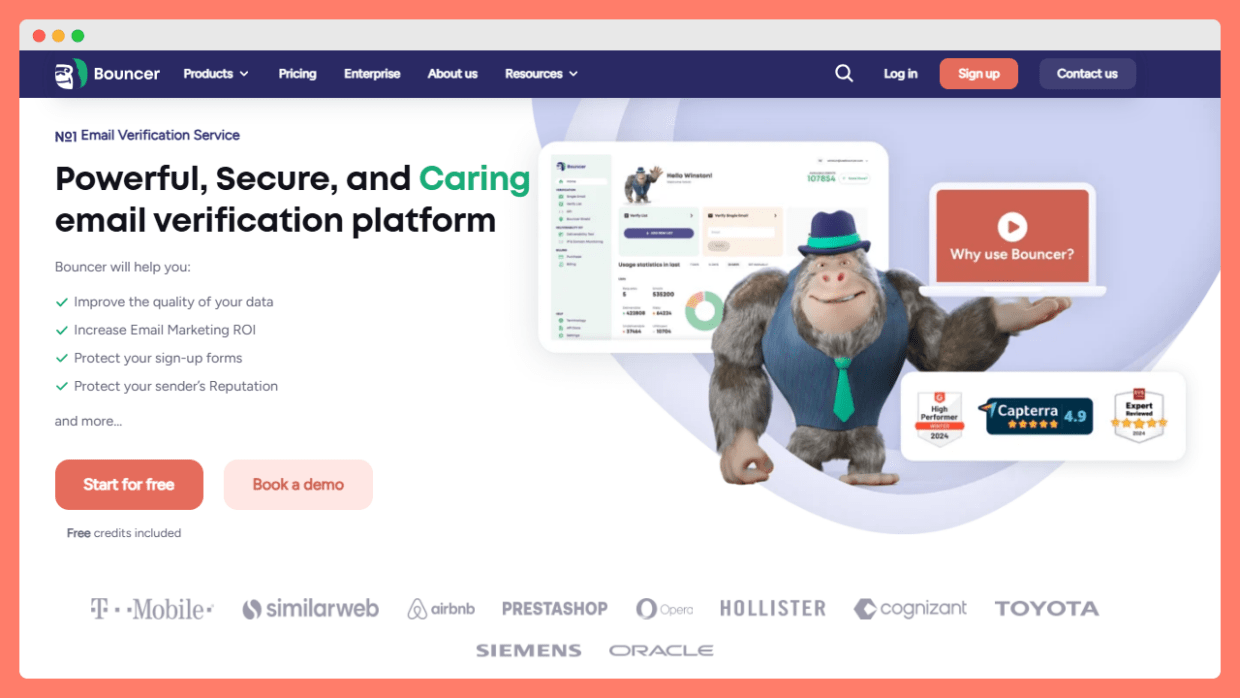
At its core, Bouncer checks email addresses for validity and deliverability before you send a single campaign. It tests syntax, domain status, and server responses so you can spot invalid, risky, or undeliverable addresses early. That means fewer hard bounces, which protects your sender reputation — something inbox providers pay a lot of attention to when deciding where your email lands.
Beyond basic checks, Bouncer adds useful context like toxicity flags and catch-all detection, helping you separate genuinely engaged contacts from addresses that could hurt performance.
That kind of insight lets you make smarter segmentation decisions instead of guessing at who’s worth keeping.
If you use a CRM, you can automate parts of this process. With integrations and features like AutoClean, Bouncer can continuously verify contacts as they come in, so your list stays healthier over time without manual uploads every month.
Many teams also appreciate having detailed verification reports before a big cleanse. Seeing how many addresses are likely to bounce or pose deliverability risk helps you choose whether to re-engage, exclude temporarily, or remove contacts altogether.
In short, if January for you means “figure out what’s actually deliverable,” tools like Bouncer give you data you can act on… not just intuition.
The January mailing list health check, at a glance
January isn’t about dramatic resets. It’s about noticing what changed once the noise of Q4 fades and using that clarity to make calmer decisions.
A solid health check starts with observation. Review how engagement and delivery behaved across the December–January transition, paying attention to trends rather than single metrics. Small shifts often matter more than obvious spikes.


