




Some records came from an event. Some came from enrichment. Some are unsubscribed in one tool but active in another. That is why GDPR-friendly email segmentation tools for EU audiences need to support more than personalization. They should help teams segment with cleaner data, clear purpose, strong suppression, and privacy-aware workflows.
You’ll learn
- What GDPR-friendly segmentation means for email teams
- Why segmentation, consent, and verification should stay connected but separate
- Which tools help EU-focused teams segment lists more safely
- Where Bouncer fits through verification, enrichment, form protection, AutoClean, and deliverability checks
- Which data fields are useful for segmentation and which ones create unnecessary risk
- How to build segmentation workflows for EU audiences without overcollecting data
- How to compare tools based on privacy, data quality, and campaign usefulness
What GDPR-friendly email segmentation means
GDPR-friendly email segmentation means grouping contacts in a way that supports a clear purpose, uses relevant data, respects consent and suppression, and keeps personal data limited to what the campaign actually needs.
Segmentation itself is not the problem. In fact, segmentation can make emails more relevant and reduce unnecessary sends. A customer in France may need a French-language campaign. A B2B lead from Germany may need a different nurture path than a customer in Spain. A contact who has not engaged for a year should not receive the same campaign cadence as an active subscriber.
The issue is how the data gets collected, enriched, stored, and used.
GDPR Article 5 sets out principles such as lawfulness, fairness, transparency, purpose limitation, data minimisation, accuracy, storage limitation, integrity, confidentiality, and accountability. For email segmentation, these principles translate into practical questions:
- Why do we need this segment?
- What data supports it?
- Did the contact expect this use?
- Is the data accurate?
- Can we delete, correct, or suppress it?
- Are we using more data than needed?
- Can we explain the logic internally?
GDPR-friendly segmentation does not mean using no data. It means using the right data, for the right purpose, with controls that protect the person behind the record.
Why EU segmentation needs more discipline
EU audiences often require more careful data handling because GDPR applies to personal data processing in the EU and EEA context. Email addresses, consent records, engagement history, company context tied to a person, and segmentation fields can all become part of the personal data picture.
Many teams want to segment EU audiences based on country, language, company size, industry, lifecycle stage, engagement, product interest, or source. Those can be valid use cases. But the team needs to know why each field exists and how it affects communication.
A segment such as “German SaaS leads with recent webinar engagement” may be practical and explainable. A segment based on unclear third-party personal attributes may be harder to justify.
| Segmentation factor | Useful for EU audiences? | Privacy-friendly note |
| Country or region | Yes | Supports language, legal, and market handling |
| Language preference | Yes | Prefer first-party preference where possible |
| Consent source | Yes | Needed for campaign eligibility |
| Subscription type | Yes | Keeps messages aligned with permission |
| Email verification status | Yes | Supports clean sending and data accuracy |
| Company size | Often | Use when routing or segmentation needs it |
| Industry | Often | Useful for B2B relevance |
| Engagement level | Yes | Helps avoid over-sending |
| Product interest | Yes, if first-party | Base on clear behavior or stated preference |
| Sensitive personal traits | Usually no | High risk and rarely needed for email campaigns |
| Vague inferred personas | Usually risky | Harder to explain and maintain |
GDPR-friendly email segmentation tools for EU audiences should help teams use useful fields without turning segmentation into uncontrolled profiling.
Bouncer
Bouncer is a strong fit for EU-focused email segmentation because it supports the data quality layer that segmentation depends on.
Segmentation is only useful if the underlying email data is accurate. If a record is invalid, stale, risky, duplicated, or tied to the wrong source, the segment may look smart but perform poorly.
Bouncer’s email list verification helps teams verify whether addresses appear deliverable before campaigns. For larger EU audience files, bulk email verification helps teams check CRM exports, webinar lists, event files, newsletter segments, and reactivation audiences. For uncertain databases, free email list sampling can help estimate list quality before full verification.
For segmentation context, Bouncer’s Company Data Enrichment enriches customer data with publicly available company information. This can help B2B teams segment by company context such as company name, domain, industry, or company size. Since the workflow starts with uploading an email list for verification, teams can avoid enriching unusable records first.
For new EU contacts, Email Verification API and Bouncer Shield help validate emails at entry. This is useful for demo forms, webinar forms, newsletter signups, trial signups, and lead capture pages.
For ongoing CRM hygiene, Bouncer AutoClean can help connected platforms keep email lists cleaner. Toxicity Check helps identify potentially harmful email addresses, while Deliverability Kit supports inbox placement, blocklist, SPF, DKIM, DMARC, and SpamAssassin checks.
Bouncer does not replace consent management or legal review. But it gives EU-focused teams cleaner, more reliable data for privacy-aware segmentation.
HubSpot
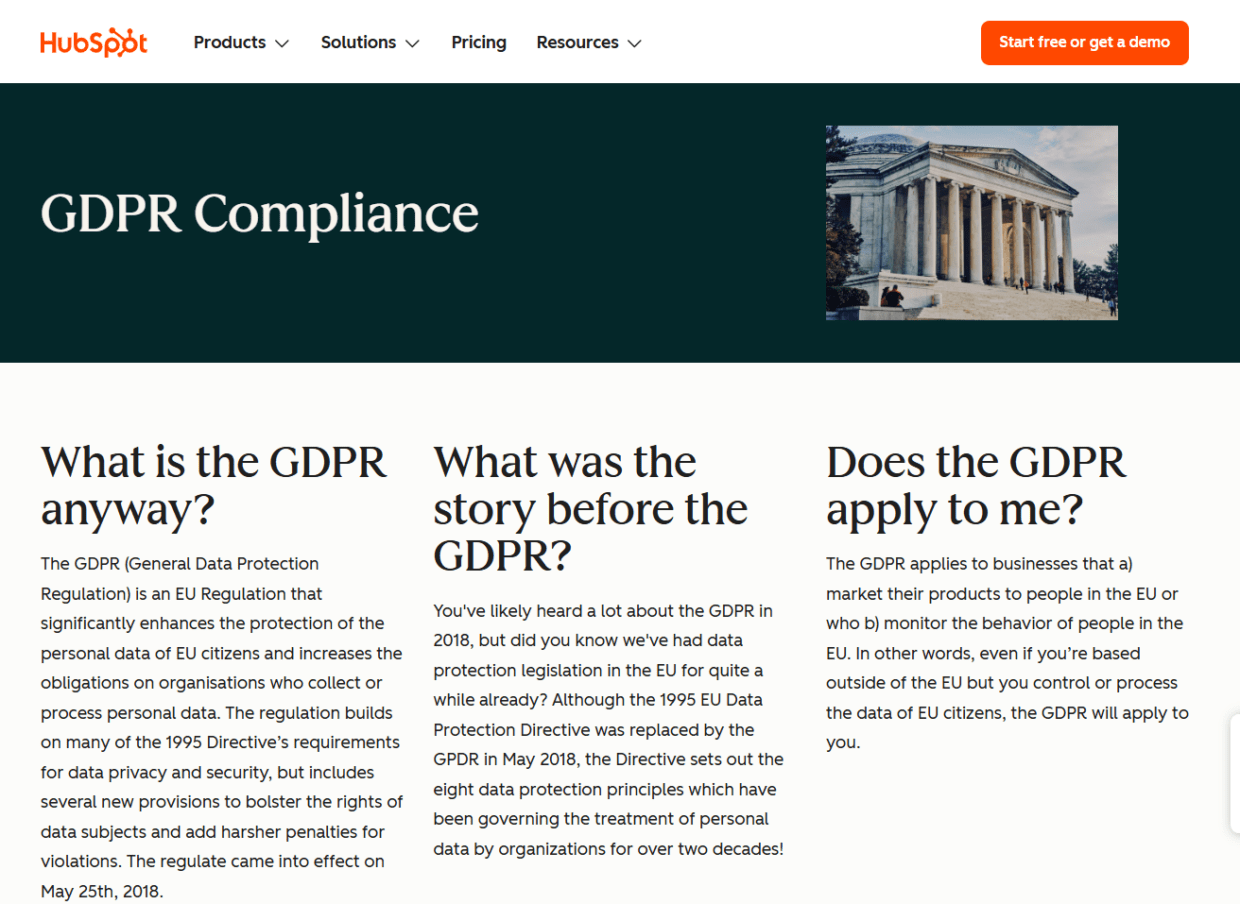
HubSpot can support GDPR-friendly segmentation when teams configure it carefully. It can store consent status, subscription types, contact properties, lifecycle stages, country fields, language preferences, source fields, and engagement data.
For EU audiences, HubSpot is useful because segmentation can connect directly to workflows, lists, forms, and campaign sends. A team can build lists based on subscription status, region, lifecycle stage, engagement, or customer status.
The strength is operational convenience. If HubSpot is the CRM or marketing automation platform, segmentation happens close to the data source.
The limitation is data quality. HubSpot can store fields and build segments, but teams still need reliable verification and source rules. If invalid, risky, stale, or duplicate records sit inside HubSpot, segmentation becomes less trustworthy.
This is where Bouncer fits well. Bouncer’s HubSpot integration and AutoClean workflows can help keep selected HubSpot lists cleaner. HubSpot can manage segmentation logic, while Bouncer improves email validity and list hygiene.
Brevo
Brevo is widely used by European businesses for email marketing, marketing automation, and transactional messaging. It can support segmentation based on contact attributes, lists, engagement, and campaign behavior.
For EU audiences, Brevo’s practical value comes from its marketing workflows and list management. Teams can segment based on location, signup source, preferences, or engagement. It can also support consent-aware communication when teams configure forms, fields, and subscription logic correctly.
The limitation is similar to most ESPs. Segmentation tools can only work with the quality of the data inside them. If imported records are old, invalid, or poorly sourced, the campaign still carries risk.
Bouncer AutoClean supports Brevo, which can help teams add recurring verification to a Brevo-driven email hygiene workflow. That makes Brevo stronger when paired with a verification layer.
Mailchimp
Mailchimp offers audience segmentation, tags, groups, signup forms, and campaign engagement filters. It is popular with marketing teams that want accessible segmentation without heavy technical setup.
For EU audiences, Mailchimp can support segments such as region, language, source, engagement, purchase behavior, or declared interests. It can also help manage unsubscribes and audience preferences.
The risk is that Mailchimp audiences can become messy if teams import lists from several sources without proper hygiene. Tags and groups can multiply quickly. Old subscribers can remain active. Consent fields can become unclear if imports are not managed carefully.
For GDPR-friendly segmentation, Mailchimp should be paired with verification, suppression rules, clear source tracking, and preference management. Bouncer can help verify lists before import or before major campaigns so segments are built from cleaner data.
Klaviyo
Klaviyo is a strong segmentation platform for ecommerce brands. It can segment based on behavior, purchases, customer profile data, engagement, predictive fields, and ecommerce events.
For EU ecommerce audiences, this can support useful segmentation such as recent buyers, inactive customers, VIP customers, product category interest, language, country, and consent status.
The privacy challenge is not the tool itself but the depth of behavioral segmentation. Ecommerce teams can collect a lot of data. GDPR-friendly segmentation requires purpose, minimization, and clear value. A brand should avoid using more data than it needs for a campaign.
Bouncer AutoClean supports Klaviyo, which can help ecommerce teams keep email records cleaner. Bouncer’s API and Shield can also help validate checkout, popup, and signup emails before they enter lifecycle workflows.
Salesforce Marketing Cloud
Salesforce Marketing Cloud can support complex enterprise segmentation across customer data, journeys, preferences, engagement, and CRM context. It is often used by larger organizations that need sophisticated journeys across markets and customer groups.
For EU audiences, the platform can support region-based segmentation, consent-aware journeys, lifecycle campaigns, and customer data integration. Large teams can build structured segmentation logic across brands, markets, and business units.
The tradeoff is operational complexity. Enterprise segmentation can become difficult to govern if source fields, consent data, suppression rules, and verification status are not standardized.
Salesforce Marketing Cloud can be powerful, but it needs strong data governance. A verification and hygiene layer such as Bouncer can help validate emails before campaigns, imports, and reactivation sends. Enterprises should also store verification status and suppression reason in connected systems.
Customer.io
Customer.io is often used by SaaS, product-led, and lifecycle teams. It supports segmentation based on product events, customer attributes, and behavioral triggers.
For EU audiences, Customer.io can be useful when segmentation relies on first-party behavior: account creation, feature usage, lifecycle stage, trial status, product engagement, or subscription status.
First-party behavior can be more privacy-conscious than broad third-party profiling when the purpose is clear and the data supports the service or communication. Still, teams need to define what data they collect, why they collect it, and how long they keep it.
Customer.io can support relevant lifecycle segmentation, while Bouncer can help validate email addresses before those records enter product-led workflows.
OneTrust and consent management platforms
Consent management platforms help teams manage consent records, privacy preferences, cookie choices, rights requests, and data governance. They are not usually email segmentation tools in the campaign-building sense, but they are important for GDPR-friendly segmentation.
For EU audiences, consent and preference data should feed segmentation. A campaign segment should not be based only on interest or engagement. It must also check whether the contact is eligible to receive that message.
Consent tools can help centralize:
- Consent status
- Consent source
- Consent timestamp
- Preference categories
- Opt-out scope
- Regional privacy requirements
- Rights request workflows
Marketing teams should not treat consent management as separate from segmentation. A segment that ignores consent is not campaign-ready.
CRM and CDP platforms
Customer data platforms and CRMs can support segmentation by centralizing data from several systems. They may store source, consent, region, engagement, product behavior, purchase history, lifecycle stage, and account data.
For EU audiences, this central view can help reduce fragmented segmentation. A CRM or CDP can stop teams from building campaigns from disconnected exports.
But centralized data also creates more responsibility. Data minimization, purpose limitation, rights handling, and retention rules still apply. More data in one place does not automatically mean better segmentation.
A good CRM or CDP workflow should include email verification status, consent status, source, region, subscription type, and suppression reason. Bouncer can feed the verification and hygiene side of this structure.
Comparing GDPR-friendly email segmentation tools
Different tools solve different parts of the segmentation problem.
| Tool | Best for | GDPR-friendly value | Limitation |
| Bouncer | Verification, enrichment, form protection, list hygiene, deliverability checks | Cleaner, more accurate email data before segmentation | Does not replace consent management |
| HubSpot | CRM-based segmentation and workflows | Stores consent, source, lifecycle, and engagement fields | Needs hygiene and governance |
| Brevo | European email marketing and automation | Practical list segmentation and campaign management | Data quality depends on imports and fields |
| Mailchimp | Accessible audience segmentation | Tags, groups, preferences, and engagement segments | Can become messy with poor list governance |
| Klaviyo | Ecommerce segmentation | Purchase and behavior-based segmentation | Behavioral data needs careful purpose control |
| Salesforce Marketing Cloud | Enterprise journeys and complex segmentation | Large-scale regional and lifecycle segmentation | Requires strong governance |
| Customer.io | SaaS and product-led lifecycle segmentation | First-party behavioral workflows | Needs clear retention and purpose rules |
| OneTrust or CMP tools | Consent and privacy preferences | Feeds eligibility and rights workflows | Not a campaign segmentation tool alone |
| CRM or CDP platforms | Central customer data | Single view of source, consent, and segments | Can increase governance burden |
The best stack often includes Bouncer for data quality, a CRM or ESP for segmentation, and a consent platform for eligibility and rights handling.
What makes a segmentation tool GDPR-friendly?
A GDPR-friendly segmentation tool should help teams use the right data for the right purpose.
Look for:
- Consent and preference fields
- Source tracking
- Suppression logic
- Regional fields
- Language fields
- Data minimization controls
- User access controls
- Audit-friendly history
- Data retention options
- Export and deletion support
- Integration with verification tools
- Clear segmentation logic
- Ability to exclude ineligible contacts
| Feature | Why it matters for EU audiences |
| Consent source | Shows why the contact can receive messages |
| Subscription type | Keeps campaigns aligned with permission |
| Region | Supports GDPR and local market handling |
| Language preference | Improves relevance without overprofiling |
| Verification status | Supports accuracy and list quality |
| Suppression reason | Prevents accidental sends |
| Data source | Helps explain where records came from |
| Access controls | Reduces internal misuse |
| Retention settings | Prevents unnecessary storage |
| Deletion support | Supports rights requests |
| Enrichment source | Shows where added data came from |
| Engagement fields | Supports frequency control |
A tool is not GDPR-friendly because it has a compliance badge. It becomes GDPR-friendly when the team configures it to respect purpose, consent, minimization, accuracy, and rights.
Verification before segmentation
Verification should usually happen before major segmentation work.
If a list includes invalid or risky addresses, segmentation may create false confidence. A segment called “EU enterprise leads” sounds useful, but if 12% of the emails bounce, the segment is less valuable than it looks.
Bouncer’s verification tools help teams check the base email data first. After verification, teams can suppress invalids, review risky records, and use cleaner lists for segmentation.
A practical order:
- Remove ineligible records.
- Verify email addresses.
- Suppress invalid and toxic contacts.
- Review unknown, catch-all, disposable, and role-based records.
- Enrich usable records if needed.
- Segment by consent, region, language, engagement, and company context.
- Send only to eligible contacts.
This prevents teams from building polished segments on broken data.
Enrichment and data minimization
Enrichment can improve segmentation, but it also needs restraint.
For EU audiences, enrichment should support a specific, documented use case. Company-level enrichment can be useful in B2B because it helps route leads or segment accounts without relying on overly personal attributes.
Bouncer’s Company Data Enrichment focuses on publicly available company information. This can support segmentation by company context, such as organization, industry, or size.
Still, more fields do not always mean better segmentation. Every enriched field should earn its place.
| Enriched field | Good use case | Keep or avoid? |
| Company name | Account matching | Keep |
| Company domain | Deduplication and B2B routing | Keep |
| Industry | Relevant B2B campaigns | Keep if used |
| Company size | Sales routing or segment fit | Keep if used |
| Country or region | Localization and eligibility | Keep |
| Sensitive personal traits | Rarely needed for email | Avoid |
| Vague personality labels | Hard to explain | Avoid |
| Unused enrichment fields | No clear purpose | Avoid |
| Source timestamp | Accountability | Keep |
| Enrichment date | Freshness review | Keep |
Data minimization does not block useful segmentation. It blocks unnecessary data collection.
Consent and suppression must override segments
A contact may fit a segment perfectly and still be ineligible for the campaign.
For example:
- A German contact matches the target industry but unsubscribed.
- A French lead is verified but only agreed to product updates, not sales emails.
- A Spanish customer bought recently but opted out of promotions.
- An EU contact has a valid business email but no clear source.
- A contact appears in an enterprise segment but has a deletion request.
A GDPR-friendly segmentation workflow must apply consent and suppression after segmentation logic, or as part of it.
| Segment match | Consent/suppression state | Campaign action |
| Matches target + subscribed | Eligible | Include |
| Matches target + unsubscribed | Not eligible | Exclude |
| Matches target + unknown consent | Review | Hold |
| Matches target + invalid email | Not eligible | Suppress |
| Matches target + deletion request | Not eligible | Exclude |
| Matches target + wrong subscription type | Not eligible | Exclude |
| Matches target + toxic status | Not eligible or review | Suppress or hold |
| Matches target + no language match | Maybe | Localize or hold |
This protects teams from “segment obsession,” where fit criteria overpower permission controls.
Practical workflow for EU B2B campaigns
A B2B team targeting EU leads can build a privacy-aware segmentation workflow like this:
- Pull contacts with known EU region or country.
- Exclude unsubscribed, deleted, hard-bounced, and restricted contacts.
- Verify emails with Bouncer.
- Suppress invalid and toxic records.
- Review catch-all, unknown, disposable, and role-based contacts.
- Enrich company data only for usable records.
- Segment by country, language, company size, industry, and lifecycle stage.
This process keeps segmentation useful without ignoring privacy controls.
Practical workflow for EU ecommerce campaigns
An ecommerce brand targeting EU customers may need a different workflow:
- Pull customers by country or shipping region.
- Separate transactional eligibility from marketing eligibility.
- Exclude unsubscribed, complained, deleted, and suppressed contacts.
- Verify old or inactive customer segments.
- Use real-time validation on checkout and popup forms.
- Segment by language, currency, product interest, engagement, and purchase history.
- Avoid overusing sensitive or unnecessary behavioral labels.
- Use localized content and clear unsubscribe.
- Send reactivation campaigns cautiously.
- Review complaints, unsubscribes, and conversions by market.
Bouncer helps with verification, form protection, and deliverability readiness, while the ecommerce platform or ESP manages purchase and preference segmentation.
Tool selection checklist
Use this checklist when comparing GDPR-friendly email segmentation tools for EU audiences.
| Question | Why it matters |
| Can it store consent source and timestamp? | Supports eligibility review |
| Can it segment by region and language? | Supports EU campaign relevance |
| Can it suppress invalid, bounced, and unsubscribed contacts? | Prevents risky sends |
| Does it integrate with verification tools? | Improves data accuracy |
| Can it handle deletion and correction requests? | Supports rights workflows |
| Can it track data source? | Helps explain where records came from |
| Does it support access controls? | Reduces internal misuse |
| Does it allow data minimization? | Avoids unnecessary fields |
| Can it support enrichment source tracking? | Adds accountability |
| Can it export or sync verification status? | Helps RevOps and campaign QA |
| Can it segment by engagement? | Supports frequency control |
| Can it support global suppression? | Avoids accidental sends across tools |
The best tool is not always the one with the most segmentation options. It is the one that helps teams apply segmentation safely.
How Bouncer supports EU audience segmentation
Bouncer supports EU segmentation indirectly and directly.
Indirectly, it improves the quality of the email data that segmentation depends on. Invalid, risky, stale, or toxic records should not sit inside high-value EU segments.
Directly, Bouncer’s Company Data Enrichment can add public company context for better segmentation. Its API and Shield protect new records at entry. AutoClean helps keep connected lists cleaner over time. Deliverability Kit supports pre-send checks.
This makes Bouncer useful at several points:
- Before segmentation: verify and clean lists.
- During segmentation: use verification status and enrichment fields.
- Before sending: suppress risky records and test deliverability.
- After sending: review bounce and deliverability patterns.
For EU audiences, Bouncer should be part of a stack that also includes CRM segmentation, consent management, preference handling, and suppression controls.
Key takeaways
- GDPR-friendly email segmentation tools for EU audiences should support purpose, minimization, consent, accuracy, suppression, and rights handling.
- Bouncer is a strong data-quality layer because it supports email list verification, bulk verification, free list sampling, Email Verification API, Bouncer Shield, AutoClean, Toxicity Check, Deliverability Kit, Company Data Enrichment, and integrations.
- Segmentation does not replace consent. A contact can match a segment and still be ineligible for a campaign.
- Verification should happen before major segmentation and campaign work, especially for old, imported, or uncertain lists.
- Enrichment should support a clear use case and avoid unnecessary personal data.
- Consent source, subscription type, suppression reason, region, language, verification status, and data source should all be available for campaign decisions.
- The best stack usually combines Bouncer for data quality, an ESP or CRM for segmentation, and a consent platform for eligibility and privacy rights.
Conclusion
GDPR-friendly email segmentation tools for EU audiences are not about avoiding segmentation. They are about making segmentation more disciplined.
Good segmentation can reduce irrelevant sends, support localization, improve engagement, and make campaigns more useful. But EU-focused teams need to build segments from accurate, permission-aware, purpose-driven data.
Bouncer helps with the data-quality side of that workflow. It verifies email addresses, protects forms, enriches company data, checks risky contacts, supports AutoClean, and helps teams test deliverability. When paired with CRM, ESP, and consent tools, it gives teams a cleaner foundation for EU audience segmentation.
Use segmentation to make emails more relevant. Use GDPR principles to keep that relevance respectful.
FAQ
What are GDPR-friendly email segmentation tools for EU audiences?
GDPR-friendly email segmentation tools for EU audiences help teams group contacts by relevant fields such as consent, region, language, engagement, subscription type, and company context while respecting privacy principles. They should support suppression, data minimization, source tracking, and rights workflows.
Is Bouncer a GDPR-friendly email segmentation tool?
Bouncer supports GDPR-friendly segmentation as a data-quality layer. It helps verify emails, clean lists, protect forms, enrich company data, check toxicity, automate hygiene, and test deliverability. It does not replace consent management or legal review.
Can I segment EU audiences by country?
Yes, country or region can be useful for EU segmentation, especially for language, legal, market, and localization needs. The data should be accurate, relevant, and tied to a clear campaign purpose.
Does GDPR allow email segmentation?
GDPR does not ban segmentation. Teams need a lawful basis, clear purpose, transparency, relevant data, and proper rights handling. Segmentation should not rely on unnecessary or intrusive data.
Should consent be part of email segmentation?
Yes. Consent or another lawful basis should inform campaign eligibility. A contact may match a segment based on industry or engagement, but still be excluded if they unsubscribed or lack permission for the message.
How does enrichment affect GDPR-friendly segmentation?
Enrichment can support segmentation when it adds relevant, necessary, and explainable data. Company-level enrichment can be useful for B2B campaigns. Teams should avoid unnecessary personal profiling or fields with no clear use.
Why verify emails before segmenting EU audiences?
Verification improves accuracy and reduces bounce risk before a team builds campaign segments. A segment full of invalid or risky records may look valuable but perform poorly and affect deliverability.
What fields should EU-focused teams store for segmentation?
Useful fields include consent source, subscription type, region, language, verification status, suppression reason, source, engagement level, enrichment source, and last verification date. These fields help teams segment with cleaner and more accountable data.


