





That’s where the best email verification tools for B2B marketing become essential: they keep your lists healthy, protect sender reputation, and make sure your messages land exactly where you want them.
This guide breaks down the best options for B2B use, starting with Bouncer, then covering several competitors with a critical, practical view. You’ll also find a decision checklist at the end to help you choose the right email verification tool for your stack.
TL;DR
- B2B marketing relies on clean email data, and the best verification tools protect sender reputation, reduce bounces, and keep campaigns performing.
- Bouncer is the strongest option for B2B teams thanks to high accuracy, fast bulk processing, and smooth integrations, while tools like ZeroBounce, NeverBounce, DeBounce, and Hunter fit narrower needs.
- Pick your tool based on accuracy with corporate domains, integration depth, pricing flexibility, and how well it supports ongoing real-time and bulk list cleaning across your tech stack.
Why B2B marketing needs email verification more than ever
Most B2B teams collect leads from multiple channels — sign up forms, events, content downloads, webinar registrations, cold outreach platforms, co-marketing campaigns, enrichment tools, and sometimes purchased databases. Each source introduces its own brand of chaos.
That chaos shows up as:
- invalid addresses that bounce instantly
- risky email addresses that look legitimate but belong to bots
- catch all corporate domains that return incomplete signals
- role-based accounts that trigger spam filters
- spam trap records planted by mailbox providers
Without strong email verification tools, bad data silently enters your CRM and damages everything downstream — segmentation, automation, sales handoffs, and of course, email marketing campaigns.
Good B2B verification tools help you:
- maintain data accuracy
- keep bounce rates low
- avoid the spam folder
- increase inbox placement
- protect sender reputation
- reduce risks in future campaigns
- eliminate invalid or risky addresses before they reach marketing platforms
Since B2B teams rely on email as a revenue channel, clean data isn’t “nice to have”, but rather foundational.
Best email verification tools for B2B marketing
Bouncer — the most accurate B2B-focused platform for marketing, outreach, and data hygiene
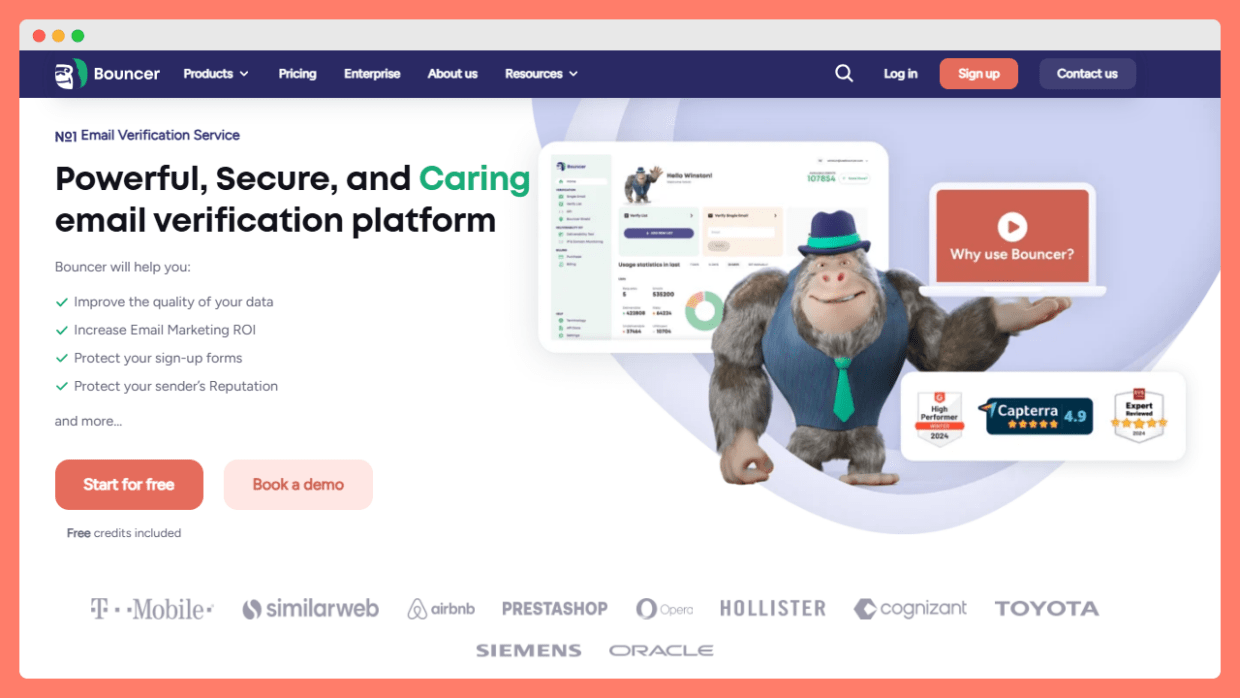
Bouncer consistently ranks among the best email verification tools because it balances accuracy, scalability, and simplicity. For B2B marketers managing large datasets, complex CRM setups, and automated nurture flows, it’s the closest thing to a powerful email verification tool that “just works.”
Its results are highly reliable across both bulk list cleaning and real time verification. Bouncer’s verification process checks domain validation, server responses, catch all behavior, formatting issues, and signals associated with risky emails. You get clear categories that help sales teams and marketing teams understand exactly what needs to be removed, segmented, or enriched.
What makes Bouncer strong in B2B marketing
- Bulk email verification that handles large datasets from webinars, events, and whitepaper downloads
- AutoClean – it creates a “set and forget” workflow, as it automatically verifies new contacts every hour
- Bulk uploads that work smoothly without file re-formatting
- Email Engagement Insights that will help you check how active your contacts are in their inboxes
- Accurate email verification that detects invalid emails, temporary inboxes, and spam traps
- Email validation services for both one-off checks and bulk email list cleaning
- Seamless integration with CRMs, marketing automation tools, cold outreach tools, and Google Sheets
- API based validation for custom workflows
- API integrations for automated sync with your existing systems
- Deliverability insights that help messages land reliably across inbox providers
- Data security built into every workflow
The user friendly interface makes it easy for sales and marketing teams to work without extra training, while automated sync keeps everything up to date across tools.
Pricing and free plan
Bouncer uses a transparent pay as you go model. No aggressive upsells, no inflated tiers, no locked features. The free plan lets you test the core features so you understand how it behaves with your real data.
Small gaps to keep in mind
Bouncer focuses heavily on verification — it doesn’t try to be an “all in one” tool. If you need warm up tools, you’ll pair it with a separate tool. Most teams prefer this, because the verification quality stays high without trying to cover every deliverability angle at once.
Just try Bouncer and experience the support it can provide.

ZeroBounce — strong but heavy for fast-moving marketing teams
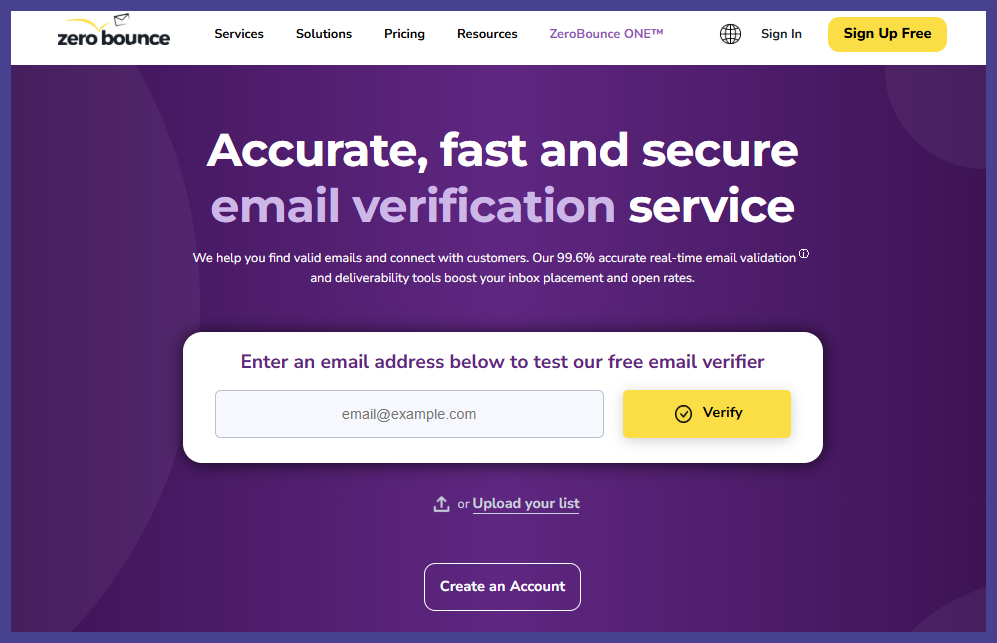
ZeroBounce has been in the market for years and remains one of the most robust email validation services. It catches fake accounts well, offers AI scoring, inbox placement tests, and gives strong data outputs.
But for B2B marketing teams that prefer quick workflows, the tool often feels heavier than necessary.
Strengths
- deep verification logic
- strong inbox placement and deliverability tools
- built-in blacklist monitoring
- wide range of integrations
Weak points
- slower user experience
- UI feels dated compared to newer competitors
- pricing becomes less friendly as volume grows
- reports sometimes include more technical data than marketers need
Good for companies with IT involvement, less ideal for agile sales and marketing teams.
NeverBounce — reliable but limited in advanced B2B needs

NeverBounce provides stable verification results and works well for one-off database cleanup projects. It offers both single checks and bulk verification, and its speed is generally good.
But the platform lacks some of the advanced features B2B marketers now expect, especially when dealing with role-based accounts, catch all corporate servers, or multiple channels feeding leads simultaneously.
Strengths
- simple interface
- consistent results for small and medium lists
- good detection of invalid or risky addresses
Weak points
- weaker performance with enterprise domains
- fewer outreach capabilities and integrations than competitors
- no strong deliverability add-ons
Best for teams that run occasional cleanups, not daily verification.
DeBounce — affordable but inconsistent on corporate domains
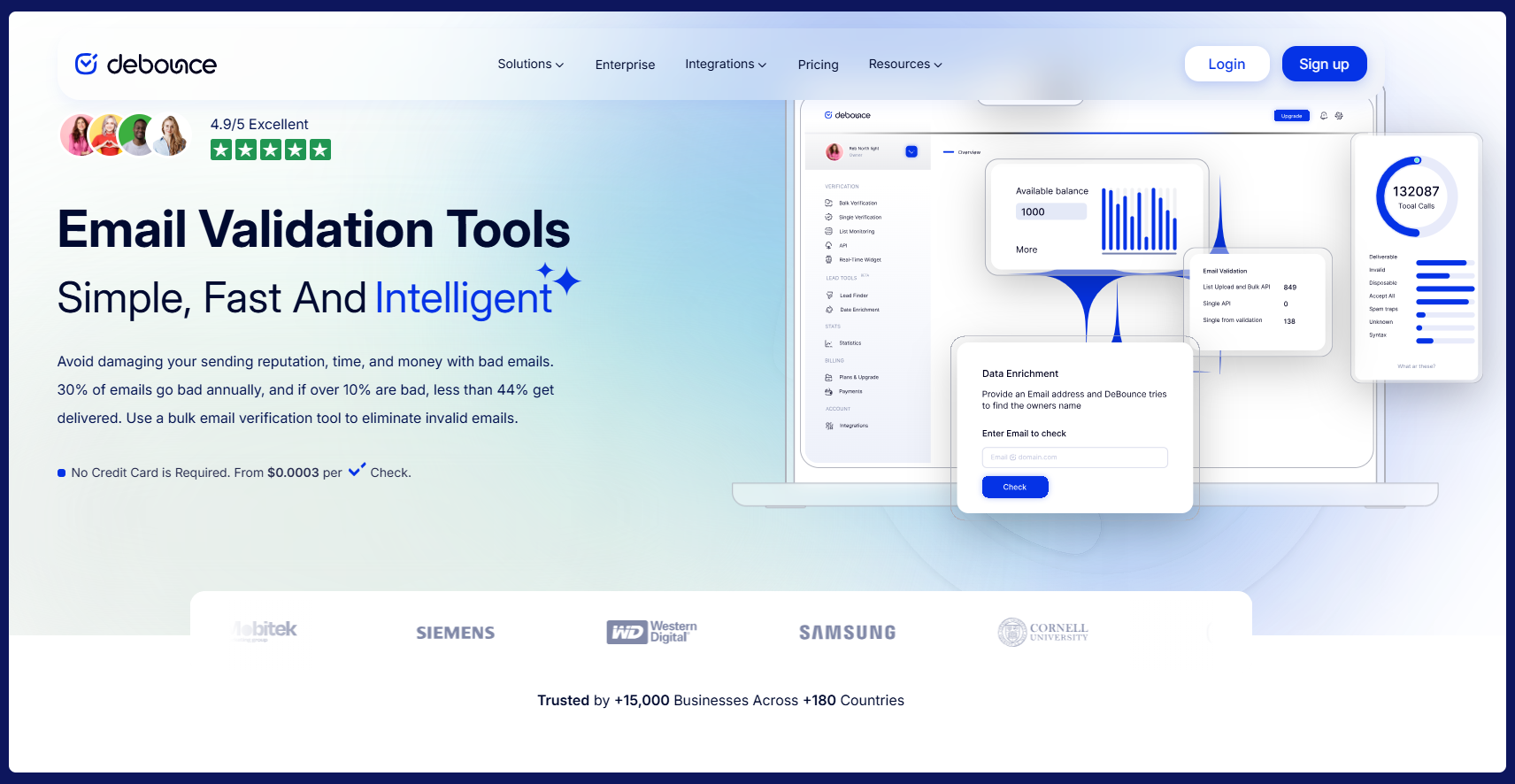
DeBounce is attractive for budget-focused teams because it offers good accuracy at a lower cost. It works well as a standalone tool for small-scale cleanup, and it supports bulk uploads with a decent UI.
However, once you start cleaning B2B databases with mixed domains, results don’t always stay consistent. Corporate mail servers often rely on stricter anti-abuse measures, and DeBounce doesn’t detect these patterns as well as top-tier providers.
Strengths
- budget-friendly
- easy to use
- strong for smaller datasets
Weak points
- weaker signals for catch all domains
- occasional false positives on corporate addresses
- fewer integrations with marketing platforms
Best for small companies with limited volume and simple B2B pipelines.
Hunter — great enrichment tool, average verification tool
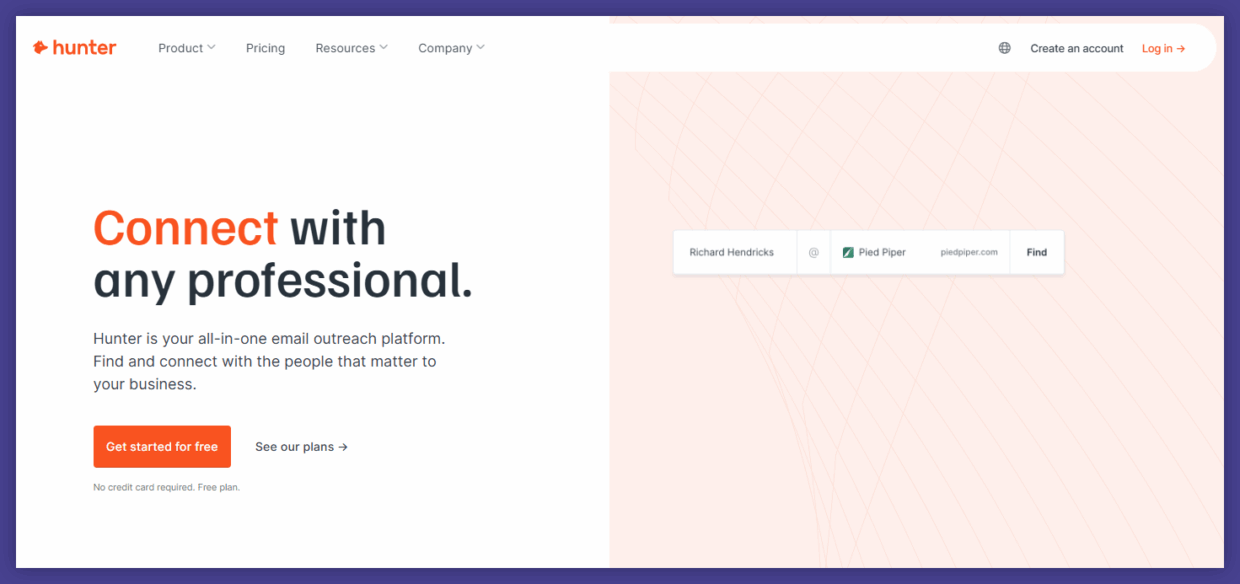
Hunter is widely known as an email finder for sales teams and marketers. Its sourcing and enrichment capabilities are strong, especially for identifying roles inside companies.
But as an email verification service, it’s still secondary. The tool works fine for lightweight validation but doesn’t provide the deep, accurate detail needed for high-quality B2B email marketing campaigns.
Strengths
- strong enrichment
- good for identifying contacts
- clean UI
Weak points
- weaker accuracy than dedicated tools
- limited reporting
- often marks difficult corporate domains as “unknown”
Best used with a verification tool, not as one.
How these tools actually improve B2B outcomes
Email verification affects every part of the B2B funnel.
1. Better segmentation and personalization
Clean contact data ensures customer data inside your CRM is accurate, making targeted campaigns more effective.
2. Stronger email deliverability
By removing invalid or risky addresses, you avoid patterns that trigger spam filters.
3. Fewer campaign failures
Tools remove risky email addresses that would otherwise harm campaign engagement and make messages land in spam folders.
4. Higher reply rates in cold outreach
If data is accurate and validated, sales emails reach decision-makers instead of bouncing.
5. Protection for upcoming nurture workflows
Future campaigns perform better when you start from a clean foundation.
6. Better integration across tools
Modern platforms support seamless integration, automated sync, and API access so verification happens inside existing flows.
7. Avoiding blocklists and penalties
Catch all domains, spam trap detection, and domain validation reduce your risk of hitting ISP rules.
Verification isn’t just a defensive measure — it is a performance lever.
How to choose the right email verification tool for your B2B marketing stack
Below is a detailed, decision-focused guide based on real B2B needs.
1. Accuracy on corporate domains matters more than speed
Consumer lists are easy. Corporate mail servers use firewalls, throttling, greylisting, and spoofing protections. Choose tools that deliver accurate email verification specifically for B2B patterns.
2. Look for deeper risk classification
You want clear categories, not vague “unknown” labels. A good verification tool identifies:
- disposable accounts
- invalid emails
- spam trap likelihood
- risky addresses
- catch all behavior
- soft-bounce indicators
This reduces manual cleanup work.
3. Validate bulk behavior
Bulk verification must handle tens of thousands of records without timing out or misclassifying domains.
Tools that struggle with heavy loads quickly become blockers for B2B operations.
4. Test real time verification
Real time systems are essential for:
- sign up forms
- webinar lead capture pages
- gated content flows
- partner integrations
- lead-gen ads across multiple channels
If leads enter clean, your entire database stays healthier.
5. Evaluate integrations early
The right tool fits into your:
- CRM
- outreach tool
- marketing automation tool
- marketing platforms
- email marketing tools
- cold outreach setup
- Google Sheets
A seamless integration flow is crucial for reducing manual work.
6. Understand pricing models
B2B email cleaning is unpredictable — sometimes 1,000 new leads arrive daily; sometimes 50,000 arrive in a week.
Look for:
- pay as you go
- flexible tiers
- predictable credit usage
- free plan for testing
Avoid tools that lock essential features behind aggressively priced enterprise tiers.
7. Check deliverability extras (optional but helpful)
Some tools include deliverability tools like:
- inbox placement testing
- tests inbox placement
- blacklist monitoring
- master inbox simulations
- outreach capabilities
These features help optimize cold outreach and nurture campaigns.
8. Confirm data protection
Your customer data is sensitive; verification providers must support strong data security, retention transparency, and compliance across regions.
Practical comparison table for B2B marketing teams
| Tool | Best for | Strengths | Limitations |
|---|---|---|---|
| Bouncer | Marketing + sales alignment | High accuracy, fast bulk, great integrations | Doesn’t include warm up tools |
| ZeroBounce | Enterprise deliverability | Deep analysis, strong deliverability data | Heavy UI, slower workflows |
| NeverBounce | SMB marketing teams | Reliable, simple, stable | Not optimized for complex B2B lists |
| DeBounce | Budget-driven companies | Affordable, easy to use | Inconsistent with corporate domains |
| Hunter | Enrichment-focused workflows | Strong email finder, quick checks | Average verification depth |
Checklist: picking the right tool for your B2B marketing organization
Use this checklist to compare vendors:
Data quality
- identifies invalid addresses
- catches hidden risky addresses
- detects spam trap patterns
- handles catch all servers reliably
- supports accurate domain validation
Bulk performance
- strong bulk uploads
- handles large B2B datasets without errors
- consistent bulk verification results
Integrations
- Google Sheets support
- integrations with email marketing tools
- automated sync with CRMs
- API integrations for custom setups
- smooth use as a standalone tool or inside other tools
Deliverability impact
- reduces bounce rates
- improves inbox placement
- prevents messages from hitting spam folder
- helps protect sender reputation
- supports sender reputation protection across inbox providers
Security + compliance
- data security practices
- transparent retention
- secure processing of customer data
Ease of use
- clear dashboard
- minimal setup
- user friendly interface
Pricing
- flexible pay as you go options
- fair paid tiers
- accessible free plan
Fit with your team
- suitable for sales teams
- suitable for marketing teams
- works across multiple tools and multiple providers
Clean data is the starting point of every effective B2B campaign
Great copy, clever segmentation, brilliant creative — none of it works when your list is polluted. The best email verification tools help sales and marketing teams verify emails before problems start, so campaigns stay healthy and messages land with the right people. Clean data supports stronger outreach, better personalization, and more predictable results across multiple channels.
For B2B marketing teams that want accuracy, ease of use, and predictable pricing, Bouncer stands out as the most reliable option. It provides everything you need for smart, scalable list cleaning without unnecessary complexity.
→ Use Bouncer’s free credits and see how much cleaner your B2B marketing data can be.


