





Email verification handles that invisible layer.
It checks assumptions before they become problems. And this article focuses on how sales teams use verification in real workflows and reviews tools that support cleaner lists and more reliable outreach.
TL;DR
- Email verification helps sales teams protect sender reputation, reduce bounce rates, and keep outreach predictable by filtering invalid and risky email addresses before campaigns start.
- Different email verification tools solve different problems — some focus on clean bulk validation, others combine verification with prospecting or outreach workflows.
- The best choice is the tool that fits how your sales team works day to day and helps emails consistently reach inboxes.
Why sales teams can’t ignore email verification
Sales teams live and die by outreach. Cold email still works, but only when messages actually arrive where they should. That sounds obvious, yet it is where many outreach campaigns quietly fail. Not because the copy is bad or the offer misses the mark, but because the email addresses themselves were never ready for sending in the first place.
When a sales team sends emails to invalid email addresses, mailbox providers notice. Bounce rates rise, email bounces pile up, and sender reputation slowly slips. This affects inbox placement over time. Even valid emails in future campaigns may land in spam or never reach the recipient at all.
The frustrating part is how subtle this process is.
None of it happens overnight. Deliverability issues build quietly, campaign by campaign, list by list. A few bad addresses here. A catch-all domain there. Some inboxes that no longer exist. Eventually, email providers stop trusting the sender.
Email verification helps sales teams stay ahead of that problem.
Instead of guessing, teams can check if an email address exists, the email domain is valid, and the mail server is actually set up to receive messages. That small step removes a surprising amount of uncertainty from outbound work. And for sales teams running cold email at scale, this matters more than ever.
Lead lists often come from many places:
- scraped websites
- sales navigator exports
- signup forms
- partnerships
- older CRM records
Contacts change jobs, inboxes disappear, and others were temporary email addresses created through disposable email providers. Without email verification, all of that risk flows directly into outreach efforts.
Going further, sales and marketing efforts often share the same email database. Poor list hygiene affects both sides. A single email campaign with high bounce rates can hurt domain reputation and make future campaigns less reliable across the board.
Email verification does not magically guarantee replies. What it does is create a stable foundation. Cleaner lists support better deliverability, more consistent inbox placement, and fewer surprises once outreach campaigns go live. That stability is what turns email into a repeatable sales channel.

What “email verification for sales” really means
Many teams assume it is just a basic syntax check that looks for an “@” symbol and a correctly formatted address. That is only the first layer. Real email validation goes much deeper than formatting alone.
A proper email verification service evaluates multiple signals before deciding whether an address is safe to use.
It looks at:
- syntax validation and email syntax to catch invalid characters or syntax errors
- whether the domain exists and has valid MX records
- whether the SMTP server responds and can accept emails
- whether the mailbox appears to receive mail without triggering spam traps
For sales teams, this distinction matters. After all, not all risky addresses look risky on the surface.
- 1. Catch all domains may accept messages at the domain level without confirming whether a specific mailbox exists.
- 2. Role-based inboxes often receive mail but rarely respond.
- 3. Spam traps look like normal inboxes but exist purely to catch poor list hygiene.
- 4. Disposable email services generate inboxes that vanish shortly after signup.
An email verification tool helps bring structure to that chaos.
Instead of a simple yes or no, it categorizes email addresses into usable, risky, or invalid. That allows sales teams to make informed decisions. Some teams remove risky addresses entirely. Others test them in smaller batches. The key point is that the choice becomes intentional rather than accidental.
Email verification for sales also differs from marketing use cases.
Marketing teams often focus on large lists and long-term engagement. Sales teams care about accuracy, timing, and response rates. They want to verify email addresses quickly, often through bulk email verification, and move directly into outreach campaigns without delays.
That is why email validation tools built for sales prioritize clarity and speed. Sales reps do not want theory. They want to know which contacts belong in today’s campaign and which ones introduce risk.
At its core, email verification for sales removes uncertainty before hitting send. It confirms that valid contacts can receive messages and that outreach efforts are built on accurate email data rather than assumptions.
When sales teams should verify email addresses
One of the most common mistakes sales teams make is treating email verification as a one-time task. However, there are several moments when email verification should be non-negotiable.
1) Before launching any cold email campaign.
If a list has not been checked recently, it should go through an email verifier first. Even lead lists sourced from leading companies or well-known platforms accumulate invalid emails over time. Running a bulk email verifier before outreach protects sender reputation from day one.
2) After importing bulk lists into a CRM or Google Sheets.
Sales teams often combine data from different sources, including email addresses, phone numbers, and job titles. Verification at this stage prevents invalid addresses from spreading across tools, automations, and outreach campaigns.
3) When dealing with older lists.
A lead list that performed well six months ago may now include invalid addresses, catch-all domains, or inboxes that no longer receive mail. Re-running email validation keeps bounce rates under control and supports better deliverability as volume increases.
4) When scaling outreach efforts.
As send volume grows, mailbox providers become less forgiving. Issues that were invisible at low volume become strong negative signals at scale. Accurate email verification shifts from list cleanup to risk management.
Some teams even verify email addresses at the signup form level. This helps block disposable email providers and temporary inboxes before they enter the email database. For outbound teams that rely on inbound leads later, this step pays off quickly.
The pattern is simple: Whenever email addresses move from storage to sending, verification should come first. That habit saves time, protects domain reputation, and keeps outreach campaigns predictable instead of stressful.
What to look for in an email verification tool for sales
When you do your research, you will find out that not every email verification service fits sales workflows. Choosing the right one comes down to a few practical considerations.
Accuracy comes first
Sales teams need accurate email verification that works across business domains and mailbox providers. Catch all detection matters here. A tool should flag catch all addresses clearly instead of marking them as safe without context. The same applies to spam traps, risky addresses, and inboxes that quietly damage sender reputation.
Speed and scale matter just as much
Sales teams often verify bulk email lists under tight deadlines. A bulk email verification process should handle large volumes without slowing campaigns down. Uploading a file, connecting through an email verification API, or syncing from Google Sheets should feel straightforward.
Clarity of results is another top factor
An email checker should not overwhelm users with technical language. Labels should clearly show what is usable, what carries risk, and what should be removed. Sales reps need to act quickly, not interpret dense reports.
Integration support also plays an important role
Sales teams work across CRMs, outreach tools, and spreadsheets. An email validation tool that fits existing workflows reduces friction. The easier it is to verify email addresses as part of daily work, the more consistently teams will do it.
Data security should not be overlooked
Email addresses are sensitive data. A verification service should handle that data responsibly, especially for teams working across different email providers and mailbox providers.
Pricing should reflect sales usage
Sales teams often rely on verification regularly, not occasionally. Flexible plans or a free account for testing help teams evaluate accuracy before committing long term.
The best email verification service for sales is not the one with the longest feature list, but the one that fits how sales teams actually work and protects deliverability quietly in the background.
Top email verification tools for sales
Email verification tools look similar on the surface but behave very differently in practice.
Below, you’ll find tools that sales teams can regularly use to verify email addresses before outreach. Many of them bundle verification with other features, like Email Deliverability Toxicity checking, prospecting or campaign workflows.
None of them are perfect for every setup, but each solves a real problem that sales teams run into when preparing lead lists and protecting deliverability.
So, let’s check the top 9 platforms for email verification for sales.
Bouncer: Email verification for sales outreach
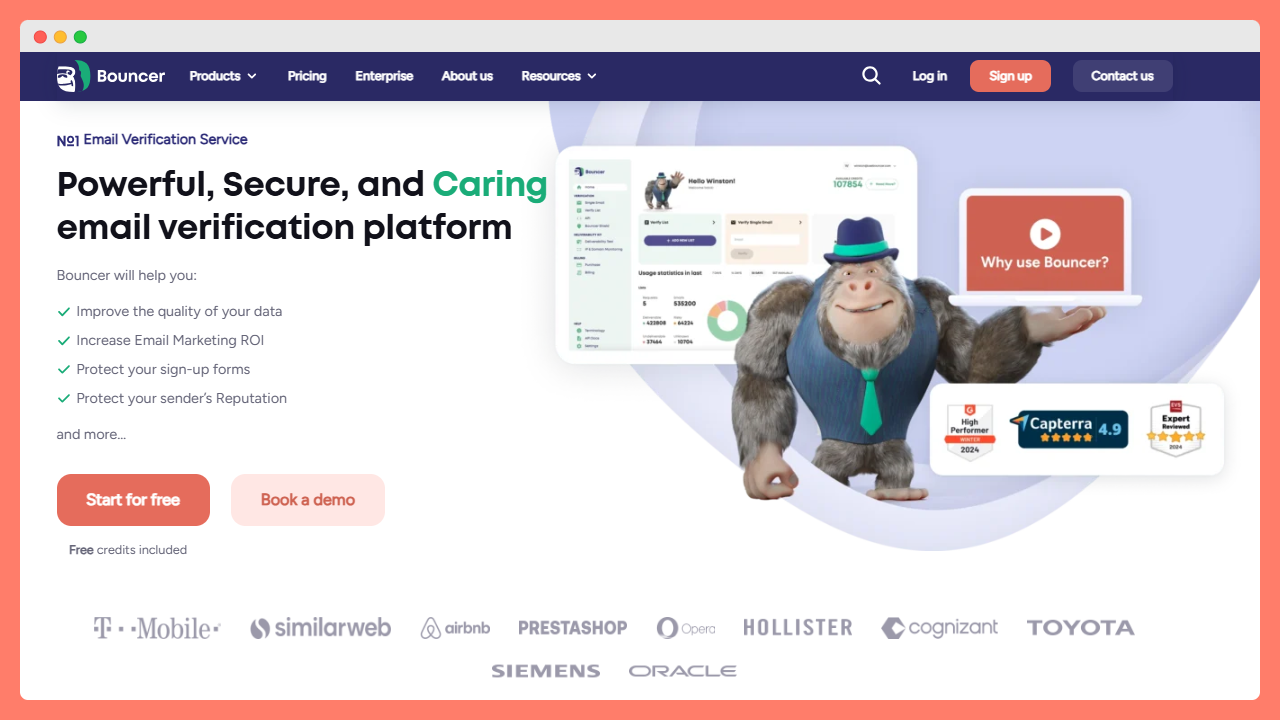
Bouncer is an email verification service designed to help teams clean and verify email addresses before outreach. It’s built for both bulk verification and real-time checks — thus, it can help you both when you’re cleaning a big list before a campaign and verifying addresses as they’re collected. Its users span from small sales teams to larger revops units that need consistent list hygiene.
Moreover, Bouncer offers features such as AutoClean, Data enrichment, Deliverability Kit, API, Shield, or Email engagement insights.
As the icing on the cake, we will say that you can use Bouncer for free in many ways, as you can use:
- 100 free credits that never expire
- Free email checker
- Free email list sampling
Bouncer’s interface is generally intuitive, and its results help teams reduce invalid and risky contacts. Therefore, it’s not a surprise that in comparisons among email verification services, Bouncer regularly appears among the top-rated tools for list cleaning and verification.
Why is this email verification good for sales?
- Designed for bulk email verification when preparing outreach campaigns
- Real-time validation to stop invalid emails at the point of entry
- Signals beyond true/false (e.g., risky or catch-all flags)
- Works with common sales data workflows (CSV upload, API)
- Helps protect sender and domain reputation by filtering invalid addresses
NeverBounce
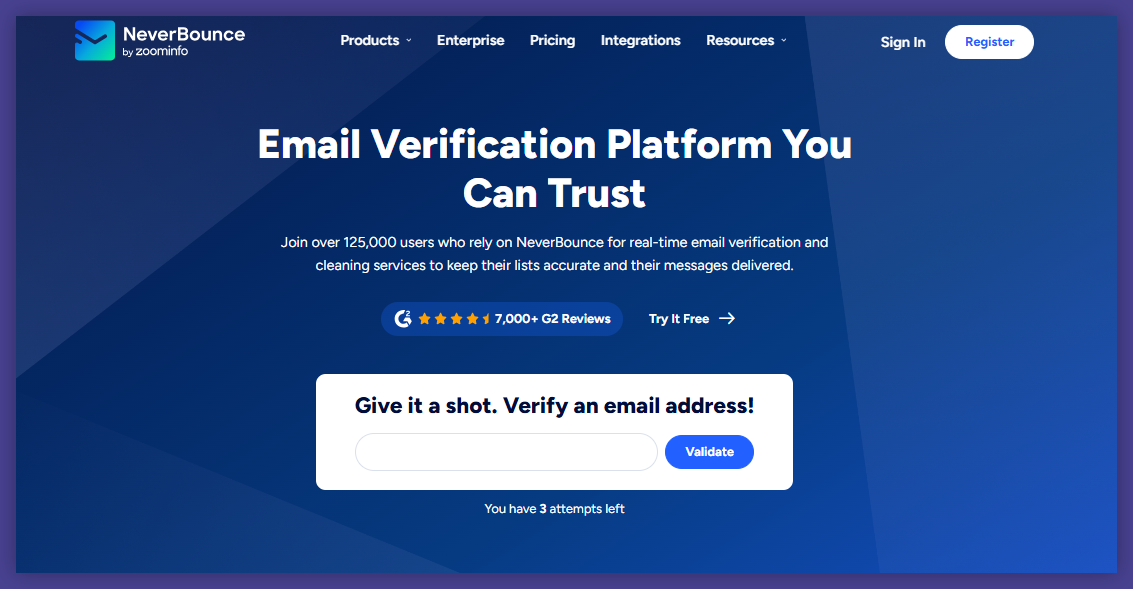
NeverBounce is a long-established email verification and list-cleaning platform used by marketing and sales teams to reduce bounce rates and clean contact data before sending.
According to user reviews on G2, users like its ease of use and quick list processing, and many highlight that it efficiently cleans mailing lists and helps lower bounce rates. However, some users note that the cost can rise with very large lists.
Why is this email verification good for sales?
- Fast bulk email verification and list cleaning
- Simple interface with straightforward workflow
- Real-time verification options for form or API use
- Helps forecast deliverability by reducing invalid emails
- Useful for teams sending regular outreach and avoiding high bounce rates
Hunter
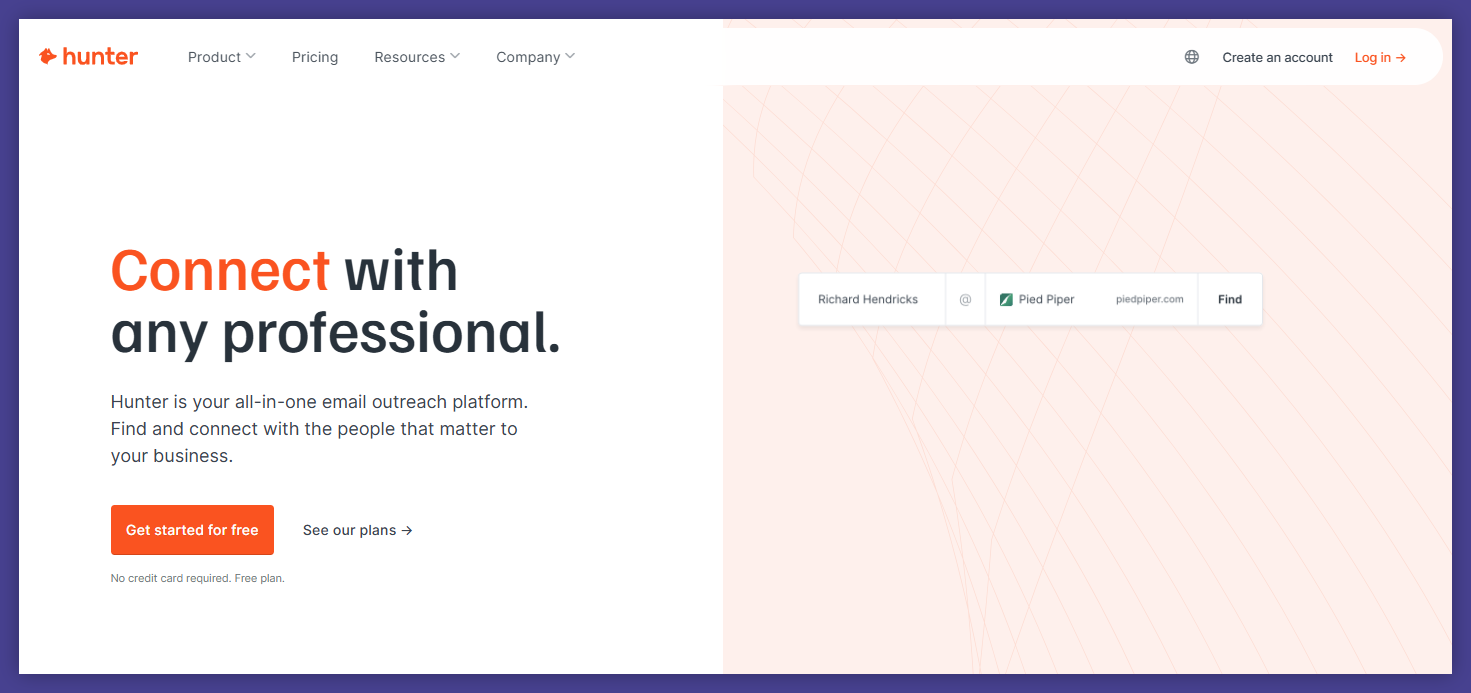
Hunter is a broader outreach and prospecting platform that includes email verification as part of its suite. It’s widely used by sales development reps and business development teams who need to both find and verify professional email addresses.
Users on G2 point to its utility for finding valid contacts, reducing bounce rates, and streamlining prospecting workflows — particularly appreciating how it makes list prep easier and more efficient.
Why is this email verification good for sales?
- Combines email discovery and verification in one platform
- Useful for building targeted B2B lists and validating them
- Integrates with CRM tools and spreadsheets
- Real-time and bulk verification options
- Helpful for sales teams that want to minimize bounce rates while expanding lists
Clearout
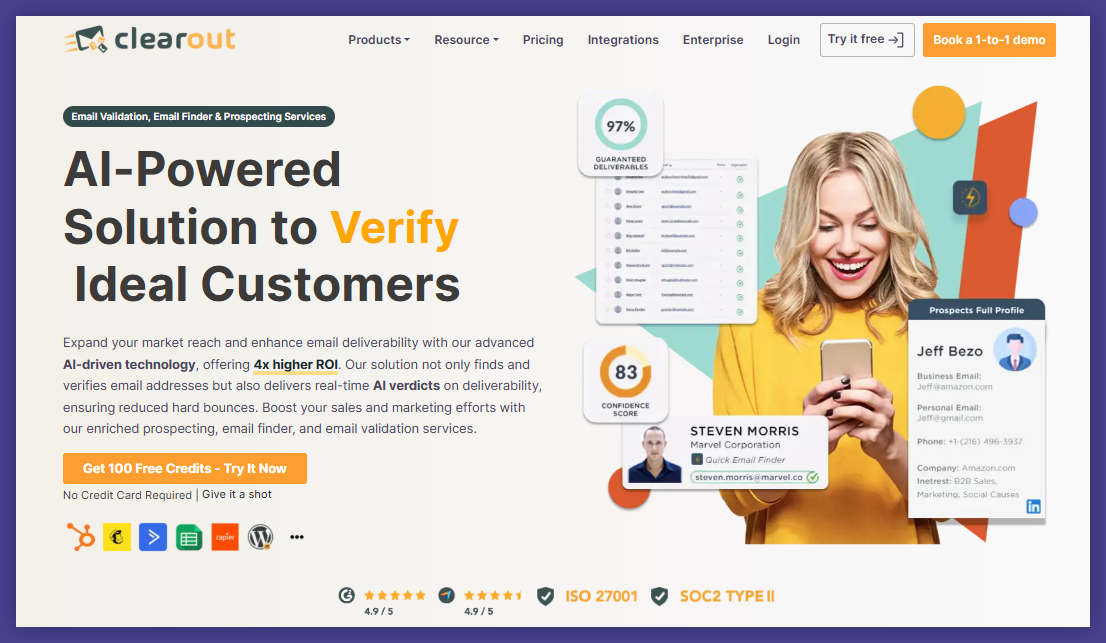
Clearout is an email verification and list hygiene platform that helps teams identify invalid, disposable, and risky email addresses before sending.
According to G2 reviews, Clearout is noted for its high accuracy, real-time validation, and speed, and users appreciate how it helps improve list quality and protect deliverability whether they’re doing bulk cleaning or real-time checks.
Why is this email verification good for sales?
- High-accuracy checks for invalid and risky email addresses
- Supports both bulk list cleaning and real-time verification
- Clear results that help refine outreach lists before campaigns
- Helps lower bounce rates and protect sender reputation
- Works well with spreadsheets and CRM workflows
BriteVerify
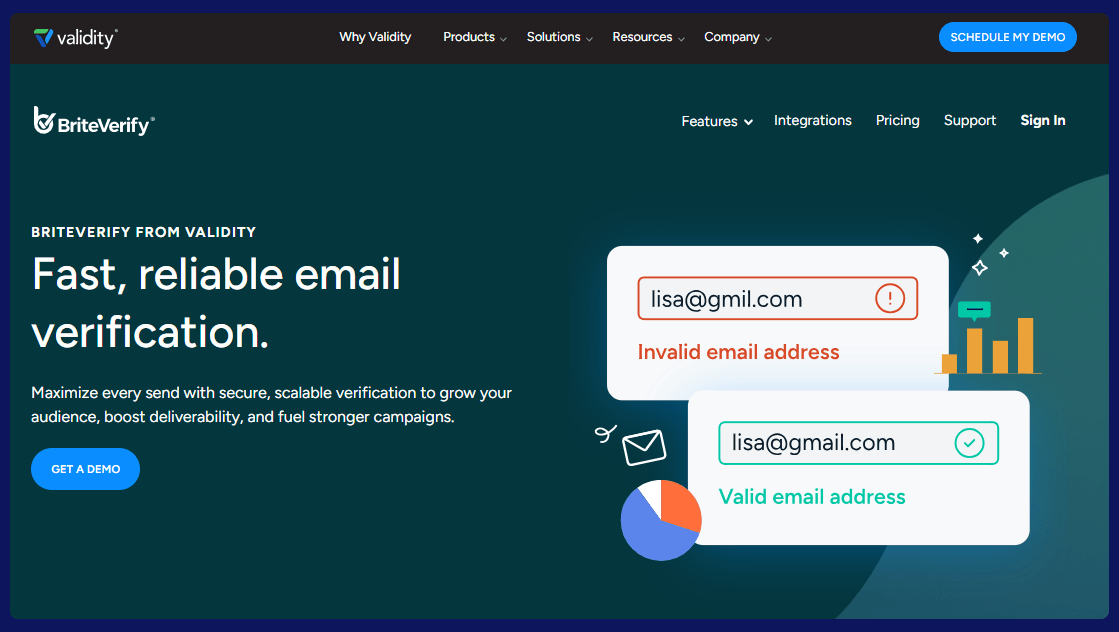
BriteVerify is an email verification service by Validity that focuses on quick and accurate validation, especially for real-time checks such as signup forms or immediate list cleaning. While not as feature-rich as some verification platforms, it’s been long used by teams that want a simple, reliable verification step.
And users appreciate its simplicity and real-time capabilities, which help prevent invalid addresses from entering lists in the first place.
Why is this email verification good for sales?
- Fast real-time email validation at the point of lead capture
- Designed for immediate feedback on email accuracy
- Helps prevent invalid emails from ever entering your list
- Good option when forms are a primary source of leads
- Straightforward results without a heavy reporting layer
ZeroBounce
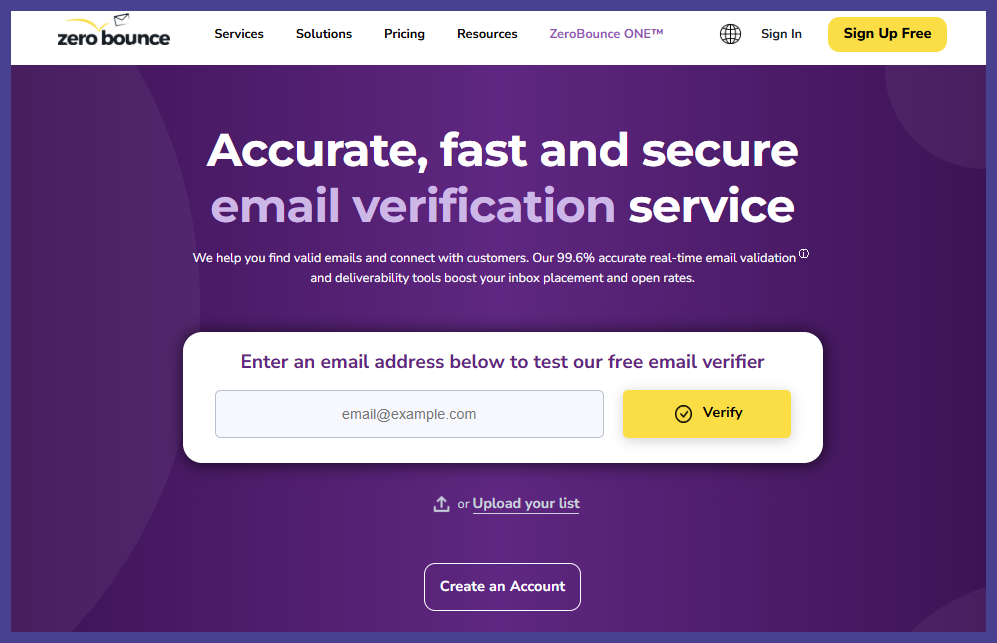
ZeroBounce is an email verification and deliverability platform that user reviews highlight for its high accuracy, spam trap detection, and comprehensive list cleaning capabilities.
On G2, reviewers praise its quality cleaning features and how well it identifies various risky and invalid addresses. It’s popular with marketing and sales teams who want to ensure lists are clean and inbox placement is strong.
Why is this email verification good for sales?
- Detects spam traps, disposable, and high-risk email types
- Helps improve overall list quality and deliverability
- Offers bulk verification and detailed reporting
- Integrates with many marketing and CRM platforms
- Well-reviewed by users for cleaning accuracy
Snov.io
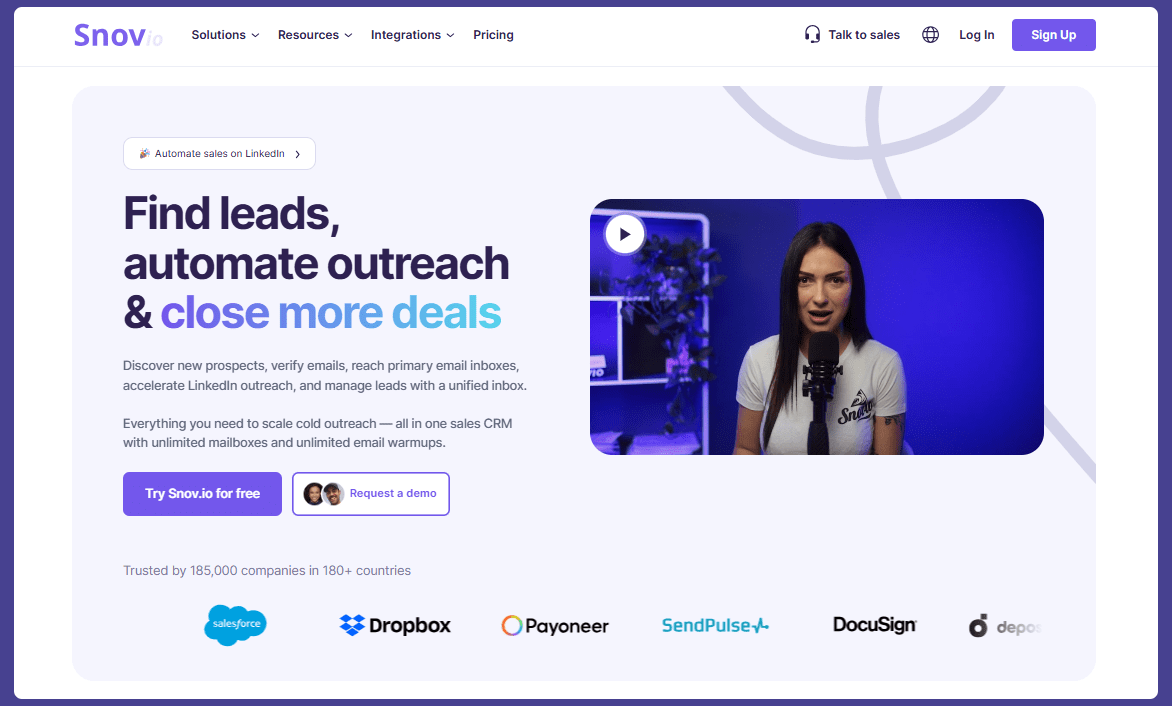
Snov.io is a sales engagement platform that includes email finding, verification, and outreach tools. It’s favored by SDRs and small to midsize sales teams that want a single platform for finding prospects, verifying email addresses, and managing outreach workflows.
While not a standalone verification-only service, its verification capability is tightly integrated with discovery and campaign execution.
Why is this email verification good for sales?
- Combines verification with lead discovery and outreach features
- Useful for building and cleansing lists without tool switching
- Integrates verification directly into sales workflows
- Supports bulk list validation with risk indicators
- Helpful for teams who want an all-in-one solution
EmailListVerify
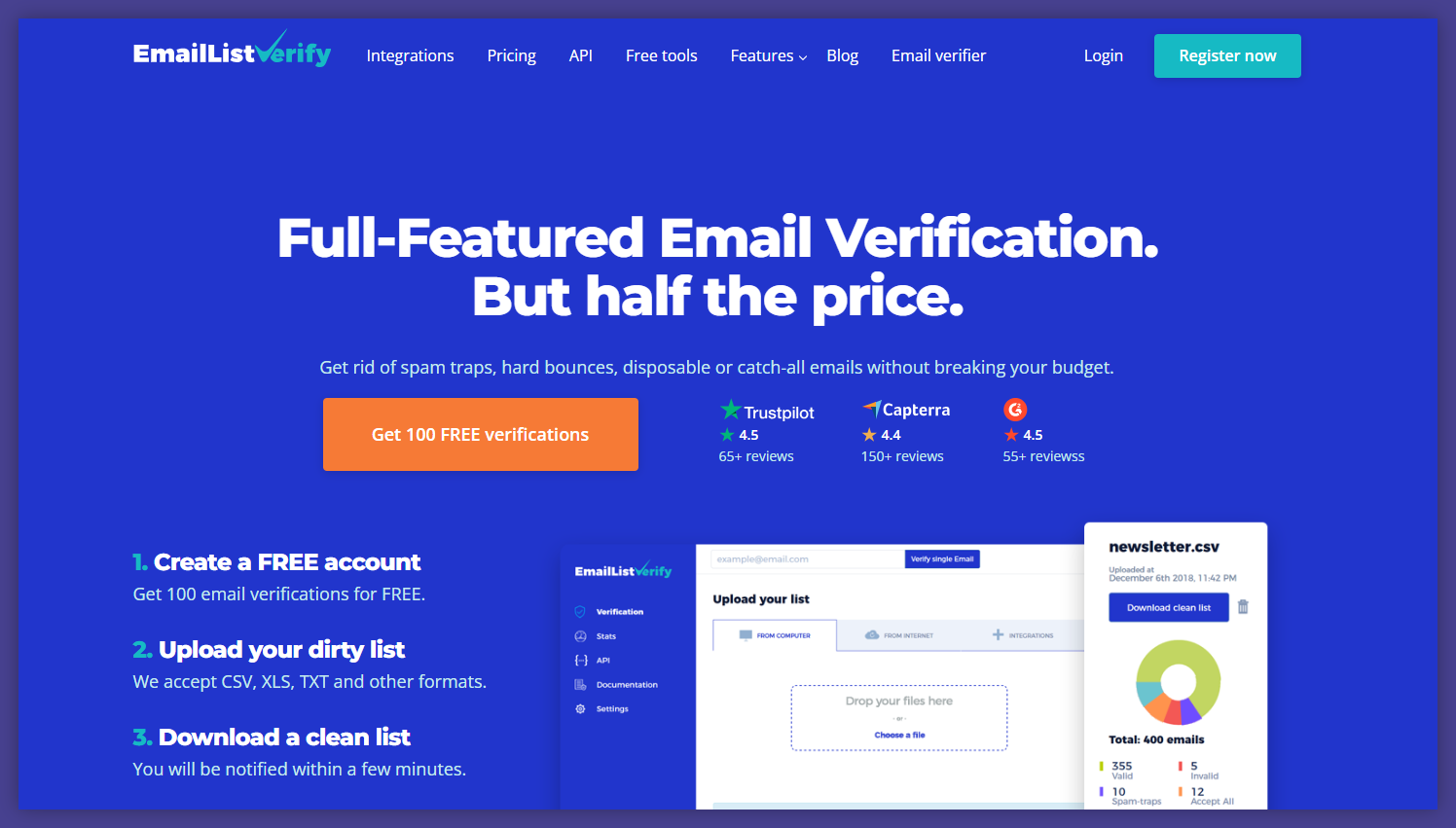
EmailListVerify is an email verification and list cleaning service designed to help teams remove invalid, disposable, and risky email addresses efficiently. Reviews indicate that it’s well-regarded for its balance of simplicity and accuracy. Users often choose it when they want a reliable verification layer at a competitive price point.
Why is this email verification good for sales?
- Reliable removal of invalid and disposable contacts
- More cost-effective than some premium options
- Supports bulk list cleaning and real-time checks
- Helps reduce bounce rates and protect domain reputation
- Works well when the budget and verification effectiveness both matter
Verify and validate email addresses with Bouncer
When email verification is missing, the consequences show up faster than most teams expect. The tools covered above approach this problem from different angles, but what matters is not how many features a tool advertises, but how consistently it helps your team send emails that actually reach inboxes.
If your sales team relies on email as a core channel, verification should feel routine. When it becomes part of how you prepare lead lists and launch outreach, deliverability stops being a mystery and starts behaving like something you can manage.
That shift alone is often enough to change how predictable sales email becomes.
Try Bouncer for free for your email verification for sales – sometimes a small change is enough to see greater results.


