





There are easy ways to do a Gmail account lookup, from finding out their social media presence to checking if the address is active.
Let’s look at six simple methods to get the details you need.
What is a Gmail account lookup?
A Gmail account lookup is a method for determining whether a Gmail address exists and obtaining more information about its owner.
People use reverse email lookup tools or email lookup services for this purpose. These services help users discover more about the person behind the email, such as their social media presence or other public data connected to the account.
Whether double-checking contact details in Google Sheets or looking for an email owner’s profile, you can just type in the address, press enter, and see what comes up. Some even start with a free search through a search engine for quick answers.
How to do a Gmail account lookup in 6 easy ways
Check out these six easy ways to find whether a Gmail email address exists:
Tip 1: use Bouncer to verify the email
Verifying an email with Bouncer helps you spot invalid or risky addresses.
Sign in and upload your email list by dragging and dropping it into Bouncer’s dashboard. Bouncer checks each address, from basic syntax validation to more complex steps like DNS and MX record reviews.
The tool even connects with SMTP servers to see if an email can receive messages without triggering a bounce.
Expert tips:
- Start with a small sample test before running the whole list. This will give you a better idea of how “clean” your list is, saving you time and avoiding unnecessary credits.
- Check for detailed reports that show data like the provider, disposable status, and full mailbox flags. These details help you decide which emails to keep or remove.
- Keep an eye out for any flagged as catch-all or protected by anti-spam filters; they’re trickier to verify but might still be worth it. Using these insights, your email list stays fresh and ready for your next campaign. Don’t forget: you can always rerun verification to spot any changes over time.
Don’t wait – verify a Gmail address for free today.
Tip 2: send a test email
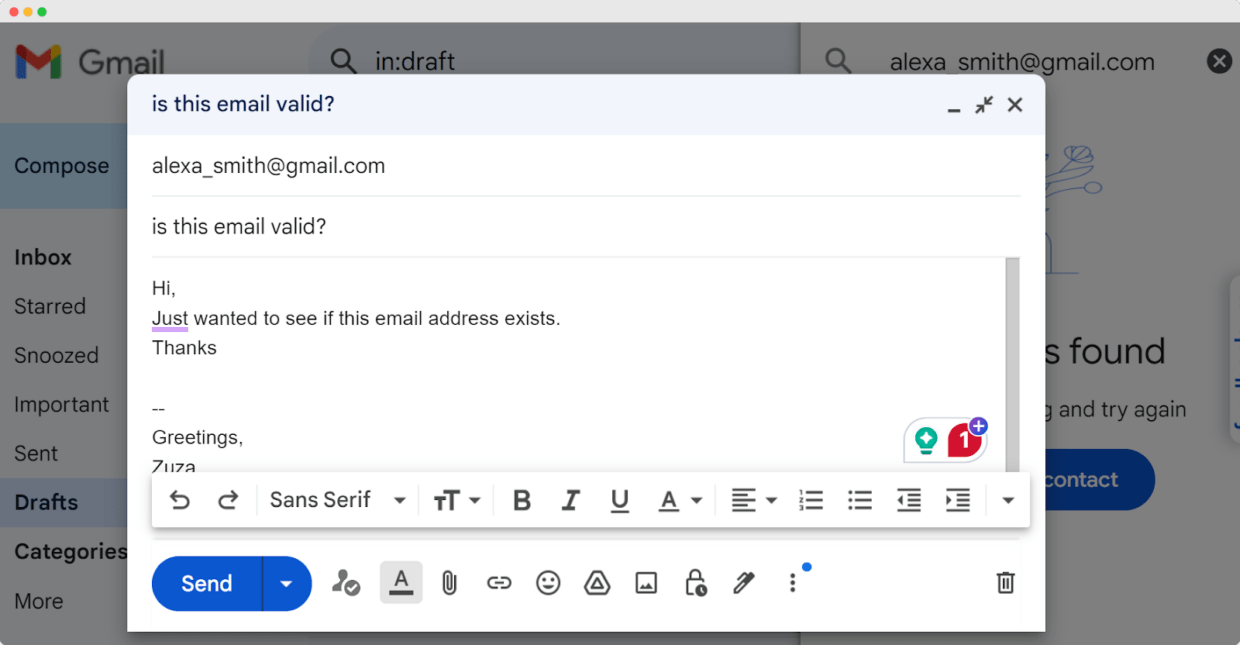
Sending a test email is a quick way to check if an address is valid. Create a simple message and send it to the address in question.
If it bounces back or doesn’t deliver, the address might be invalid or inactive.
When doing this, use a basic subject line and content that won’t be flagged as spam. Also, keep an eye on your inbox for bounce notifications or automated replies.
Expert tips:
- Use a different subject line for test emails to avoid triggering spam filters.
- Monitor bounce messages for clues on why the email didn’t go through (e.g., “mailbox full” or “address doesn’t exist”).
- Wait a day before resending a test to avoid looking like a spammer.
- Avoid attachments in your test email, as they can flag security filters and block your test.
Tip 3: do a Google contacts check to see if you share mutual contacts
Checking if you share mutual contacts with an email owner can reveal more details.
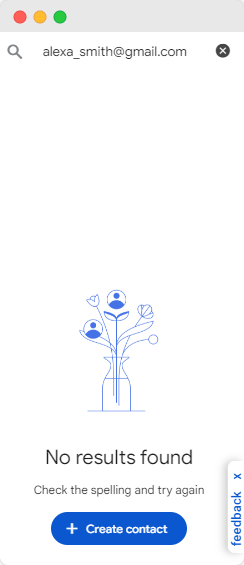
Open your Google Contacts and type the email into the search bar.
If you have any shared contacts, they’ll show up in the results, hinting at how you might be connected to the person behind the address.
Expert tips:
- Use the “Connections” tab to view any shared links more easily.
- Contact mutual contacts for more information about the email owner before making direct contact.
- Update your Google Contacts regularly so your mutual connections stay up to date.
- Save the email to your contacts and see if any linked profiles or data appear after some time.
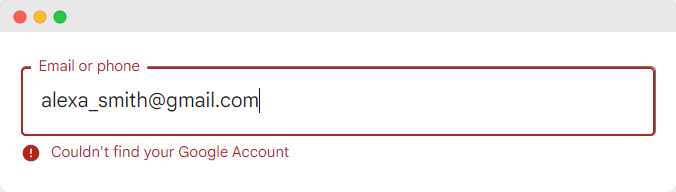
Tip 4: don’t use Google account recovery as an email lookup method
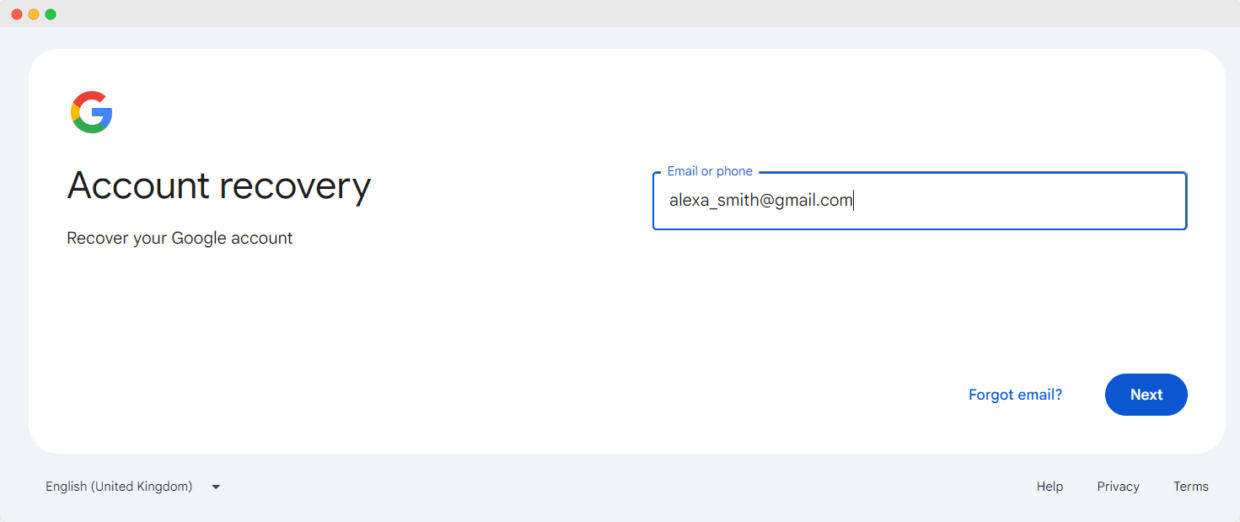
Google’s account-recovery flow is designed for the account owner, not for checking someone else’s address. It can hide information for privacy and security reasons, so the prompts are not a reliable way to confirm that a Gmail mailbox exists or is active.
For a business workflow, use a legitimate email verifier or public-source lookup instead of initiating recovery on another person’s account.
A recovery prompt should not be treated as proof of mailbox activity. Email verification and identity lookup answer different questions, and neither requires trying to access another person’s recovery flow.
Expert tips:
- Respect account privacy: recovery tools are for the owner of the account.
- Do not infer activity from recovery prompts: providers intentionally limit what those screens reveal.
- Use public information for identity research: search results and public profiles are more appropriate for lookup.
- Use verification for deliverability: if you already have an address, validate it rather than probing account access.
Tip 5: Google the address
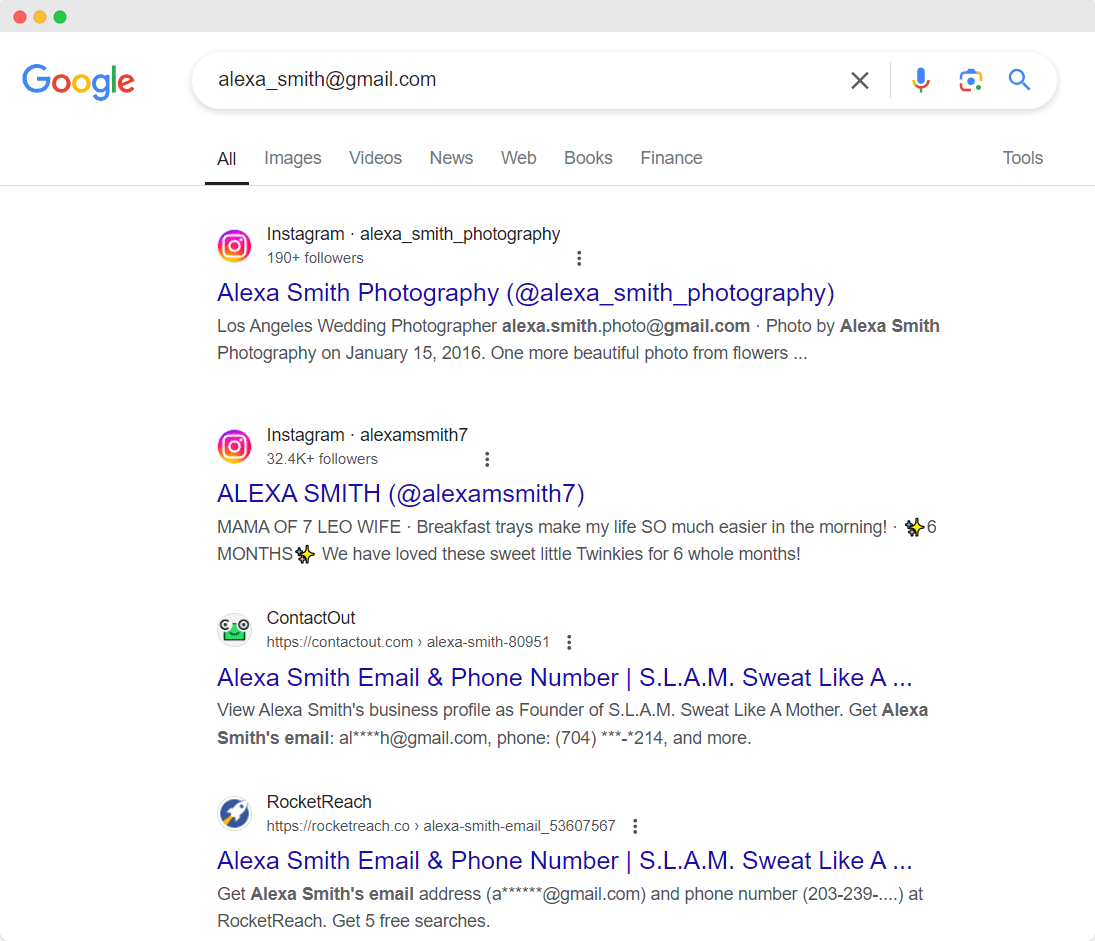
Searching the email address directly in a search engine can give surprising results.
Type the address in quotation marks for precise results, and see if any public profiles, mentions, or directories appear.
This method often reveals the social media presence or articles linked to the email owner.
Expert tips:
- Use quotation marks (“example@gmail.com”) to narrow down results.
- Look at the first results page for personal blogs, forum posts, or public directories.
- Try different search engines for a broader range of results.
- Combine the email with keywords like “contact” or “profile” for better matches.
Tip 6: Search social media profiles
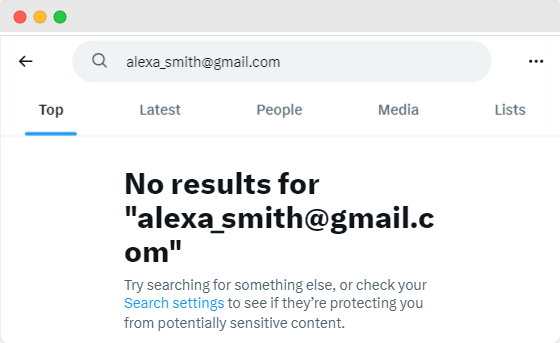
Finding an email owner’s social media presence can tell you more about them.
Platforms like Facebook, LinkedIn, or X often link profiles to email addresses.
Enter the email into the search bar and see if any accounts pop up. It’s a simple way to confirm if the person is who they say they are.
Expert tips:
- Start with LinkedIn for professional connections tied to email addresses.
- Check privacy settings – some users hide their accounts from email lookups.
- Use reverse email lookup tools if direct searching doesn’t bring results.
- Be cautious about using this info and respect privacy boundaries when reaching out.
Gmail account lookup vs email verification: what’s the difference?
A Gmail account lookup is mainly about finding public clues connected with an address. Email verification answers a different question: can the address accept mail, and does it look safe enough to use in your list? If you are still trying to locate the right address, our guide to finding email addresses online covers more discovery methods.
Once you have an address, verify it before adding it to a campaign or CRM workflow. That step is especially useful when a lookup returns an old or uncertain contact. For a practical breakdown of the checks involved, read how to verify if an email address is real or fake.
Can you look up who owns a Gmail account?
Only to a limited extent. Search engines, public profiles and reverse lookup services may reveal information that the owner has made public, but they cannot legitimately expose private Google account data. If your goal is outreach, treat identity research and email verification as separate steps: one adds context, the other checks whether the address is usable.
Conclusion
Knowing how to do a Gmail account lookup can make a big difference when dealing with unknown contacts.
Each method offers unique insights designed to help you learn more about an email and its owner while remaining respectful of privacy.
The right approach depends on your needs and how deep you want to dig. From quick searches to more in-depth tools, finding out what you need doesn’t have to be difficult.
Bouncer makes it easier to verify emails reliably and accurately. Sign up today and get 100 free credits to confidently check your email lists.


