





Sequences run in the background, automated follow ups fire at the right time, and every touch — from phone calls to LinkedIn messages — depends on something very simple: your emails land where they’re meant to.
That’s why email verification went from “nice to have” to “quietly essential.”
A right email verification tool protects sender reputation, keeps email deliverability stable, filters out spam traps before they hurt your domain, and helps sales and marketing teams avoid wasting time on invalid email addresses that never should have entered the CRM in the first place.
This guide breaks down the tools SDRs actually trust, what makes verification matter, and why Bouncer has become the practical choice for teams that want fewer surprises in their cold outreach campaigns.
TL;DR
- SDR performance depends heavily on clean, verified email data — without verification, bounce spikes, spam traps, and domain damage quietly ruin sequences and kill deliverability.
- The best tools for SDRs are fast, accurate with B2B domains, easy to integrate into outbound stacks, and priced fairly so teams can scale prospecting without surprises.
- Bouncer stands out as the most practical choice for SDR workflows thanks to its top-tier accuracy, speed, seamless integrations, human-readable results, and predictable pricing.
Why SDRs benefit from adding verification early in the workflow
Email verification is rarely the first thing new SDRs think about. Most start with messaging, ICP, sequencing. Yet, verification shapes everything else — quietly, consistently, and without adding work.
Below is a deeper look at why it matters.
Keeps domain health stable without extra manual steps
A sender reputation takes months to build and minutes to damage. When invalid email addresses slip into your sequences, email service providers interpret your domain as careless or suspicious. A few bounces seem harmless in isolation — but bounce patterns are one of the strongest negative signals ESPs look for.
Good verification protects your domain by:
- flagging invalid emails before they reach your outreach tool
- recognizing patterns that spam filters associate with risky behavior
- reducing the invisible stress your domain absorbs from weak data
- preventing cold outreach campaigns from collapsing under preventable mistakes
Without it, even perfectly crafted outreach messages can fall straight into the spam folder.
And once you’re in spam folders across multiple inboxes, climbing back out becomes a long, slow, demoralizing process for SDRs and managers alike.

Protects your time so you can focus on actual selling
SDRs have enough to juggle:
booking meetings, building pipeline, writing sequences, qualifying accounts, and navigating countless tools. Manually checking contacts slows down the workflow and rarely produces reliable results.
A powerful email verification tool helps SDRs:
- verify emails or business email addresses instantly
- clean up messy CSV exports
- use bulk email verification for weekly prospecting batches
- avoid wasting time on leads that were never reachable
With real time verification and automated bulk checks running in the background, SDRs stay focused on conversations — not on cleaning up bounce messes after a campaign fails.
Fits naturally into existing outbound stacks
Most SDR teams use multiple tools:
- a sales engagement platform for automated follow ups
- a cold emailing tool for sequences
- an integrated email finder for daily prospecting
- a CRM for tracking deals
- marketing tools and signup forms feeding new leads
- domain search tools, spreadsheets, enrichment systems
When a verifier doesn’t integrate well, SDRs ignore it. But when a verifier quietly blends in — validating contacts at import, cleaning lists from enrichment tools, confirming emails from LinkedIn messages, and working directly inside a cold email software — it becomes part of the flow without feeling like extra work.
That’s when verification delivers its biggest value.
Supports consistent outreach performance
Cold outreach depends on rhythm.
When sequences send on time, inbox placement stays healthy, and data quality stays high, SDRs gain momentum. Verification reinforces that rhythm by keeping the data layer predictable.
Clean, verified contacts mean:
- fewer surprises
- fewer bounce-related panic moments
- fewer broken sequences
- fewer deliverability emergencies
- more stable results across entire teams
It’s not glamorous — but dependable workflows always beat sophisticated tools that require constant babysitting.
Key criteria SDRs should consider when choosing a verifier
Most SDRs don’t need a PhD-level breakdown of verification methods or server response protocols. What they do need is a tool that behaves well in real-world outbound scenarios.
Here are the criteria that actually matter.
#1 True accuracy with B2B domains
B2B domains are tricky.
They use strict security rules, tougher spam filters, and inconsistent server responses. A lot of email verification software glosses over this complexity — which is why so many tools return vague results like “unknown,” forcing SDRs to guess.
The best email verification tools:
- detect spam traps without false positives
- handle catch-all domains intelligently
- analyze mailbox-level signals and server response codes
- separate risky emails from completely invalid addresses
- help you avoid situations where spam complaints rise unexpectedly
When SDRs rely on accuracy, sender reputation protection becomes automatic.
#2 Speed that matches real SDR prospecting habits
SDRs prospect every day — sometimes every hour. That means the verification layer needs to keep up.
The most helpful tools offer:
- real time verification for single leads
- bulk email verification for weekly or monthly list prep
- the ability to process thousands of email addresses without delay
- fast and clear outputs for cold outreach efforts that need to go out the door
If verification slows down the workflow, reps skip it. Speed ensures they don’t.
#3 Integrations that require no technical setup
A right email verification tool should fit naturally into your existing stack.
That means a verifier must connect smoothly with your tools, no matter if you use:
- Apollo
- HubSpot
- Lemlist
- Reply
- Close
- Pipedrive
- Zapier
- Google Sheets
Or:
- sign up forms
- cold emailing software
- multi channel outreach systems
- landing page tools
When integrations work well, SDRs can:
- verify emails before adding them to sequences
- keep customer data clean (check out how clean you email lists)
- maintain consistent sender reputation
- confidently import contacts into their email outreach tool
This removes friction and keeps the verification process invisible.
#4 Fair pricing without penalties for growth
Outbound volume never stays the same. One quarter might be heavy on outbound campaigns; the next might rely more on inbound leads.
A helpful tool:
- doesn’t penalize growth
- supports pay as you go pricing
- allows credits to roll over
- offers a free plan for small teams
- avoids hiding core features behind expensive tiers
Predictable pricing keeps budgeting simple for SDR managers.
#5 Clear, human-friendly results
Verification should explain itself without jargon. SDRs don’t want mystery labels — they want clear outcomes.
Good tools offer:
- simple color-coded results
- clear warnings for possible spam trap risk
- easy export of verified contacts
- labels that explain exactly what to do
- no vague “unknown” categories unless truly unavoidable
When results are easy to interpret, SDRs use the tool consistently.
Bouncer — the practical, SDR-focused choice
Many tools promise advanced verification, but Bouncer delivers reliability SDRs can actually feel in their daily routines. It doesn’t overwhelm you with noise. It focuses on getting the fundamentals right: accuracy, speed, fair pricing, and stability.
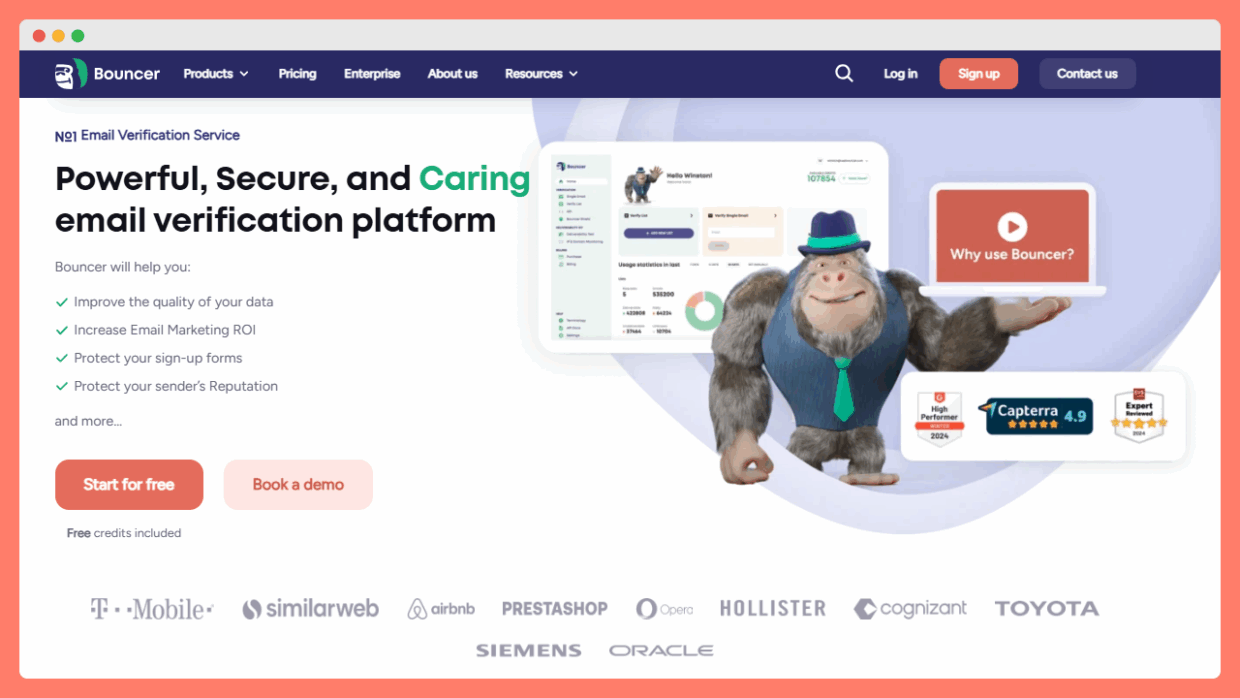
Below is a closer look at why Bouncer has become the preferred option for many outbound teams.
Accurate results that help SDRs avoid risky data
Bouncer stands out because its verification engine handles tough B2B email addresses exceptionally well. Instead of drowning you in “unknown” labels, it gives meaningful, actionable results that reduce guesswork.
Bouncer checks:
- mailbox existence
- server response patterns
- risk profiles (including spam traps)
- domain health
- formatting issues
- inbox readiness
- signals that influence spam filters
- factors that determine inbox placement testing outcomes
This level of accuracy matters for cold email outreach efforts because risky contacts hurt sender reputation quickly. With Bouncer, lists come back cleaner, outreach messages reach real inboxes, and performance becomes more predictable.
Fast bulk verification for large prospecting runs
Most SDR teams prepare prospecting batches weekly or monthly. Bouncer’s bulk email verification helps clean thousands of contacts at once without slowing down the workflow.
Teams use it when:
- importing enrichment exports
- preparing outbound campaigns
- reviewing event lists
- cleaning scraped datasets
- validating large spreadsheets of business email addresses
SDRs don’t have to wait long. Bouncer processes lists quickly and provides a clear breakdown of verified contacts, invalid addresses, and risky segments.
Fits smoothly into SDR stacks
Bouncer integrates with many cold emailing tools, sales engagement platforms, CRMs, and email marketing tools. Whether you rely on automated follow ups, cold email automation, signup forms, or domain search tools, Bouncer can fit into that workflow without friction.
It supports:
- integrations like HubSpot, Lemlist, Brevo, or Salesloft
- various integrated email finder tools
- marketing teams using sign up forms
- ESPs handling high outbound volume
This gives SDRs a clean pipeline where verification happens automatically or in one click.

Fair pricing without surprises
Many SDR teams appreciate Bouncer’s pricing because it:
- supports pay as you go
- offers a free plan
- doesn’t expire credits
- keeps costs stable even when list sizes fluctuate
- avoids stacking features behind premium tiers
This flexibility makes it easier to plan outbound budgets without guesswork.
Clear results SDRs can act on immediately
Bouncer’s interface is built for people who want answers quickly.
Reps don’t need to decode technical terms or read long documentation pages. Each result tells exactly what the contact represents and whether it belongs in a campaign.
This helps SDRs avoid:
- spam complaints
- preventable bounces
- sequences breaking mid-send
- marketing teams panicking about reputation dips
When results are easy to read, SDRs use the tool properly — and consistently.
Other top email verification tools SDRs consider
SDRs explore many tools before settling on the one that fits their workflow. Let’s look at the most common alternatives and the real feedback they tend to receive.
ZeroBounce
ZeroBounce is one of the best-known names in the space. It offers inbox placement testing, metadata enrichment, and broad integrations.
SDRs like:
- quality scoring
- detection of high-risk patterns
- strong extra features
- compatibility with cold emailing software
Concerns include:
- pricing becomes steep with scaling
- too many “risky” or “unknown” results
- heavier interface than some teams want
- customer support varies depending on load
- pay as you go credits get expensive fast
ZeroBounce suits marketing teams running email campaigns, but for SDR-heavy cold email outreach, it sometimes feels like more tool than necessary.
NeverBounce
NeverBounce built a reputation around speed. It is fast, simple, and handles basic invalid addresses effectively.
Pros:
- very fast bulk checks
- easy to use
- good first verification tool for small teams
Cons:
- accuracy drops with strict corporate servers
- limited advanced verification
- many questionable addresses return as “unknown”
- pay as you go plans feel less competitive today
It works best for lightweight workflows — but SDRs with larger outbound lists often outgrow it.
Kickbox
Kickbox appeals to marketing teams because of its deliverability insights.
Useful features:
- clean, intuitive interface
- inbox placement previews
- integrations with cold emailing tools
Limitations:
- important features require add-ons
- costly when scaled
- risky contacts require manual decisions
Kickbox is great for email campaigns, but for cold outreach campaigns, SDRs sometimes find the cost outweighs the benefit.
Emailable
Emailable integrates well and processes lists fast.
Strengths:
- broad integration network
- good speed
- straightforward UI
Weaknesses:
- inconsistent accuracy with B2B domains
- many “unknown” verdicts
- customer support feedback varies
- not ideal for sales teams that depend on cold email outreach efforts
Best suited for cleaning simple lists, not deep outbound.
Smaller platforms (Clearout, MailerCheck, Snov.io, etc.)
These tools appeal to teams looking for a free plan or built in email verification inside broader products.
They work well for:
- signup forms
- small marketing teams
- quick checks
- basic hygiene
But in such platforms, SDRs can report, for example:
- weaker spam trap detection
- poor accuracy with advanced domains
- limited sender reputation protection
- little insight into how emails land in multiple inboxes
For serious cold outreach efforts, these tools often fall short.
How the tools actually compare in SDR workflows
Here’s a practical side-by-side look based on real SDR feedback:
Accuracy
- Bouncer: strongest for B2B domains
- ZeroBounce: good, but vague results
- NeverBounce: simple patterns only
- Kickbox: marketing-oriented accuracy
- Emailable: inconsistent
Bulk email verification
- Bouncer, Emailable, NeverBounce are fastest
- ZeroBounce/Kickbox often slower in peak times
Deliverability + sender reputation
- Bouncer protects sender reputation the most naturally
- Kickbox needs paid add-ons
- Others leave risky emails in lists
Integration quality
- Bouncer fits SDR workflows best
- Others integrate widely but not always smoothly
Pricing
- Bouncer: most predictable
- ZeroBounce: most expensive
- Kickbox: add-ons make it costly
- NeverBounce + Emailable: cost fluctuates
How SDRs can choose the right tool (simple checklist)
If you’re selecting a verifier, test it like an SDR — not like a data analyst.
Ask:
- 1. Does it keep sender reputation stable over several campaigns?
- 2. Does it verify emails from domain search tools and integrated email finders reliably?
- 3. Does it handle spam traps and tricky server responses well?
- 4. Does it blend naturally into your sales engagement platform?
- 5. Does it work for cold email automation and multi channel outreach?
- 6. Is the pricing predictable when list sizes fluctuate?
- 7. Are results clear enough that SDRs don’t need explanations?
Answer those questions honestly and the right option becomes obvious.
Final recommendation
SDR work gets easier when the data layer is clean. Outreach becomes more predictable. Automated follow ups run on time. Cold emailing software performs as intended. And most importantly — sales teams avoid the painful cycle of repairing sender reputation every time a list goes wrong.
After reviewing the top email verification tools, one pattern stands out:
Most platforms offer interesting features, but only a handful deliver the accuracy and consistency outbound teams truly rely on.
Bouncer continues to be the most practical choice for SDR teams because it:
- handles B2B domains with accuracy
- protects sender reputation without extra setup
- fits into SDR tool stacks naturally
- offers fair pricing and a free plan
- keeps outreach campaigns predictable
- avoids overwhelming SDRs with complexity
If you want cold outreach efforts to run smoothly — and you want fewer surprises, fewer bounces, and fewer emergency deliverability audits — Bouncer is the easiest path to stability.
Try it with your next prospecting list.
You’ll feel the difference in how clean, consistent, and reliable your outreach becomes.
FAQ
Do SDRs need a cold email outreach software?
Most SDRs benefit from a cold email outreach software because it keeps the workflow organized and removes a lot of manual work. Modern platforms come with key features like automated follow-ups, scheduling, personalization, and detailed reporting for cold email campaigns. Many also support unlimited email accounts, which helps teams test different domains or separate prospecting streams without switching tools all day.
Even the best cold email software works better when paired with the right stack — an email verification service, a reliable CRM, and other tools such as enrichment platforms or sequence builders. SDRs can run outreach manually, but software gives structure, consistency, and a much higher chance of landing meetings at scale.
How can salespeople verify email addresses?
Salespeople usually verify email addresses using an email verifier or a full email verification service that checks deliverability signals, server responses, and risky patterns before a contact enters a sequence. These tools can validate single leads in real time or process large lists before a campaign goes live.
Some platforms offer a chrome extension so SDRs can verify emails directly while prospecting on LinkedIn, company websites, or databases. Others integrate with enrichment systems, CRMs, and other tools in the sales stack to keep data clean automatically. The goal is simple: confirm the address exists, reduce bounces, and help cold email outreach land where it should.
How important is email deliverability in sales?
Email deliverability is one of the most important factors in modern sales because it determines whether your messages reach real inboxes or sink into spam. Even strong outreach fails when the technical foundation is weak. A clean list, a good domain setup, and a consistent sending pattern help your reputation stay healthy so SDRs can run cold email campaigns confidently.
Many teams use an email verification service or email verifier to remove invalid contacts and protect their domain. Tools with key features like spam-signal detection or safe-send recommendations help maintain deliverability over time. And when problems appear, a dedicated support team from your outreach platform or verification provider can help you diagnose issues faster than trying to fix everything across other tools.
In short: if emails don’t land, sales don’t happen — deliverability is the foundation.


