





They corrupt your data, waste automation resources and damage your sender reputation. Email bounce rates averaged 10.68% across industries in 2025.
Every bounce is a wasted touchpoint that undermines the accuracy of lead scoring, reporting and downstream workflows in customer relationship management (CRM) systems.
This article explains why dedicated email verification tools should be part of every CRM data hygiene strategy.
We describe what to look for when selecting a verification service that integrates seamlessly with your CRM, and highlight the best options on the market.
We start by looking at why clean email data matters in a CRM context, then dive deep on Bouncer a verification tool with robust CRM‑integration features. We will finish with a comparison of other strong options. An evaluation checklist at the end of the blog post will help RevOps teams choose wisely.
Let’s get started!
TL;DR
- Bad email data quietly breaks CRM workflows: it inflates bounce rates, corrupts lead scoring and reporting, and wastes automation and storage budget.
- The best email verification tools for CRMs combine real-time and batch checks, native or low-code integrations, strong security (SOC 2 / GDPR), and clear statuses that trigger workflows automatically.
- Bouncer is the strongest CRM-centric option thanks to AutoClean for ongoing list hygiene, granular rules, native HubSpot integration, and low per-email pricing, with ZeroBounce, NeverBounce, and Clearout as solid alternatives for specific stacks.
Why email verification service matters within a CRM context
CRM systems run on data. Contact records drive along with tools like Chili Piper alternatives drive lead routing, scoring, segmentation and automated sequences. When invalid or outdated email addresses enter your CRM, they pollute the entire pipeline.
In a 2024 CRM data quality checklist, Insycle notes that bounced emails can seriously harm your domain reputation. Sending too many messages that bounce reduces the likelihood that future emails will land in the main inbox.
The same guide recommends removing hard‑bounced emails from CRM databases and explains that spam and obviously fake addresses (e.g., test@domain.com or fake@domain.com) clutter systems and should be identified and removed.
Poor data hygiene also creates operational waste.
Invalid emails trigger nurture sequences and scoring rules that go nowhere, skewing lead‑to‑conversion metrics and making reports unreliable. Clean data, by contrast, improves inbox placement and protects sender reputation. Sagacity Solutions estimates that if more than 10% of addresses in a 100,000‑contact campaign are invalid, that’s 10,000 wasted touches and a “tarnished sender reputation”.
Removing spam or unengaged contacts also reduces CRM storage costs and keeps automation focused on real leads. For operations leaders, investing in an email verification service is therefore not an optional convenience but a foundational control to ensure CRM integrity.

Essential features for CRM‑friendly email verification tools
When evaluating email verification services for CRM use, look beyond basic syntax checks.
A CRM‑friendly tool should offer:
Native or low‑code CRM integration
Direct integrations reduce friction by allowing you to verify contacts without exporting data. Bouncer’s AutoClean, for example, connects to HubSpot and verifies lists continuously.
ZeroBounce’s integration page highlights that its email verifier works with more than 60 website builders and CRM platforms, and the email vendor selection study notes that ZeroBounce offers 45 direct integrations with platforms like ActiveCampaign, GetResponse, HubSpot and Shopify.
Real‑time and batch modes
Real‑time APIs stop bad data at the point of entry, while bulk verification cleans legacy data. The Sagacity guide explains that real‑time validation prevents bad data from ever entering your system, whereas batch mode cleans existing lists.
Detailed deliverability checks
Leading verifiers go beyond simple syntax validation. They check domain existence, DNS/MX records, and mailbox availability and detect catch‑all, disposable or role‑based addresses.
Bouncer’s Deliverability Kit includes domain and syntax checks, catch‑all and disposable‑address detection and even estimates campaign bounce rates.
ZeroBounce’s HubSpot integration performs syntax, DNS, spam trap and disposable domain checks and adds a validation status to each contact record.
Automation triggers and reporting
Look for workflow hooks that feed verification results back into your CRM. Bouncer provides a “Bouncer Recommends” field to trigger workflows such as marking contacts as non‑marketing when they’re suppress‑worthy.
The best services offer dashboards that display verification results and let you schedule periodic jobs or monitor KPIs.
Compliance and security
Handling personal data requires robust security. Bouncer is SOC 2 and GDPR compliant, hosts data in the EU and anonymizes emails.
ZeroBounce holds certifications including SOC 2, ISO 27001 and HIPAA. Compliance should be non‑negotiable when integrating with customer databases.
Transparent pricing, support and scalability.
The emailvendorselection review recommends looking for per‑email pricing that suits your volume and support that includes live chat or phone.
Bouncer’s pay‑as‑you‑go model costs as low as US$0.002 per email and supports up to 250,000 emails per upload, making it suitable for enterprise‑scale CRM lists.
Deep dive: Bouncer the CRM‑centric email verification software
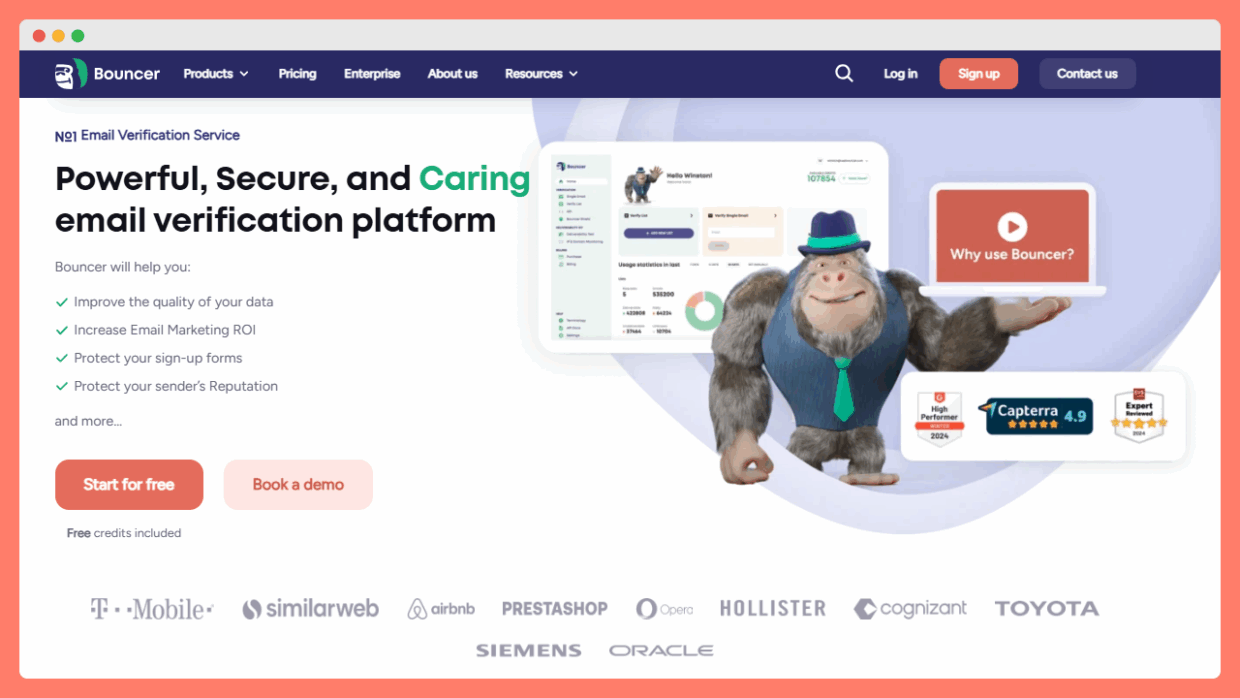
Bouncer is a fast, user‑friendly and powerful email verification service and is especially appealing for CRM administrators.
On the HubSpot marketplace, Bouncer is described as the easiest yet most powerful email verification and deliverability service, trusted by over 5,000 companies, and it connects directly to your HubSpot account so you can verify specific lists or set up AutoClean to “forget about email verification”.
The AutoClean feature is designed for CRM data hygiene: once configured, it automatically maintains a clean contact list by verifying lists and new contacts every hour. The marketplace listing also highlights a Toxicity Check that identifies widely circulated, breached or spam‑trap emails.
Bouncer’s dedicated AutoClean page goes into detail. It describes how AutoClean integrates seamlessly with your CRM, keeping lists fresh and ready to convert. The service is fully automatic: no manual imports are required – it verifies lists on a schedule and checks new contacts every hour. Integration is native to HubSpot.
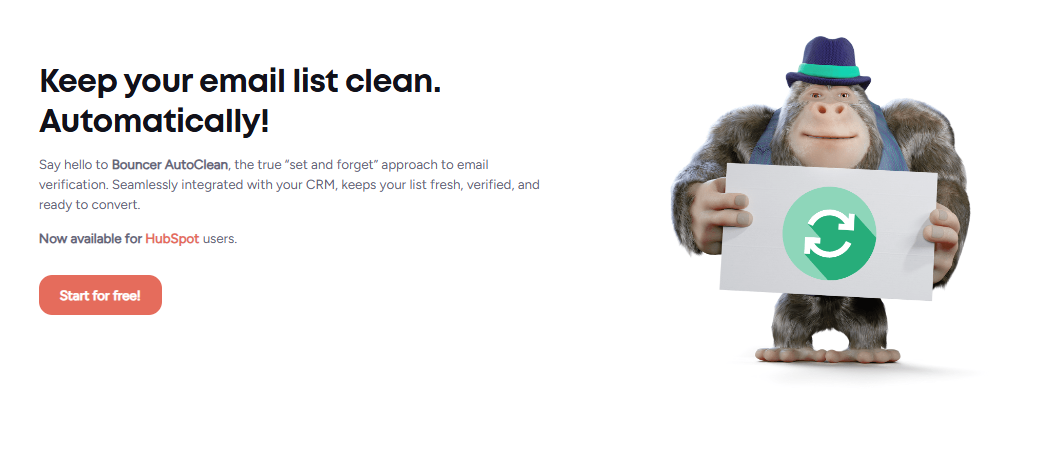
Granular controls allow administrators to set rules based on deliverability status or toxicity score – safe emails are kept, undeliverables suppressed, and questionable addresses quarantined. Workflow triggers let RevOps teams use the Bouncer Recommends field to automate actions like marking a contact as non‑marketing when the status is “suppress”.
Beyond CRM automation, Bouncer offers comprehensive verification checks.
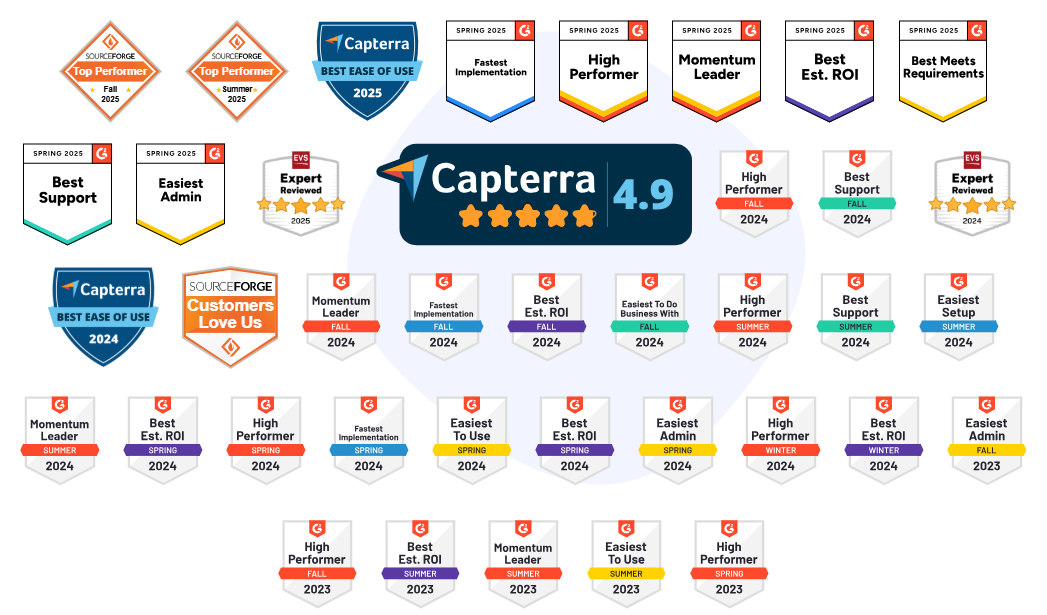
Bouncer performs domain and syntax checks, detects catch‑all and disposable addresses and allows bulk uploads of up to 250,000 emails. It also provides a Deliverability Kit to verify your mail server setup and authentication and alerts you if you’re blacklisted. Bouncer delivers the highest accuracy among various tested tools and is the cheapest per email (US$0.002–0.007). Customers also praised the dedicated support team.
These strengths make Bouncer particularly attractive for CRM administrators who need reliable, scalable verification integrated directly into their workflows.
Other top tools for CRM email addresses verification
Although Bouncer is a strong CRM‑ready option, several other verification services offer compelling features for CRM teams.
ZeroBounce

- ZeroBounce is known for its extensive integration ecosystem and deliverability tools.
- Its website explains that the real‑time email verification API can be connected to more than 60 popular website builders and CRMs.
- A HubSpot‑specific page notes that you can integrate the ZeroBounce API into your HubSpot workflows to validate contacts; the integration cleans email lists and “automatically stop[s] fake signups from spoiling your database”.
- The same page details that ZeroBounce performs syntax, DNS, spam‑trap and disposable‑domain checks and adds a validation status to each contact record.
- After syncing, it automatically imports lists from your CRM and exports the results back, and its Contact Monitoring feature validates new CRM contacts in real time.
- ZeroBounce is a good choice for companies needing broad CRM compatibility and features like inbox placement testing and DMARC monitoring.
NeverBounce
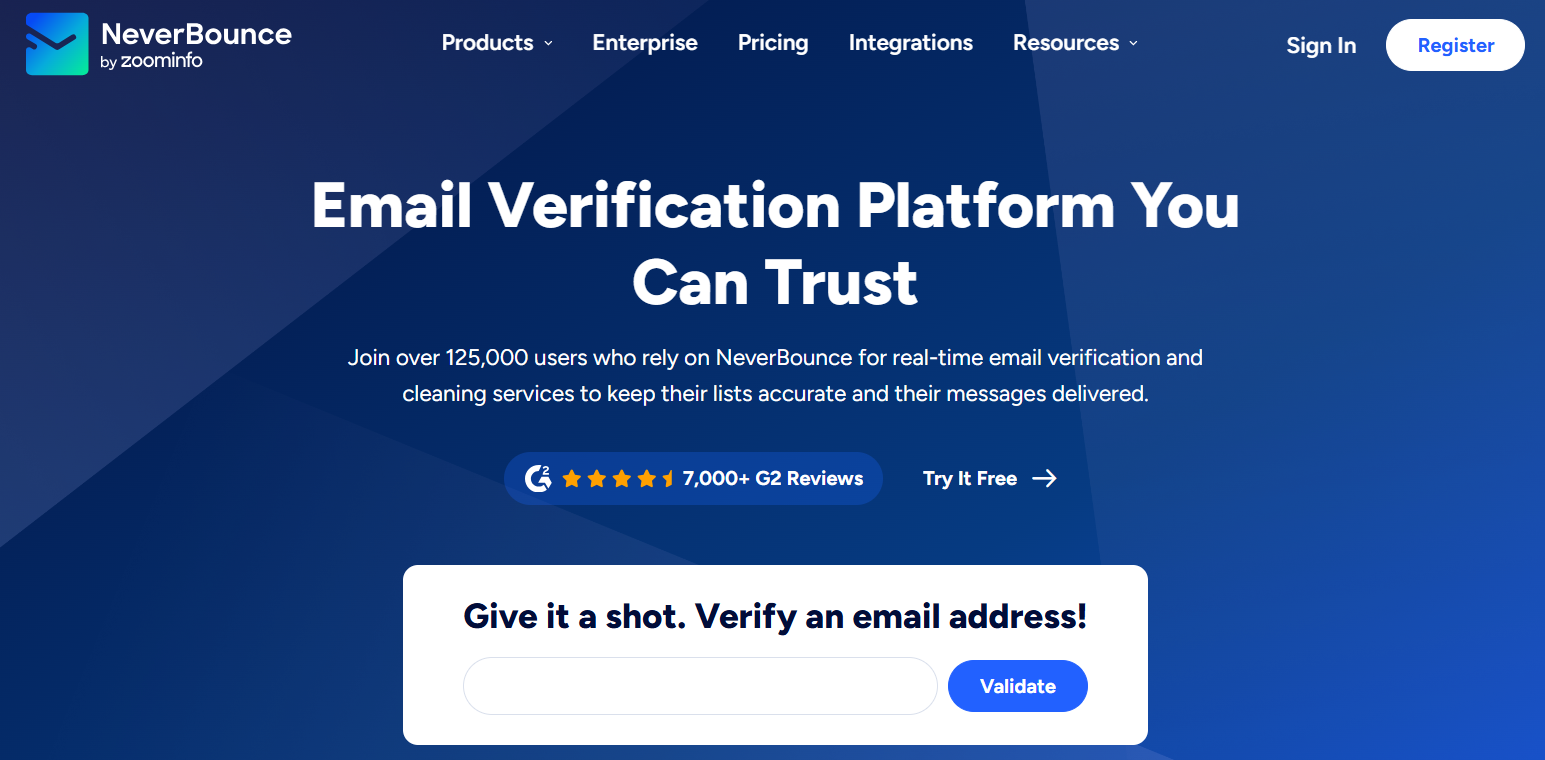
- NeverBounce focuses on speed and real‑time verification.
- It offers integrations with CRMs via platforms like Integrately and Zapier.
- An Integrately guide for connecting NeverBounce with Salesforce states that the integration automatically verifies the email address of every new lead added to Salesforce, keeping the database clean and saving time.
- It also allows CRM teams to routinely clean their contact lists by removing or flagging invalid emails.
- NeverBounce is therefore suitable for teams using Salesforce or similar systems who need real‑time verification at lead capture.
Clearout
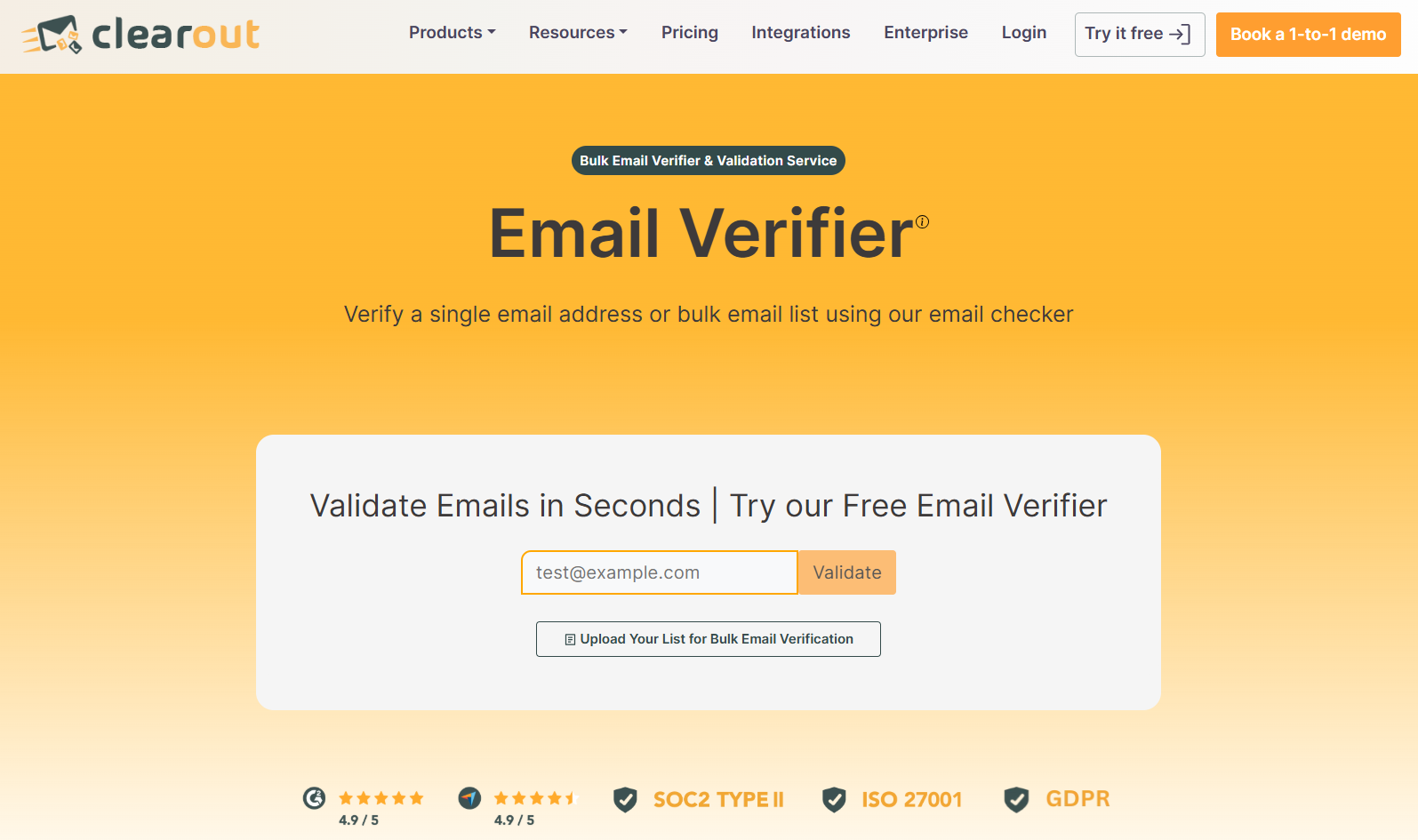
- Clearout distinguishes itself with a large set of validation checks and flexible integrations together with a pleasant user interface.
- Warmup Inbox’s comparison notes that Clearout provides more than 20 validation checks, including spam‑trap and greylisting detection and identification of disposable and role‑based email addresses.
- It also offers a Google Sheets add‑on for verifying lists directly in spreadsheets.
- These features make Clearout appealing for CRM administrators who often work in spreadsheets before importing data into the CRM.
- Clearout’s SOC 2 compliance and pay‑as‑you‑go pricing further enhance its suitability for enterprise environments.
Other verification tools include Emailable and Snov.io. When selecting among these, consider the balance between integration support, feature depth and pricing that fits your CRM use case.
Checklist for CRM teams
| Task | Status |
|---|---|
| Export CRM email snapshot & identify invalid addresses | ☐ |
| Validate capture source IPs (ip addresses) | ☐ |
| Run batch cleanup via bulk list verification | ☐ |
| Use bulk email verification on all legacy imports | ☐ |
| Confirm verification process includes domain validity | ☐ |
| Enable spam trap detection and log risky addresses | ☐ |
| Suppress risky emails; tag root causes like syntax errors | ☐ |
| Identify and quarantine catch all domains and catch all addresses | ☐ |
| Validate data security posture, SOC2/GDPR/HIPAA if applicable | ☐ |
| Confirm availability of free plan test sandbox or free credits | ☐ |
| Compare subscription plans against required volume tiers | ☐ |
| Upgrade to a paid plan for production enforcement | ☐ |
| Activate blacklist monitoring alerts & dashboards | ☐ |
| Block risky addresses from cold outreach until verified | ☐ |
| Validate send domains to avoid landing in spam folder | ☐ |
| Support ticket test to rule out poor customer support vendors | ☐ |
| Evaluate dashboards for detailed reports usefulness | ☐ |
Email marketing made easy for CRMs
Invalid email addresses inside a CRM cause more than bounced campaigns. They erode data integrity, waste marketing budget and undermine automation.
Modern email verification tools offer both real‑time and batch verification, identifies spam traps and disposable addresses, integrate with CRMs and marketing automation platforms and provide workflow triggers to keep data clean.
Bouncer stands out for its native HubSpot integration, AutoClean “set‑and‑forget” functionality, granular rules and cost‑effective pricing. You can try it now with 100 free credits at your disposal.
Tools like ZeroBounce, NeverBounce and Clearout also provide strong CRM integrations and may suit different requirements such as broader platform support or advanced deliverability features.
For CRM administrators and RevOps teams, the next step is clear: audit your data, evaluate tools against the criteria above and integrate a verification solution directly into your CRM.
By doing so, you’ll protect your sender reputation, improve workflow reliability and make your campaigns reach real contacts who can convert.


