





As inbox providers tighten spam filters and privacy rules, marketers can’t ignore list hygiene anymore. The global email verification software market reflects this urgency: it was worth about US$0.65 billion in 2024 and is projected to reach around US$1.03 billion by 2029, a compound annual growth rate (CAGR) of 9.6%.
For performance‑driven marketers, especially those at B2B SaaS companies, email verification is more than a technical necessity.
Clean lists directly influence open rates, conversion rates and return on investment (ROI). This guide explains why email verification matters, what features to look for, how to evaluate tools and integrate them seamlessly into marketing workflows.
It also dives deep into Bouncer, a popular tool designed for marketing teams, and compares it with a few other leading options.
TL;DR
- Dirty email lists hurt deliverability, ROI and sender reputation, so marketers need verification baked into both list imports and real-time capture.
- The best tools combine high accuracy, strong risk detection, fast processing, and easy integrations with CRMs and marketing platforms.
- Bouncer leads for marketers thanks to AutoClean for HubSpot, predictive bounce insights, EU-hosted data security and fast, scalable verification for both real-time and bulk workflows.
Why email address verification matters for email marketing
Poor list hygiene leads to soft and hard bounces that hurt more than campaign metrics. Today, mailbox algorithms analyse engagement behaviour and complaint history in addition to delivery signals – so one bad contact can weaken your entire sender domain.
With more than 347 billion emails exchanged globally per day in 2025, inbox competition is fiercer than ever.
Mobile email opens now exceed 55%, and modern email outreach success depends on sender reputation and engagement history, not just deliverability. Trusted list hygiene prevents wasted automation triggers, revenue leakage, and reputation damage.
B2B SaaS marketers especially need more than syntax validation. Advanced verification tools surface spam traps and institution-level catch-alls, threats that lower-quality systems often fail to identify.
This matters because even a 1% increase in spam-trap or invalid contacts can reduce inbox placement by up to 10%, rapidly suppressing reach.
Verification helps teams eliminate bad contacts before hitting “Send,” ensuring each email marketing campaign performs closer to benchmarks like 35.9%+ global inbox prevalence post-Apple privacy increased baselines.
Cost matters just as much as reputation. Most marketers pay per email verified or per batch of email marketing sends, so allowing dirty data into segmentation wastes real budget. Marketers should remember that 22.5-28% of emails decay annually, and B2B SaaS email addresses can decay 3.6% monthly, meaning lists lose value continuously if not validated. Keeping bounce rates near the industry median of 1.39-2.48% requires active verification cycles, protecting both ROI and compliance obligations like GDPR-aligned data infrastructure.

Marketing impact
- Deliverability & inbox placement
Bounce risk directly influences sender behaviour and deliverability signals. With bulk email verification in place, mailing lists perform closer to regional benchmarks such as Europe averaging 91% inbox placement vs North America at 87%, while anything below 80% inbox placement is considered poor. Hygiene reduces campaign filtering failures, keeping bounce rates below 2% and ideally below 1%, protecting email deliverability.
- List ROI
Investing in a campaign is pointless if messages never reach prospects. High-quality lists show open-rate performance ranging from 35.9% to 42.35% globally, with strong verticals reaching 45%+ ROI impact per US$1 spent. Reliable batch verification prevents reaching undeliverable contacts, preserving list ROI for email marketing campaigns.
Segmentation & personalisation
Valid emails fuel segmentation and personalisation accuracy. Segmentation accounts for nearly 58% of automated email workflows ROI, while personalised email outreach drives ~29% higher open rates and ~41% higher click-through rates, improving campaign ROI when risky contacts are removed.
Cost control
Sending budget is meaningful at per-unit scale. Removing undeliverable or risky contacts before automated outreach protects list economics while preventing ESP penalties. Without list checks, teams risk the 20-30% natural decay ceiling per year, which can inflate sending cost exposure, reduce domain reputation, and trigger account penalties.
What to look for in email verification software
Choosing the right platform requires more than a cursory feature comparison. The following criteria are particularly relevant for marketing teams:
Accuracy & risk detection
Look for services that go beyond syntax checks to detect spam traps, disposable addresses and catch‑all domains. Platforms should also analyse engagement history and identify “known complainers”.
Real‑time vs. batch verification
Real‑time API validation catches typos and invalid addresses at the moment of capture and can reduce bounce rates by up to 95%. Batch verification, on the other hand, is essential for cleaning legacy lists or preparing a campaign.
Multi‑layer verification
Effective tools perform syntax, domain and advanced SMTP checks, and they detect role‑based and disposable emails. Look for multi‑layer processes that filter out catch‑alls and role addresses (e.g., info@ or sales@).
Integration & automation
The tool should integrate with your CRM, marketing automation (MA) and outreach platforms. Native workflows reduce manual exports and keep data flowing automatically.
Speed & scalability
Processing speed matters when verifying large lists. Some platforms can handle hundreds of thousands of addresses per hour and return results quickly for real‑time workflows.
Compliance & security
Verify that vendors are GDPR/SOC 2 compliant, offer data anonymisation and allow deletion of results. EU‑hosted solutions may simplify compliance for European companies.
Pricing model
Compare pay‑as‑you‑go credits, subscriptions and unlimited plans. Ensure the pricing encourages continuous verification without punitive overage fees.
The best email validation tool – Bouncer – deep dive
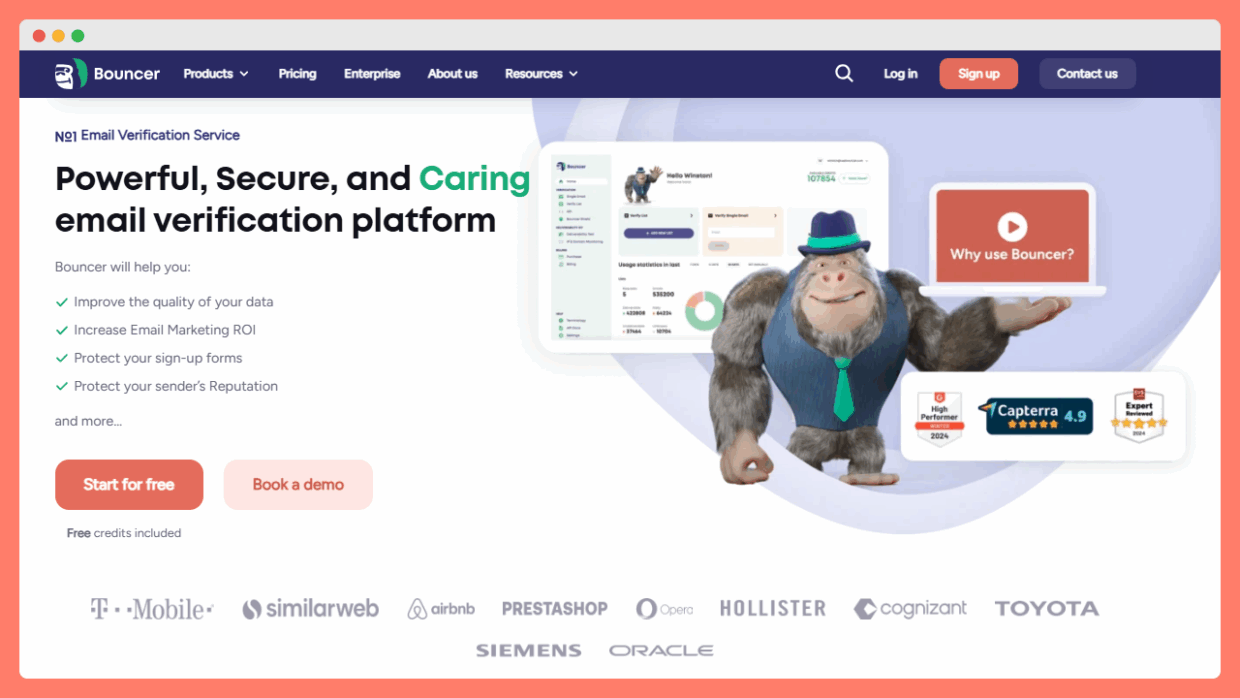
Bouncer is the most user‑friendly and powerful email verification and deliverability platform.
G2 reviewers say Bouncer is a “really good email verification tool with excellent support” and praise the “streamlined verification process” that helps “sterilize all my leads every time I run a campaign” and “take care of email marketing campaigns.” Users highlight it as a powerful email verifier that works across Email Service Providers, with a “fair and cool credit top-up system” including free credits where available, while some request more depth in API documentation, even though the user interface remains user-friendly and intuitive.
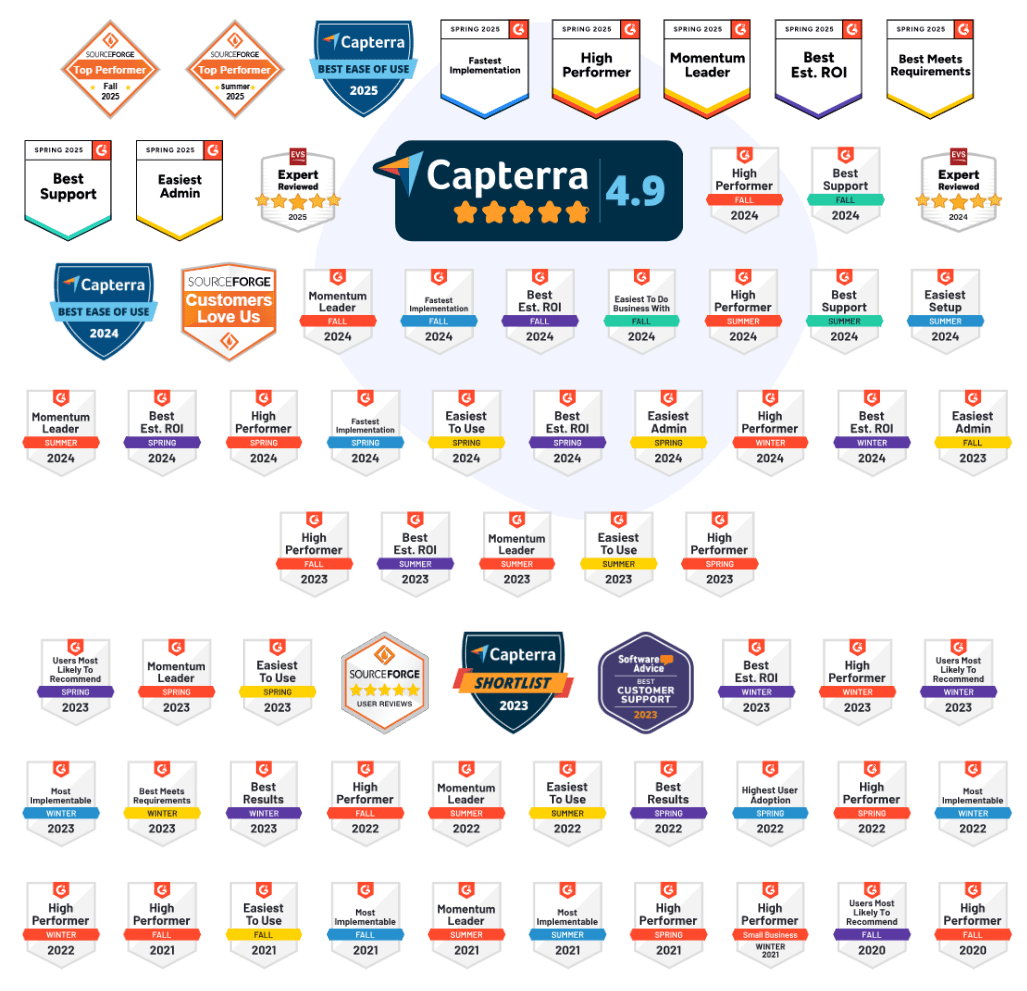
Bouncer is secure and GDPR‑compliant, and trusted by over 5 000 companies across six continents.
The platform offers both list and API verification and maintains a zero‑downtime policy. It can verify up to 200 000 emails per hour per customer and includes advanced modules such as a Toxicity Check and Deliverability Kit.
HubSpot integration & AutoClean
Bouncer’s marketing‑oriented strength lies in its HubSpot integration. The AutoClean module creates a “set and forget” workflow. It:
- automatically verifies new contacts every hour,
- tags risky or undeliverable addresses via a “Bouncer Recommends” field,
- and triggers non‑marketing workflows in HubSpot.
Marketers no longer need to export lists manually since the integration continuously cleans data in the background, at the same time improving open and click rates and letting teams focus on segmentation and messaging.
Key features
- Bulk & Real-Time Verification: marketers can drag‑and‑drop lists of up to 250 000 addresses or call Bouncer’s API to check emails at the point of entry. The system categorises addresses as deliverable, undeliverable, risky or unknown.
- Predictive Bounce Rate Insights: Bouncer includes a Bounce Estimate feature that uses its proprietary algorithm to predict how many verified emails may bounce back, helping marketers evaluate risky or unknown addresses instead of deciding blindly.
- Toxicity & Spam-Trap Detection: the Toxicity Check flags widely circulated or breached emails and potential spam traps. This “toxicity scoring” differentiates Bouncer from simpler validators.
- GDPR‑compliant & EU-hosted: data centres are located in EU territory, email addresses are hashed and can be deleted on demand. This appeals to marketers operating under GDPR.
- Integrations & developer‑friendly API: Bouncer integrates with marketing automation platforms (HubSpot, Mailchimp, etc.), CRM systems and outreach tools. A real‑time API allows developers to validate single emails or bulk lists with minimal code.
- Free sampling & pay‑as-you‑go pricing: users can test list quality with free sample verification and purchase credits that never expire.
Marketing benefits & use cases
- Lower bounce rates and better deliverability
Bouncer helps detect deliverable and undeliverable emails so you can decrease bounce rates and avoid spam. In one example, a SaaS company using Bouncer’s API for sign‑up forms reduced bounce rates from 6% to 2%.
- Cleaner data feeding campaigns
The HubSpot integration removes manual list exports and ensures only verified addresses enter campaigns, improving segmentation and ROI.
- Predictive insights & ROI
Predictive bounce rate analysis and toxicity scores help marketers prioritise leads and avoid damaging sends.
- European data sovereignty
GDPR‑aligned hosting and anonymisation reassure EU‑based marketers and clients.
Case study
BookYourData provides the clearest proof of why email verification matters for marketers managing large lists and performance metrics. They processed 8 million email addresses with Bouncer’s verification process, preventing 1 million undeliverable sends before exports reached any email service provider.
This directly protects email deliverability, shielding sender credibility and ensuring campaigns avoid the spam folder rather than the inbox.
Marketers rely on bulk email verification for list hygiene, and BookYourData recovered 6 million previously unverifiable catch-all contacts, turning bad data into verified contact details for follow-up outreach.
Their CEO called Bouncer “cheap insurance for maintaining clean, trusted lists at scale,” while reviewers consistently praise its user friendly interface, customer support, and transparent subscription plans including monthly subscriptions.
For marketers sending large batches in 2026, the tool’s ability to classify risky emails, run disposable email detection, catch all server detection, and provide instant bounce analysis helps teams suppress or re-engage leads instead of burning campaign budget.
With guaranteed scale to millions and no manual splitting needed, BookYourData’s results demonstrate how the right email verification tool improves campaign ROI, protects database health, and amplifies engagement when the stakes are high.
Join BookYourData and other companies – get your 100 free credits.
Other best email verification services
While Bouncer is a strong choice for marketers, it’s not the only option.
Below are brief overviews of several popular alternatives:
ZeroBounce: deliverability diagnostics + verification
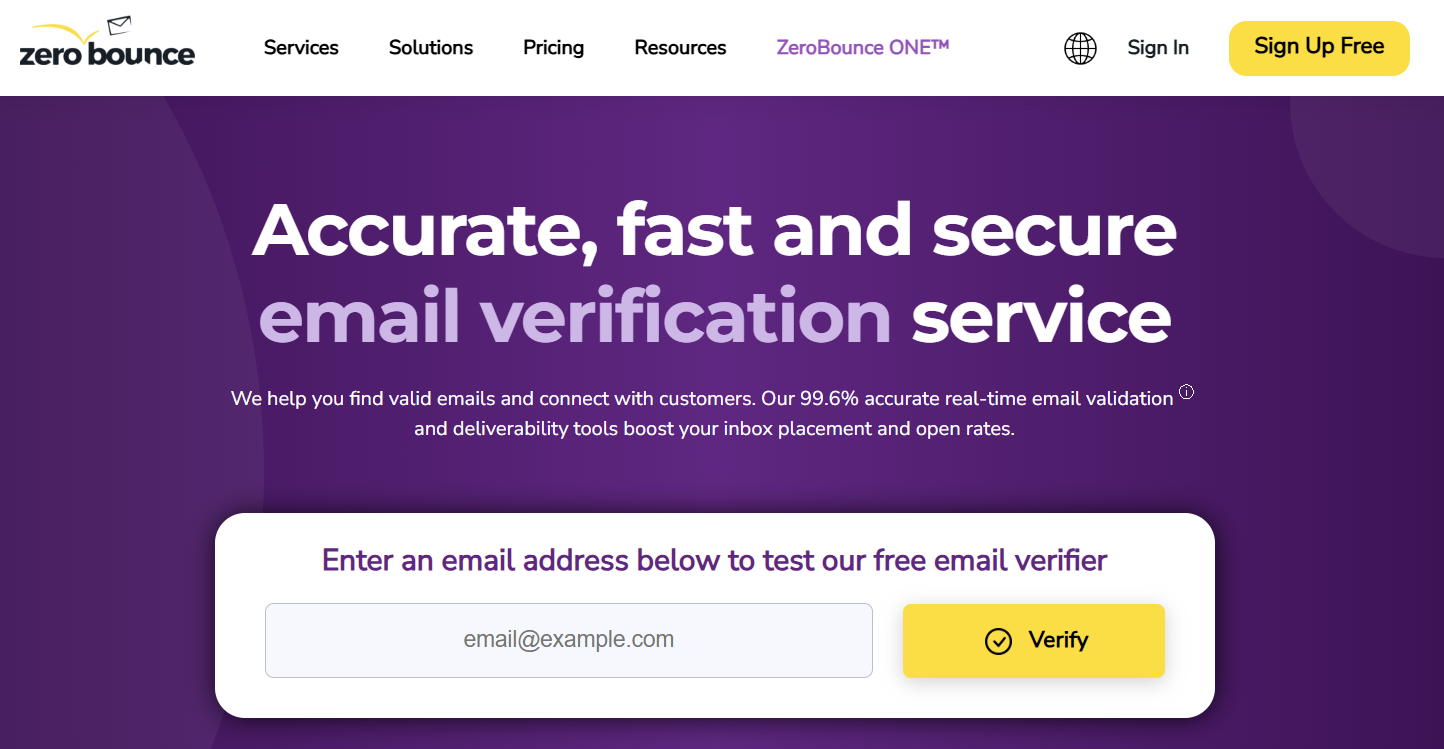
ZeroBounce combines verification with deliverability analytics. It offers bulk and real‑time verification, AI scoring for catch‑all emails, inbox placement tests and spam‑trap detection.
Additional modules monitor DMARC records and server diagnosticsw. This depth makes it ideal for teams wanting both list hygiene and detailed deliverability insights. However, the extra features add complexity and cost.
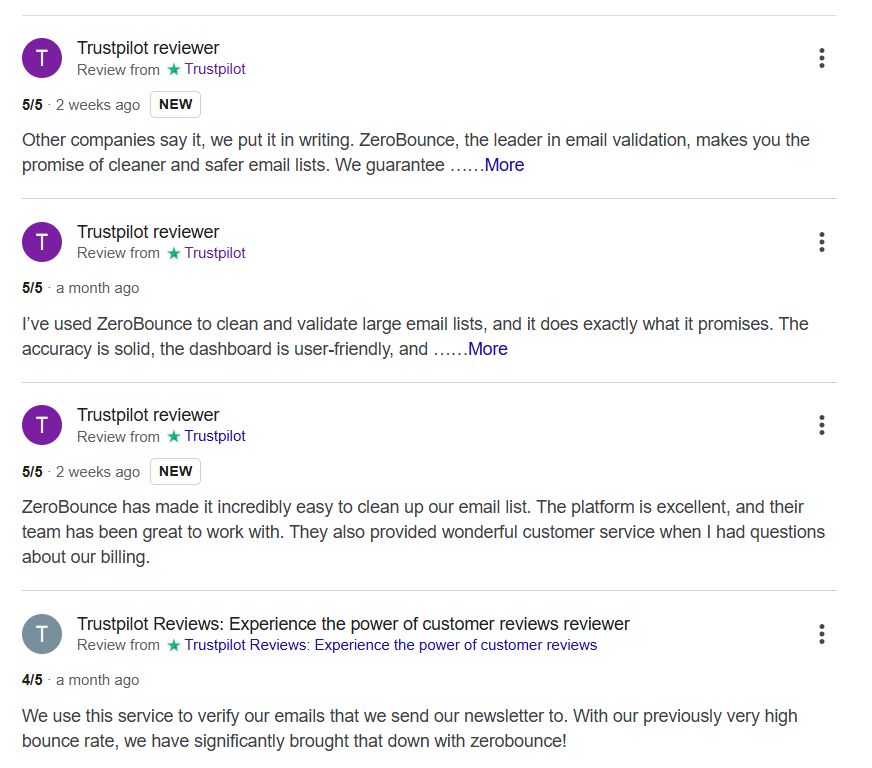
Latest user reviews:
NeverBounce: speed & automated Sync
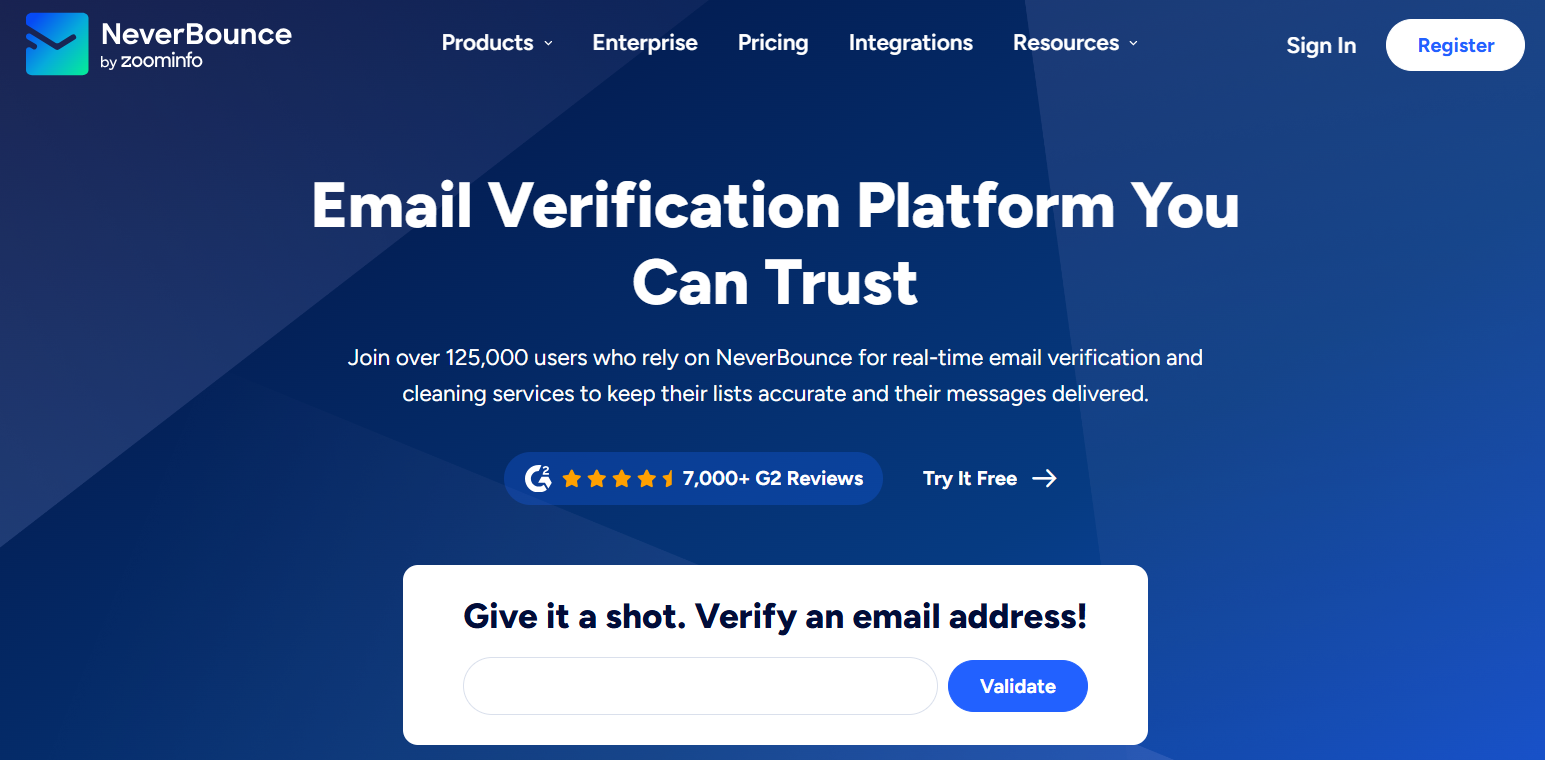
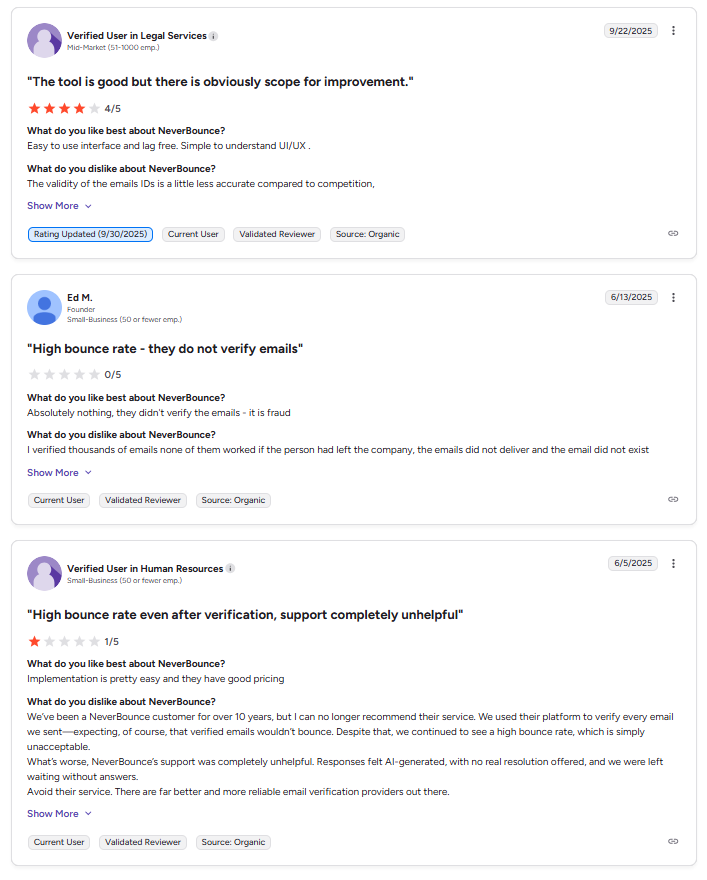
NeverBounce focuses on speed and automation. It integrates directly with CRMs and sign‑up forms, enabling continuous cleaning rather than one‑off batches. The service provides bulk verification, real‑time API checks and automated sync to keep ESP lists clean over time.
Its strength lies in fast processing and easy integration, but catch‑all detection can vary and deeper deliverability diagnostics are limited.
Latest user reviews:
Snov.io: verification + outreach platform
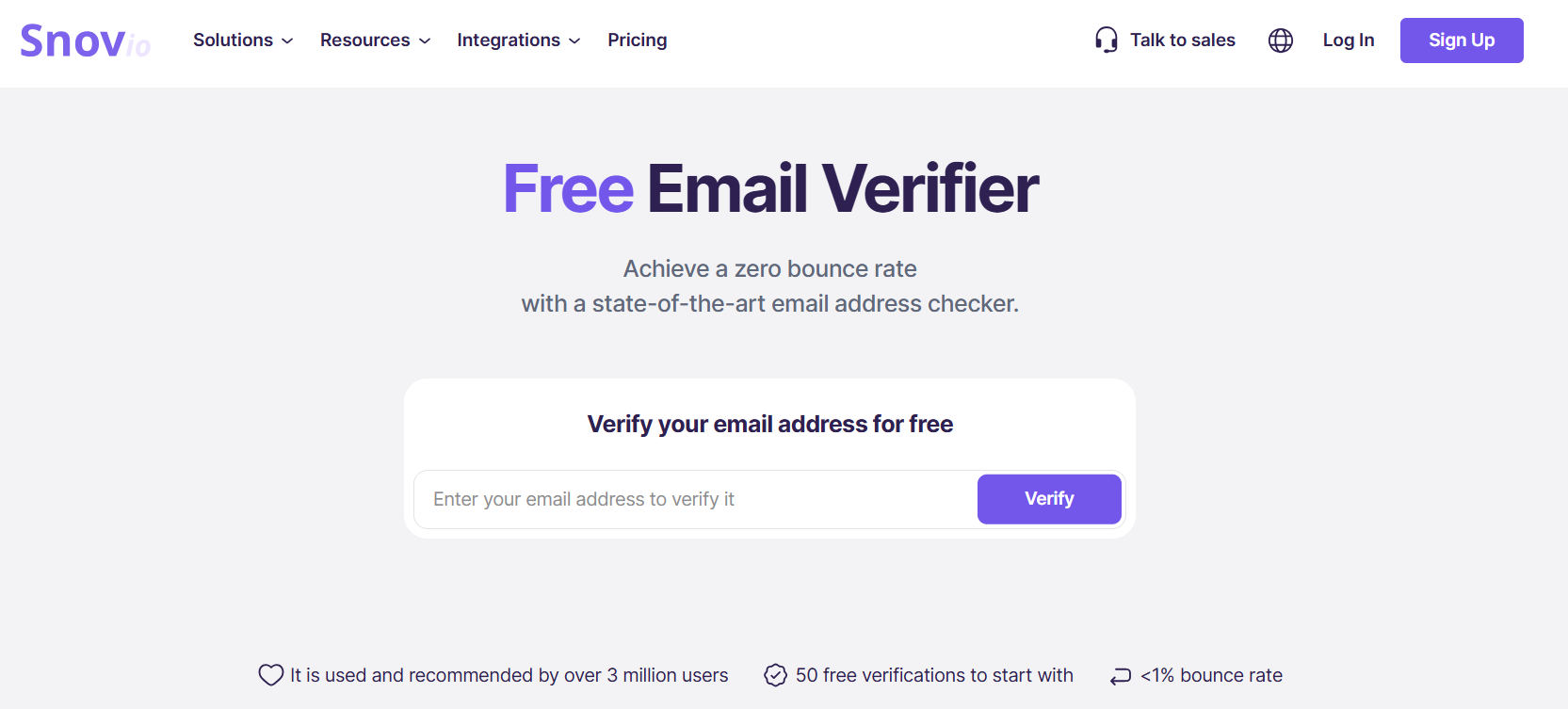
Snov.io combines email verification with lead sourcing, outreach sequencing and a lightweight CRM. It offers bulk verification, real‑time API checks, detection of catch‑all/disposable/role‑based emails and a seven‑step verification pipeline.
It’s ideal for sales teams that want prospecting, verification and outreach in one workflow. For marketers who only need verification, the broader platform may feel heavy and credits shared across features can burn quickly.
Latest user reviews:

Hunter (verifier): simple & integrated with lead finding

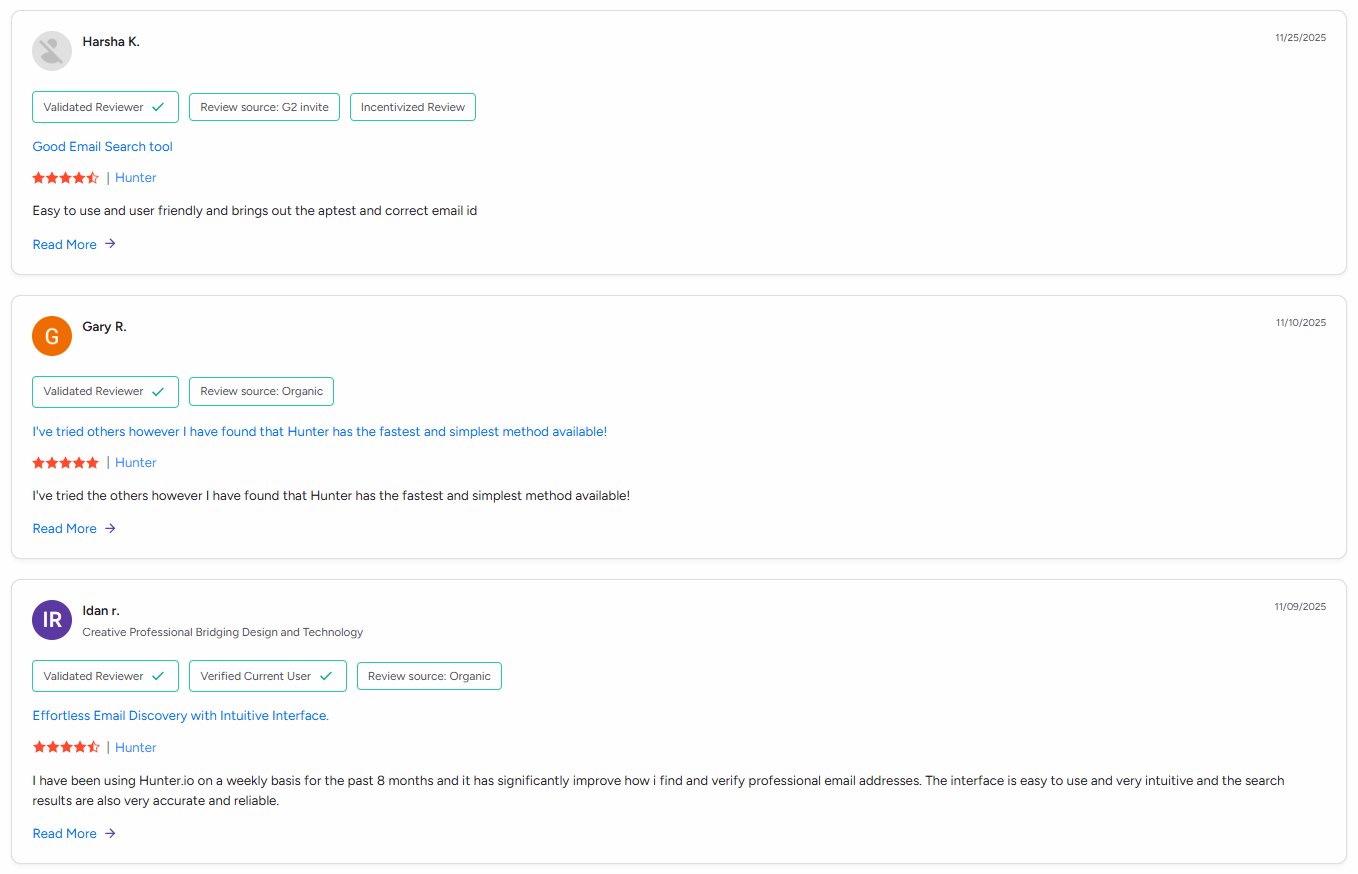
Hunter is widely known for its email finder, with an integrated verifier. It supports bulk and single verification, a real‑time API and outputs statuses for valid, invalid and accept‑all addresses. Checks include SMTP and MX server validation.
Hunter is convenient for marketers already using the platform for lead discovery. However, verification depth is lighter than dedicated tools.
Latest user reviews:
Emailable: speed & accessibility
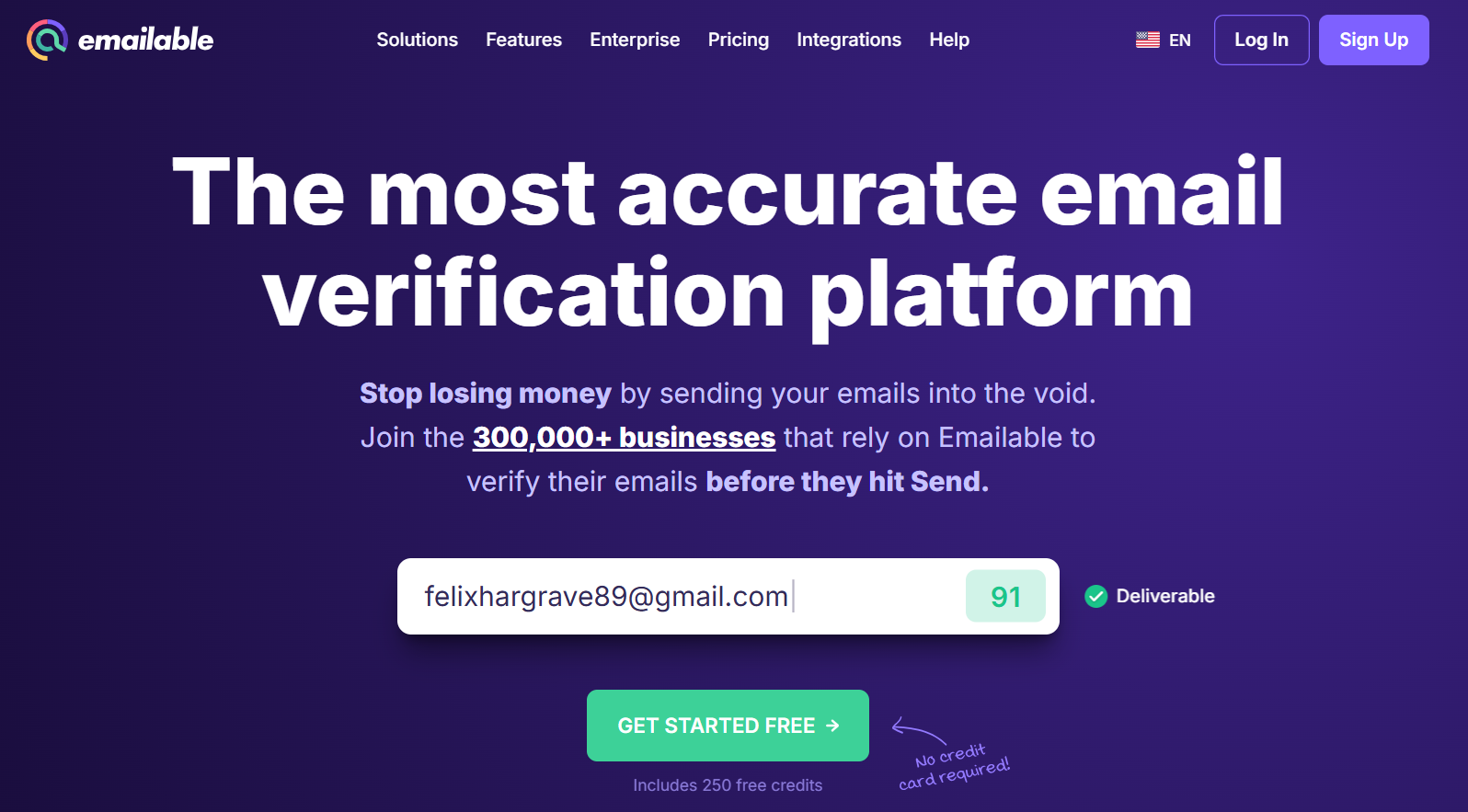
Emailable emphasises speed and simplicity. It provides bulk list cleaning, real‑time API verification, detection of disposable/catch‑all/role‑based domains and domain‑level and mailbox‑level health signals.
A form widget enables live validation on web forms. The generous free trial makes it attractive for testing, though deep deliverability diagnostics are limited.
Latest user reviews:

Clearout: deep validation & compliance
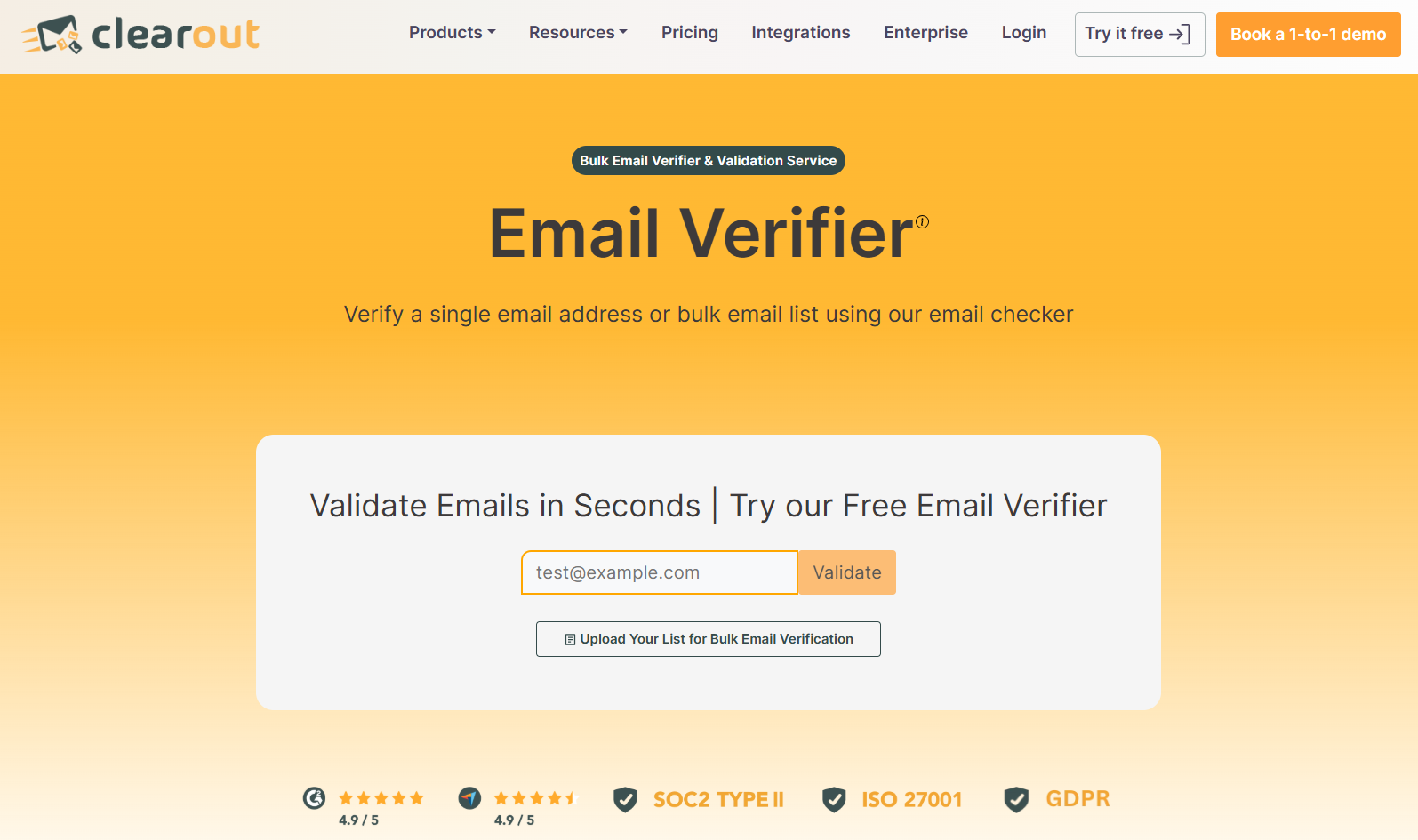
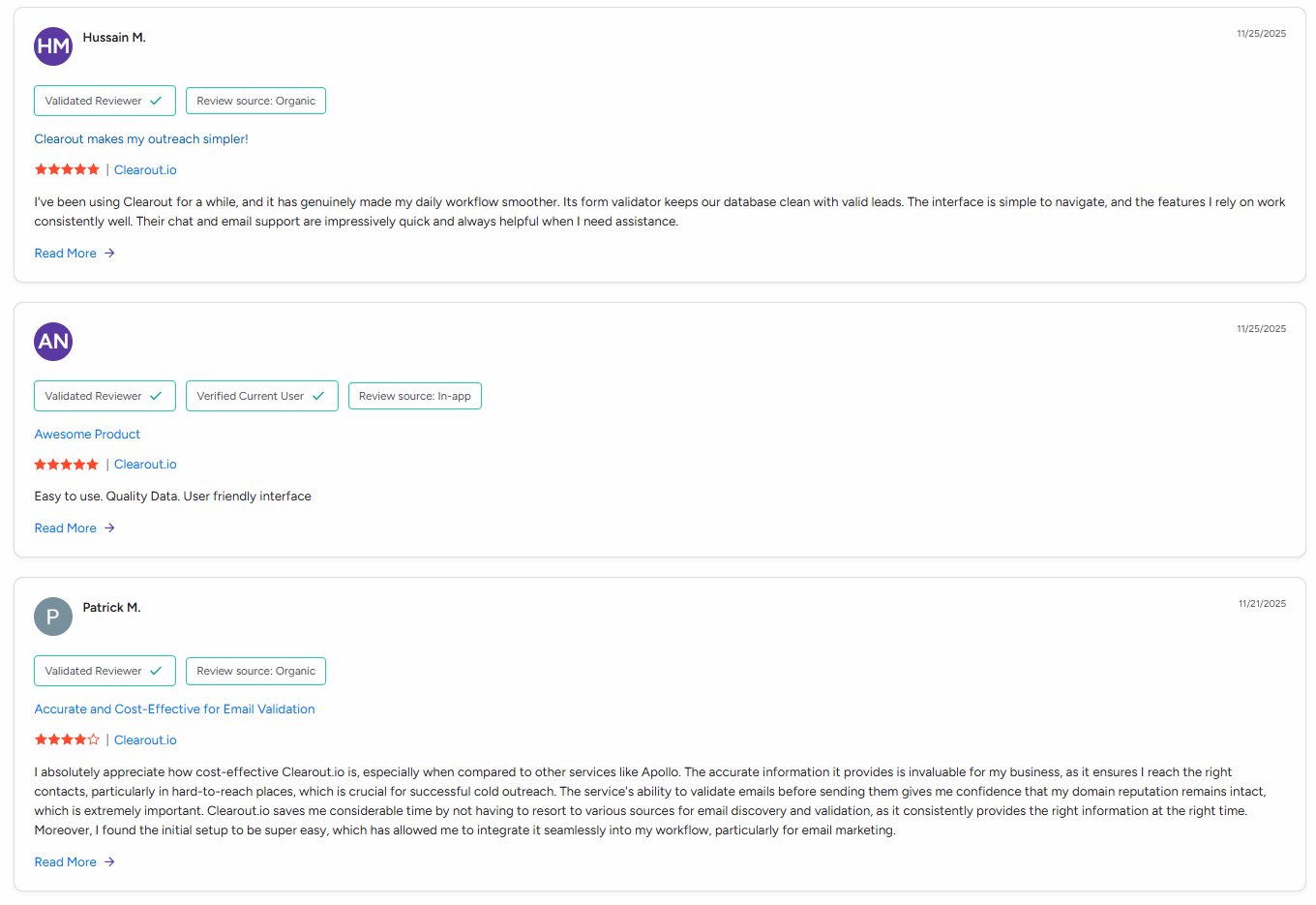
Clearout is designed for organisations needing thorough validation and auditability. It offers bulk and real‑time verification, 20+ validation checks (including spam‑trap and greylisting detection) and a Google Sheets add‑on.
SOC 2 and GDPR compliance and detailed reporting appeal to data‑sensitive businesses. The interface has a learning curve and pricing may be higher for occasional use.
Latest user reviews:
Market context
A comprehensive comparison by Warmup Inbox assessed 15 top verifiers and found that most modern tools provide bulk list verification and real‑time API checks, detect spam traps, disposable domains and catch‑all servers, perform syntax, domain and MX record validation, and filter out hard bounces.
Many also incorporate AI scoring, inbox placement tests or DMARC monitoring.
It’s important to remember that selecting the right solution depends on your specific workflow, integration needs, budget and risk tolerance.
How marketers should evaluate and use verification tools in their email campaigns
It’s not as obvious as it may seem, so here are some best practices:
#1 Define goals
Start by defining your objective. Do you need to verify email addresses captured in real time, repair a decayed list, or both?
If you’re running outreach campaigns via an email outreach platform, picking the right email verification tool ensures your foundations stay strong.
The verification process should map to your KPIs:
- improve email deliverability,
- protect your sender reputation,
- and support both bulk and real-time verification needs.
A clear verification process prevents invalid email addresses from quietly inflating your database. For ad-hoc scrubbing, choose a bulk verification tool. For always-on hygiene, look at verification tools in 2026 where automation and scale-readiness separate winners from fragile options.
Assess accuracy & risk detection
Marketers must validate more than syntax. The email verification process should confidently classify professional email addresses, detect disposable email addresses, and flag risky emails, including spam traps and risky emails hiding behind catch-all servers.
Accuracy benchmarks are meaningless without understanding risk scoring.
A bulk verification tool must return instant bounce analysis to quickly surface threats and ideally follow instant bounce analysis with suppression recommendations.
Good deliverability tools refund credits when an address is unverifiable – important when the vendor promises free credits back for emails that fail the email verification process.
Also inspect catch all server detection, and check if the vendor clearly returns verified contact details so clean records enrich downstream segmentation.
Ask vendors if you can validate emails, or validate emails in bulk via a google sheets add on to audit acquisitions at scale.
Check integration & workflow
Your email service provider stack must feel the lift. Confirm the vendor offers connectors with marketing platforms, marketing and sales teams collaboration tools, CRMs, and campaign systems.
The API should support validate emails on the fly, with clear email verification API documentation such as email verification API documentation.
Integrations should extend beyond CRMs and plug into scoring, routing, nurture, or outreach.
If you’re verifying at capture stage, ensure the tool integrates with sign up forms and lead-intake automations.
A comprehensive solution supports data travel into marketing platforms, so invalids don’t weaken ROI. Inspect the user interface for export controls, batch triggers, and per-record intelligence. A user friendly interface, or user friendly interface specifically, reduces ops strain when lists scale to 500k+.
Evaluate speed & extreme scale readiness
Bulk lists need power, not patience. Confirm throughput matches your volume – whether you’re doing bulk email verification or using a bulk verification tool, results must return fast enough to support compressed send cycles.
Best-in-class deliverability tools process large files quickly using mail servers intelligence and parallelised mail servers responses from mail servers they connect to.
Real-time capture and batch cleans benefit from API capacity that scales without choking.
If your list exceeds 500k, check if the tool requires manual splitting or supports multi-file orchestration. Verification latency impacts campaign economics, so teams should track processing SLAs, speed ceilings, and operational friction scores.
Compare pricing models
Verification ROI is heavily pricing-model dependent. Some vendors offer subscription plans structured as credits, others as subscription plans structured via monthly subscriptions.
Review whether the email marketing platform you use accepts the verifier natively, or if you’re syncing via a connector or API.
Determine if subscription plans or pay as you go packages suit better than seat-based recurring subscriptions.
Estimate cost per 1k checks, cost per million, and whether savings from removing invalids outweigh integration overhead. Cost clarity is key for agencies that must justify margin and media-adjacent spend.
Compliance, data governance & security
Email lists are datasets, not junk drawers. Prioritise vendors maintaining clear privacy positions: GDPR & SOC-2 alignment, PII handling, retention policies, and data deletion SLAs. This matters deeply for sales operations and RevOps teams governing inbound lead-data, outreach performance and segmentation accuracy.
Verification should preserve, not compromise, data quality.
Look for platform-level data separation, clear anonymisation rules, hashed persistence, and deletion guarantees. Documentation quality signals workflow safety: heavy data teams must trust how verification decisions are archived, replayed, or overwritten.
Test & measure
Run pilots, not guesswork. Use free credits, free plan access, or free trial sampling to evaluate tooling before pushing production-scale verification.
Measure list lift using bounce reduction, spam-trap misses avoided, cost saved, segmentation integrity and campaign performance elevation pre- vs post-implementation.
Inspect engagement lift, sender-reputation improvement, inbox placement testing, and whether your email service provider experiences fewer instant bounce analysis events once integrated.
Teams managing huge datasets should use inbox placement testing as a surrounding metric to validate reputation gains. Track metrics like: % invalid, bounce rate, complaints, sender reputation, cost saved, and comprehensive insights.
Conclusion
Email verification is no longer optional for marketers aiming to maximise deliverability, ROI and customer trust. As the market expands, the stakes for list hygiene grow higher.
Modern tools offer sophisticated checks that go beyond basic syntax validation to detect spam traps, disposable accounts and risky catch‑all domains.
Among these tools, Bouncer stands out for its marketer‑friendly features, like automatic HubSpot cleaning, predictive bounce insights, and EU‑centric data handling. All while maintaining high performance and precision.
The right verification platform will depend on your goals, volume and tech stack.
Evaluate options based on accuracy, integration, scalability and compliance. Then integrate verification into both real‑time capture and routine list maintenance, monitor the results and adjust your workflows accordingly.
With clean data feeding your campaigns, you’ll see stronger deliverability, higher engagement and better ROI.
If you’re ready to start now, try Bouncer now and see how it can change your email marketing game.


