





Here are our top contenders for the best email list cleaner for 2026.
The best email list cleaner should do more than remove invalid addresses. It should help you protect sender reputation, reduce bounces, spot risky contacts, and keep your email data usable before every campaign.
For marketing, sales, and lead generation teams, Bouncer is the strongest all-round choice in 2026 thanks to its accuracy, low unknown results, bulk cleaning speed, GDPR-friendly setup, and clear output. Below, we compare Bouncer with other popular email list cleaners so you can choose the right tool for your list size, risk level, and workflow.
TL;DR: best email list cleaners in 2026
If you need the best overall email list cleaner, choose Bouncer’s email verification tool. It gives you accurate bulk verification, a low unknown rate, real-time validation options, strong security, and simple results your team can act on.
If you need extra deliverability add-ons, ZeroBounce is worth checking. If you want a familiar bulk verification tool, NeverBounce may fit. If you already use Mailgun for sending, its validation tools can be practical. If price is your main concern, Clearout and similar tools may be enough for smaller checks.
The right choice depends on four things: how risky your list is, how often you clean data, how much you care about compliance, and if you need real-time email verification at the point of signup.
Quick comparison: best email list cleaners
| Email list cleaner | Best for | Bulk verification | Real-time API | Key strength | Watch out for |
| Bouncer | Best overall email list cleaner | Yes | Yes | Accuracy, low unknown results, security, ease of use | Not the cheapest option if you only need a tiny one-off check |
| ZeroBounce | Teams that want validation plus deliverability extras | Yes | Yes | Broader deliverability toolkit | Can feel heavier than needed for simple list cleaning |
| NeverBounce | Simple bulk email verification | Yes | Yes | Familiar option for cleaning existing lists | Less differentiated if you need deeper risk insights |
| Mailgun Validate | Teams already using Mailgun | Yes | Yes | Works well inside a Mailgun-based sending setup | Less attractive as a standalone email list cleaner |
| Clearout | Budget-sensitive teams | Yes | Yes | Simple cleaning and validation options | Check results carefully on risky or older lists |
| Kickbox | Teams that want straightforward verification | Yes | Yes | Easy list validation workflow | May lack the wider hygiene layer some teams need |
| Emailable | Fast list verification | Yes | Yes | Clean interface and quick checks | Compare pricing and data needs before choosing |
How we ranked these email list cleaners
A good email list cleaner should protect your sender reputation, not just give you a green or red status next to each email address.
We ranked the tools using criteria that matter most before a real campaign:
| Ranking factor | Why it matters |
| Accuracy | Poor accuracy can remove good contacts or leave risky ones in your list. |
| Unknown rate | A high unknown rate leaves your team guessing before a campaign. |
| Bulk cleaning speed | Large lists need fast processing, especially before time-sensitive launches. |
| Risk detection | Disposable emails, catch-all domains, spam traps, and toxic patterns can damage deliverability. |
| Real-time validation | Forms, signups, and lead capture flows need protection before bad data enters your CRM. |
| Security and compliance | Email data is sensitive, so storage, processing, and regional compliance matter. |
| Ease of use | Marketers and sales teams need clear outputs, not a technical report nobody reads. |
| Pricing transparency | Credit usage and hidden limits can change the real cost of cleaning a list. |
We weighted accuracy, unknown results, and security higher than price. A cheap email list cleaner that misses risky addresses can cost more than it saves.
If you want a deeper breakdown of verification quality, accuracy, speed, and cost, read our comparison of the best email verification tools.
Best email list cleaners in 2026
1. Bouncer: best overall email list cleaner
Bouncer’s email verification tool is the best email list cleaner for teams that want accurate verification, fast bulk cleaning, clear results, and strong data protection in one platform.
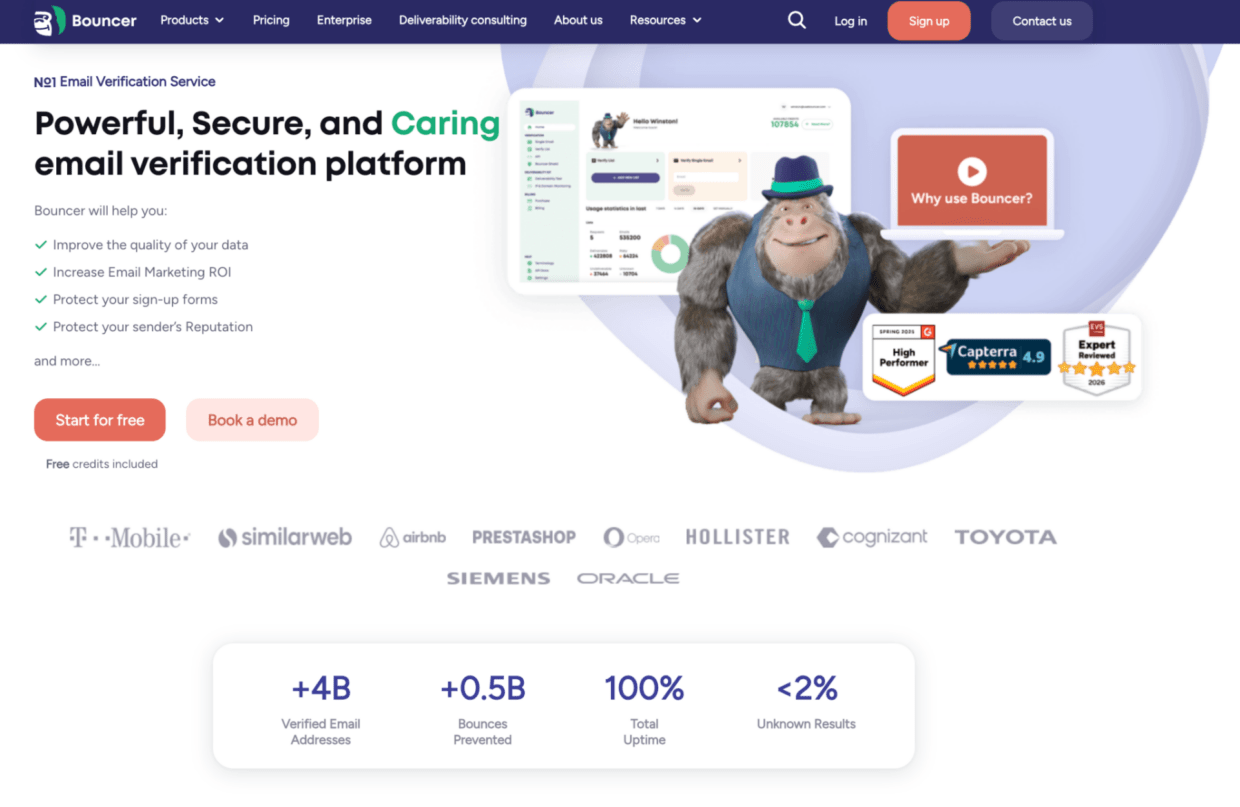
It works well for marketing teams cleaning newsletter lists, sales teams preparing outbound campaigns, agencies managing client data, and companies that want to stop bad emails before they enter their systems.
Why Bouncer ranks first
Bouncer stands out because it combines bulk email list cleaning with real-time email verification and extra deliverability tools. You can clean existing lists, verify new emails through an API, check risky patterns, and protect forms with Bouncer Shield.
That matters because list cleaning is no longer a pre-campaign admin task. It is part of sender reputation management. If you want to go deeper into the bigger picture, Bouncer’s guide to email deliverability trends explains why list quality, authentication, and engagement are becoming harder to separate.
Bouncer is especially strong if you need:
- accurateemail verification
- low unknown results
- list cleaning before campaigns
- Email Verification API for forms, signups, and product flows
- GDPR-friendly processing
- clear statuses your team can understand
- extra hygiene checks through Toxicity Check and Deliverability Kit
Bouncer’s top features
- Email Verification App helps you upload and clean email lists before sending. It checks addresses, identifies invalid and risky contacts, and gives your team a cleaner list to work with.
- Email Verification API lets you validate emails in real time. This is useful for signup forms, lead capture flows, product registrations, checkout forms, and any place where a bad email can enter your system.
- Bouncer Shield protects forms from fake, toxic, disposable, or low-quality emails. It helps stop bad data before it reaches your CRM, ESP, or sales workflow.
- Toxicity Check helps identify addresses that may harm deliverability. This gives teams more context than a basic email status.
- Deliverability Kit helps teams understand sending health before they blame the wrong thing. Sometimes the issue is not only the list, but the domain, setup, or sending pattern.
- Data Enrichment helps teams improve campaign context with publicly available company information. This can be useful when list cleaning is part of a wider lead data workflow.
- Integrations make Bouncer practical for teams that want verification to fit into their current stack instead of becoming another manual task.
Choose Bouncer if
Choose Bouncer if you clean lists before campaigns, run cold outreach, collect leads through forms, manage customer or prospect databases, or care about GDPR-friendly email verification.
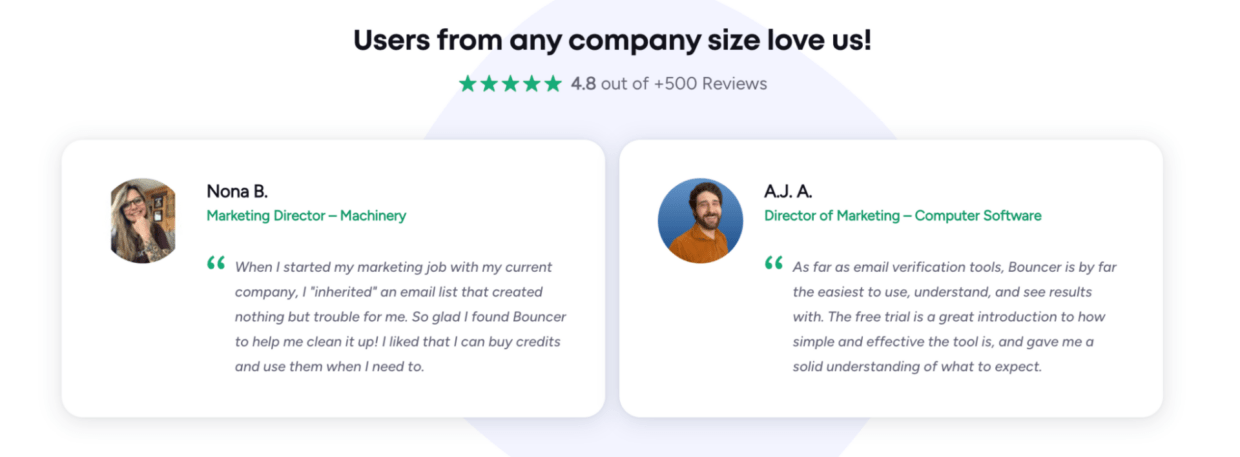
It is also a strong choice if your team needs more than a one-time list checker. Bouncer works best when list cleaning is part of a repeatable data hygiene workflow. If you are still cleaning emails in spreadsheets, this guide to alternatives to spreadsheet-based email cleaning is a useful next read.
Bouncer may not be the best fit if
Bouncer may be more than you need if you only want the cheapest possible check for a very small list. In that case, a free email checker or free email list sampling may be enough.
But if invalid, risky, or fake emails can damage your sender reputation or campaign results, Bouncer is the safer choice.
2. ZeroBounce: best for teams that want validation plus deliverability extras
2026 pricing check: free accounts receive 100 monthly verification credits. PAYG costs $129 for 10,000 credits, while ZeroBounce ONE™ is $99/month or $79/month on annual billing for 10,000 monthly validation credits plus additional tools.
ZeroBounce is a popular email validation and list cleaning platform with additional deliverability tools. It is a good option for teams that want more context around email quality, not only basic verification.
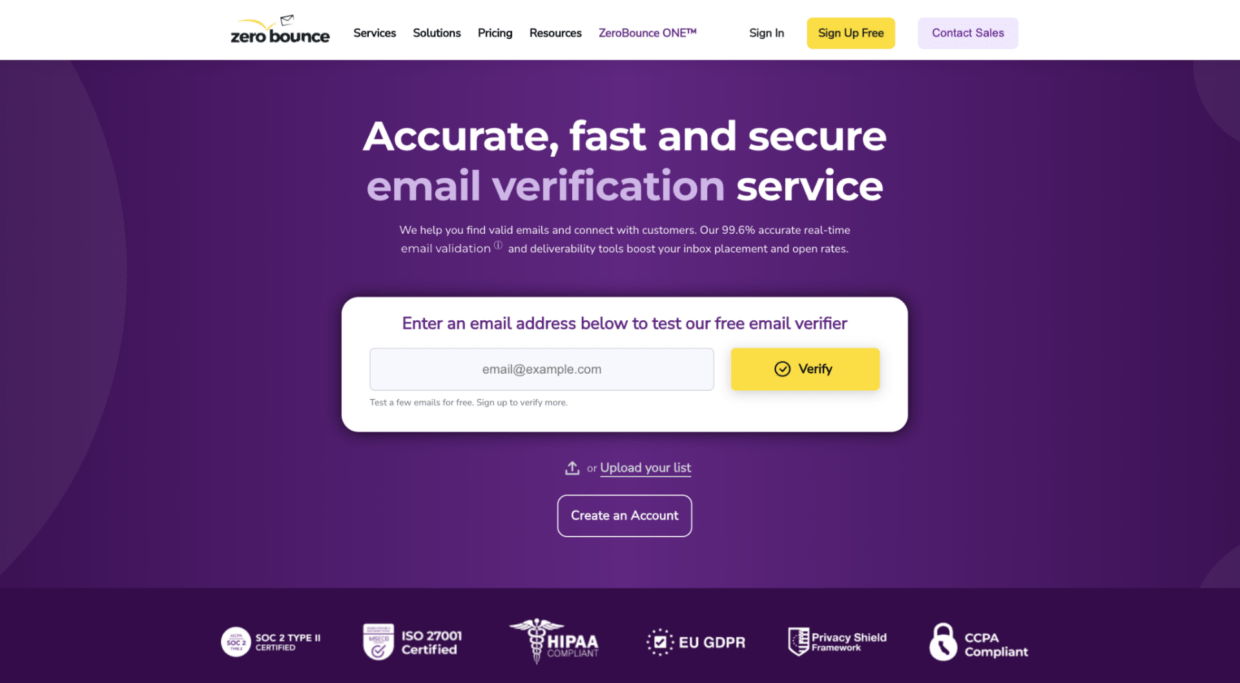
It may work well for companies that want validation, activity insights, and deliverability support in one place. It can also be useful for teams that already have a more advanced email operations setup.
The trade-off is complexity. If you only want simple, accurate list cleaning before a campaign, a cleaner workflow may be easier.
3. NeverBounce: best for simple bulk email verification
2026 pricing check: recent pricing references list $8 for 1,000 PAYG credits and $50 for 10,000, with Growth starting at $49/month for up to 10,000 emails. PAYG credits are valid for 12 months.
NeverBounce is a familiar name in email verification. It works well for teams that want to upload a list, clean it, and move on.
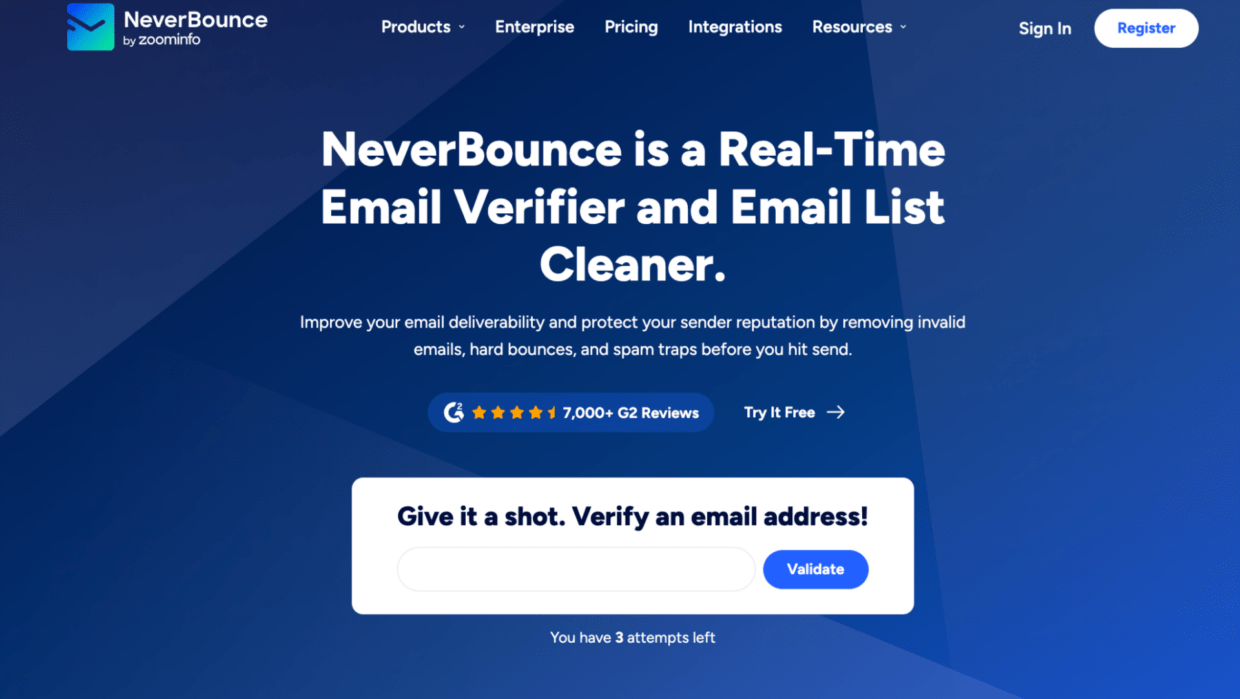
It is a practical option for straightforward bulk verification, especially when your main goal is to reduce bounces before sending.
Its biggest limitation is differentiation. If you need deeper risk signals, low unknown rates, real-time protection, and a broader email hygiene workflow, compare it carefully with Bouncer before choosing. You can also read our dedicated guide to NeverBounce alternatives if this is one of your shortlisted tools.
4. Mailgun Validate: best for teams already using Mailgun
2026 pricing check: Mailgun positions Validate inside Optimize. Pilot is $49/month after the first free month and includes 2,500 validations; Starter is $99/month with 5,000 validations.
Mailgun Validate makes sense for teams already using Mailgun for email sending. It can validate email addresses as part of a larger email infrastructure setup.
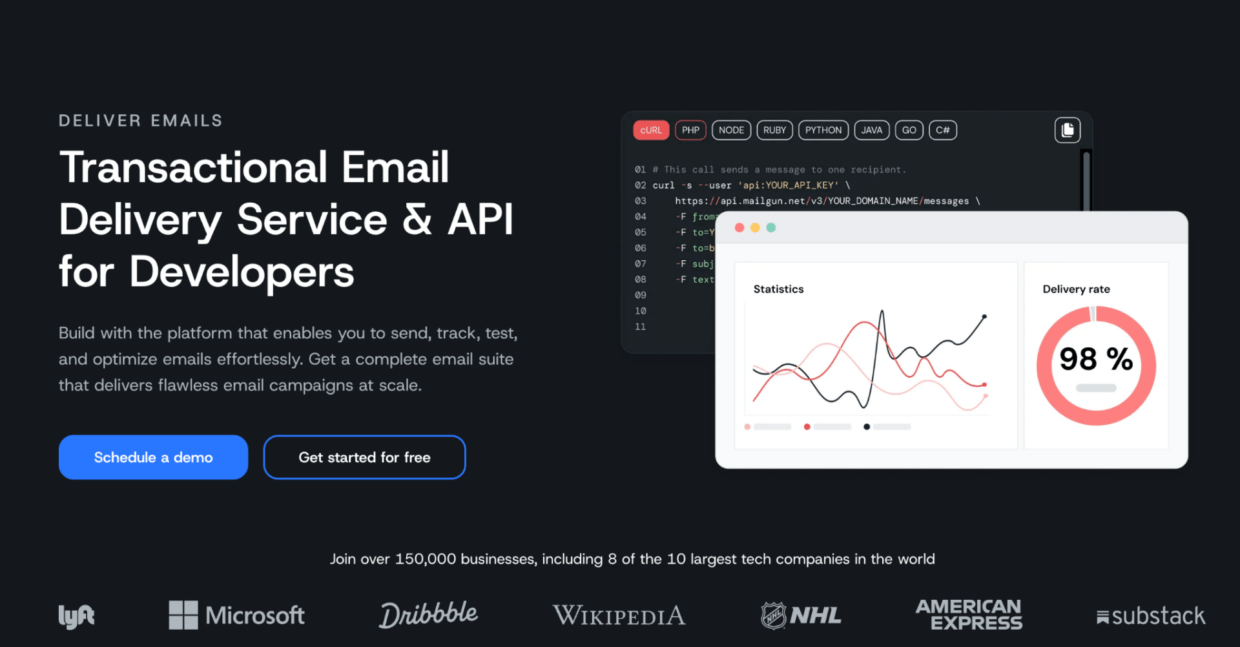
This is useful if your technical team already works inside Mailgun and wants validation connected to existing workflows.
It is less ideal if you are looking for a standalone email list cleaner for marketing, sales, or agency use. In that case, a dedicated tool like Bouncer may be easier to adopt across the team.
5. Clearout: best for budget-sensitive list cleaning
2026 pricing check: Clearout gives new users 100 free credits. PAYG starts at $40 for 5,000 credits, purchased credits do not expire, and Unknown or duplicate results are not charged.
Clearout can be a good option for teams looking for a simple email verification and list cleaning tool at a lower cost.
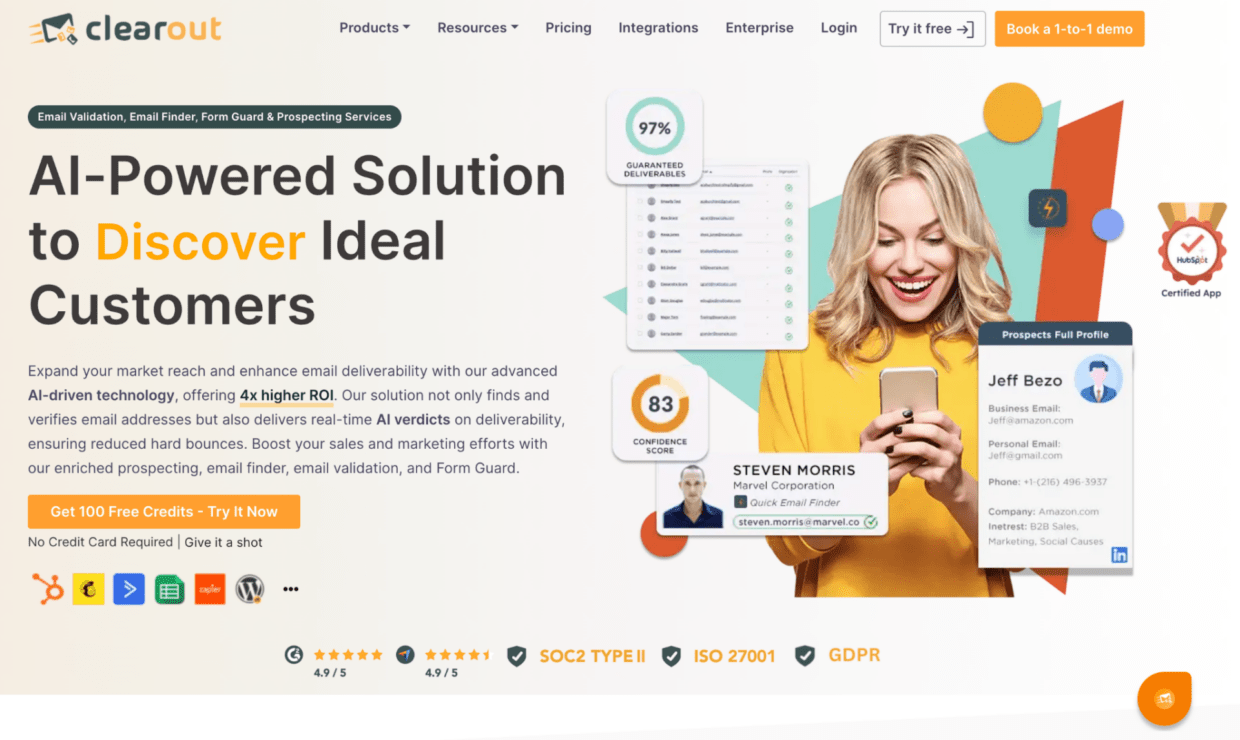
It covers the basics: bulk verification, validation, and email quality checks. For small lists or occasional cleaning, that may be enough.
For risky lists, older databases, or high-volume sending, test it carefully. Accuracy, unknown results, and risk detection matter more as your sending volume grows.
6. Kickbox: best for straightforward validation workflows
2026 pricing check: Kickbox includes 100 free verifications. Current PAYG examples include $10 for 1,000, $40 for 5,000 and $70 for 10,000 verifications.
Kickbox is another established email verification option. It is useful for teams that want a simple way to check lists and reduce bounces before sending.
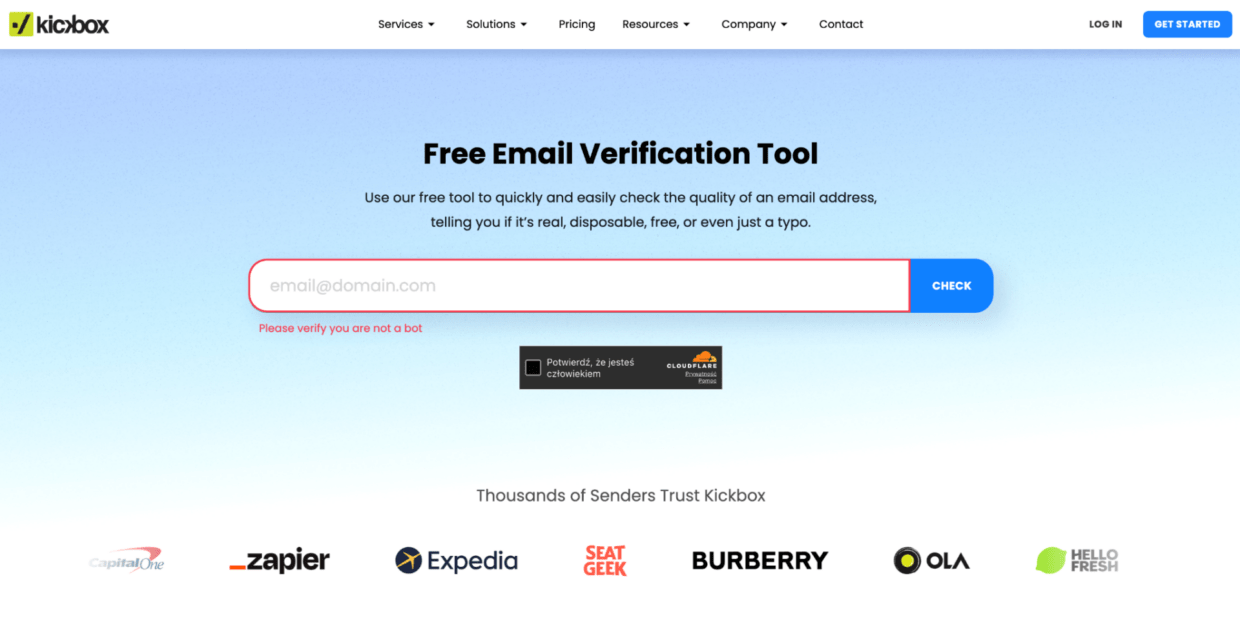
The main appeal is ease of use. Upload your list, verify it, and use the results to remove invalid addresses.
It may be less compelling if you want a more complete email hygiene setup with stronger real-time protection, broader risk checks, and extra deliverability context.
7. Emailable: best for fast email verification
2026 pricing check: Emailable gives new accounts 250 free credits. PAYG starts at $38 for 5,000 credits, purchased credits do not expire, and Unknown results are free.
Emailable offers email verification for teams that want a clean interface and fast checks. It is a solid option for basic list cleaning and validation workflows.
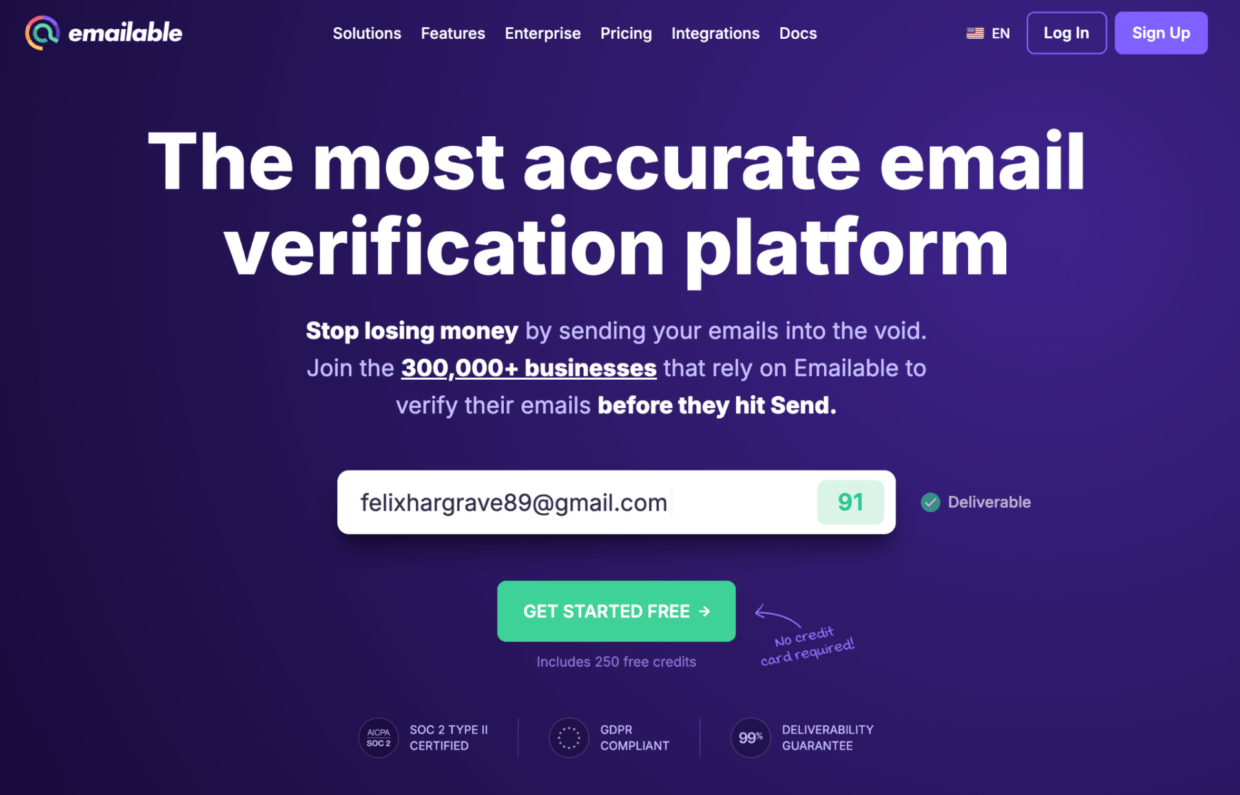
It may suit smaller teams that want to clean email addresses quickly before sending.
Before choosing it over Bouncer, compare unknown rates, security needs, API use cases, and how much detail your team needs from the results.
Why email list cleaning matters more in 2026
Email providers are stricter than they used to be. Sender reputation, spam complaints, bounce rates, authentication, and engagement all affect if your emails reach the inbox.
A dirty list can hurt you in several ways:
- more hard bounces
- more spam complaints
- worse campaign metrics
- lower inbox placement
- wasted spend on invalid contacts
- poor CRM data quality
- higher risk before cold outreach
Email data also decays over time. People change jobs, abandon old inboxes, mistype addresses, use disposable emails, or stop engaging. Even a list that looked healthy a few months ago can become risky before your next campaign.
Cleaning your email list helps you remove invalid, fake, risky, or outdated addresses before they damage your results. For a more tactical breakdown, read Bouncer’s guide on how often you should clean your email list.
Email list cleaner vs email verifier vs validation API
These terms are often used together, but they are not exactly the same.
- An email list cleaner checks a bulk list of email addresses and helps you remove invalid or risky contacts before sending a campaign.
- An email verifier checks if an email address is valid, reachable, and likely safe to send to. If you want the basics, start with Bouncer’s guide on how to verify email addresses.
- An email validation API checks emails in real time, usually when someone submits a form, signs up, creates an account, or enters an email during checkout. If your team needs this setup, read more about the power of Email Validation API.
- A full email hygiene platform combines bulk cleaning, real-time validation, risk detection, deliverability checks, and integrations.
Bouncer covers all of these use cases, which is why it works well as a long-term email hygiene tool instead of only a one-off cleaner.
Can you clean an email list for free?
Yes, but free email list cleaning is usually best for small samples, quick checks, or first tests.
Free tools can help you understand if your list may be risky. They are useful when you want to check a few addresses, test a sample, or see if full verification is worth it.
With Bouncer, you can start with the Free Email Checker if you want to check individual addresses, or use Free Email List Sampling to estimate the quality of a larger list before paying for full verification.
For larger lists, cold outreach campaigns, customer databases, newsletter lists, and recurring data hygiene, a paid email list cleaner is usually safer. You get better scale, clearer results, and more control over what happens next. You can compare pay-as-you-go and subscription options on Bouncer’s pricing page.
How often should you clean your email list?
Clean your email list before every important campaign if the list is old, purchased, scraped, imported, or collected from multiple sources.
For regular newsletter databases, clean your list every three to six months. Clean it sooner if you notice rising bounce rates, lower engagement, more spam complaints, or sudden deliverability drops.
For cold outreach and lead generation, clean your list before every send. B2B contact data changes quickly, and even a short delay can turn valid addresses into risky ones. If this is your use case, Bouncer also has a dedicated page for email list verification for lead generation.
For signup forms and product flows, use Bouncer Shield or the Email Verification API. It is easier to block bad emails at the source than to clean them later.
How to choose the best email list cleaner
The best email list cleaner depends on how you collect, store, and use email data.
Ask these questions before choosing:
- Do you clean lists once in a while or every week?
- Do you need bulk verification only, or real-time validation too?
- How important are GDPR, data storage, and security?
- Do you need integrations with your CRM, ESP, or sales tools?
- Do you send cold outreach, newsletters, product emails, or all three?
- How risky is your list source?
- Do you need simple statuses or deeper deliverability insights?
- How much can unknown results affect your campaign planning?
If your list is small and low-risk, a simple verifier may be enough. If email is a serious acquisition or retention channel, choose a cleaner that gives you accuracy, risk context, security, and automation.
For teams managing multiple senders or client lists, Bouncer’s guide to email hygiene platforms for agencies may help you compare broader workflows.
Best email list cleaner: final recommendation
Bouncer is the best email list cleaner for teams that want reliable verification, strong security, real-time validation, and a practical workflow for keeping email data healthy.
It is especially useful for marketing teams, sales teams, agencies, SaaS companies, and lead generation teams that cannot afford avoidable bounces or poor sender reputation.
Other tools can work for narrower use cases. ZeroBounce is worth checking if you want extra deliverability features. NeverBounce fits simple bulk cleaning. Mailgun Validate makes sense if you already use Mailgun. Clearout may suit smaller, budget-sensitive checks.
But if you want one email list cleaner that can handle bulk cleaning, real-time protection, risky email detection, and long-term data hygiene, start with Bouncer’s email verification tool.
FAQ
What is the best email list cleaner?
Bouncer is the best email list cleaner for most marketing, sales, and lead generation teams. It combines accurate bulk verification, low unknown results, real-time validation, strong security, and clear results. It is especially useful if email quality affects your deliverability, campaign performance, or CRM data.
What does an email list cleaner do?
An email list cleaner checks your email database and identifies invalid, risky, fake, disposable, or undeliverable addresses. It helps you remove contacts that may cause bounces, spam complaints, or poor deliverability before you send a campaign.
Is email list cleaning the same as email verification?
Email list cleaning usually means checking a bulk list and removing risky or invalid contacts. Email verification can refer to checking one address or many addresses. In practice, both help you confirm if emails are valid, reachable, and safe to use.
How often should I clean my email list?
Clean your list every three to six months if you send regular campaigns. Clean it before every major campaign if the list is old, imported, or used for cold outreach. Use real-time validation if you collect emails through forms or signups.
Can email list cleaning improve deliverability?
Yes. Email list cleaning can reduce hard bounces, remove risky addresses, and improve the quality of your sending list. It will not fix every deliverability issue, but it supports better sender reputation when combined with good authentication, engagement, and sending practices.
Can email list cleaning remove spam traps?
Some email list cleaners can identify risky patterns linked to spam traps, but no tool can promise to catch every spam trap. The safest strategy is to use permission-based collection, avoid questionable sources, validate emails in real time, and clean lists regularly.
Is a free email list cleaner enough?
A free email list cleaner can work for small checks, samples, or early testing. It is usually not enough for large databases, cold outreach, high-volume campaigns, or ongoing list hygiene. For serious sending, use a paid cleaner with better accuracy, reporting, and scale.
Should I clean a cold email list before outreach?
Yes. Cold email lists should be cleaned before every campaign. B2B data changes quickly, and sending to invalid or risky addresses can increase bounces, damage sender reputation, and reduce the chance that future emails reach the inbox.
What should I look for in an email list cleaning service?
Look for accuracy, low unknown results, bulk cleaning, real-time validation, risk detection, security, compliance, integrations, and clear pricing. The best email list cleaner should help your team make better sending decisions, not only label emails as valid or invalid.


